
 English
 русский
 Español
 عربى

The most expensive excavator mistakes rarely happen at the moment of purchase. They happen months earlier, when a buyer guesses at dig depth, ignores site access, or assumes any used machine with low hours is a safe buy. A machine that cannot physically reach the work, or one that arrives without parts support, costs far more than whatever you saved on the deal.
The decision becomes manageable when you take it in the right order: define the work first, match the size class to your sites, weigh new against used, compare the specifications that actually move the price, and vet the seller as carefully as the machine itself. Follow that sequence and most of the risk disappears before you ever sit down to negotiate.
Start With the Work, Not the Machine
Before looking at a single listing, write down the jobs the machine will do in a typical month. Utility trenching, foundation digging, landscaping, post-hole work for fencing, drainage ditches on a farm, light demolition — each points to a different requirement, and each narrows the field faster than any brochure.
Three numbers matter most:
- Dig depth: a residential water line that must sit below the frost line often needs 1.5 to 2 m of depth, and drainage or septic laterals may need more. Choose a machine whose maximum dig depth exceeds your deepest job by 10–15%, because working at the very limit of the boom is slow and unstable.
- Reach and dump height: if you will load material into trucks or over a stockpile, the dump height must clear the bed edge, which usually means at least 2 m.
- Lifting capacity: setting septic tanks, culvert pipes, or stone slabs depends on rated lift at full radius, not just the boom's closest point.
Site conditions narrow the choice further. Standard garden gates run roughly 90–100 cm wide; a compact 1-ton machine measures about 70–80 cm across and passes through, while a 3.5-ton machine at 1.5–1.7 m needs a fence opening cut. Ground conditions matter too — rubber tracks spread the weight and protect finished lawns, and soft, rain-soaked soil demands the lowest ground pressure you can get.
Work type also decides configuration. Farms that need fencing, ditching, and light land clearing from one machine often choose a model that converts between standard digging tooling and agricultural attachments:
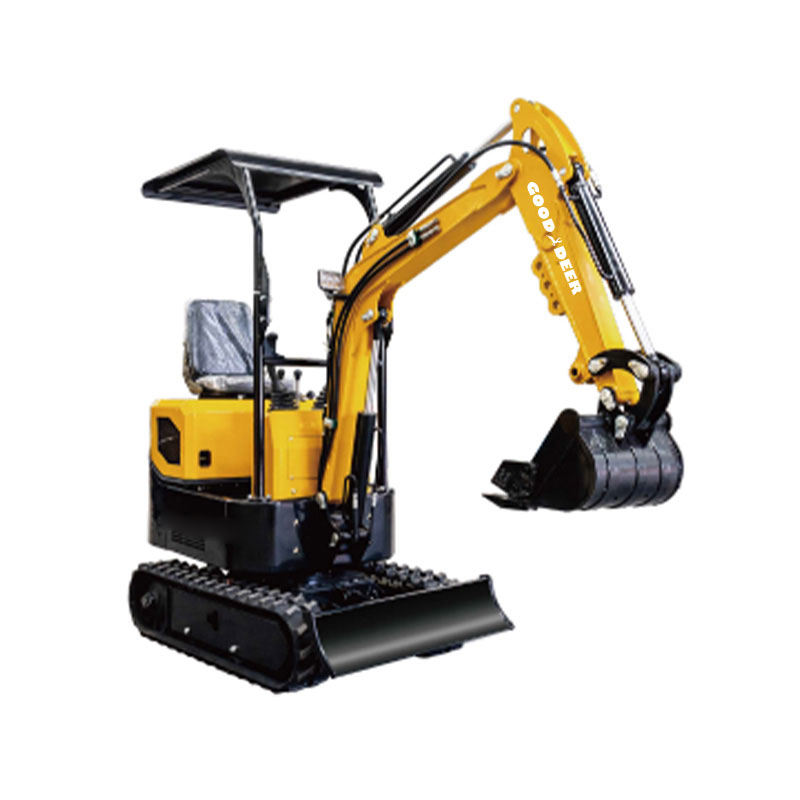
 Farm Convertible Mini ExcavatorThey play an important role in various small-scale projects, such as farmland renovation, orchard management, landscaping, garden organization, indoor demolition, etc ...View Product →
If your projects sit mostly in small-scale construction and site development, it helps to review how machines like these are applied across real construction work before fixing a budget — the application tells you which attachments to price in from day one, and attachment budgets are routinely 10–20% of the machine price.
Match the Size Class to Your Site
Size class is the single biggest cost driver. It sets the purchase price, the trailer you will need, the fuel you will burn, and in some regions the license class your operator must hold. The table below summarizes the common classes.
| Size Class | Operating Weight | Typical Max Dig Depth | Best Suited For | Transport Needs |
|---|---|---|---|---|
| Micro | Under 1.5 t | 1.4–2.2 m | Gardens, indoor demolition, plumbing work behind houses | Towable behind a heavy pickup |
| Mini | 1.5–3.5 t | 2.2–3.5 m | Landscaping, utility trenching, small construction sites | Single-axle equipment trailer |
| Midi | 4–6 t | 3.5–4.2 m | Roadwork, larger site preparation, heavier lifting | Dual-axle trailer, commercial hauling |
| Full-size | 10 t and up | 4.5 m and deeper | Civil engineering and bulk earthmoving | Lowbed transport, often with permits |
As a rule, buy for the site you will visit most often, not the biggest job you might take twice a year. Renting a larger machine for occasional heavy work almost always beats owning one that sits idle most of the week, because depreciation runs whether the machine works or not.
For most first-time buyers — landscapers, general contractors, and farms — the compact crawler class hits the practical balance: enough depth for genuine utility work, still transportable behind an ordinary trailer, and light enough for finished ground:
 Compact Crawler ExcavatorsMini Excavators benefit from their compact size, typically weighing between 1- 8 tons, with a small volume that is easy to transport and operate. They have functions s...View Product →
New or Used: The Trade-Offs That Actually Matter
Here is the conclusion first: a used excavator is only cheaper if its hydraulics and undercarriage are sound. Otherwise it becomes the most expensive option on the market, because a hydraulic pump or undercarriage replacement can exceed the discount you received at purchase.
What to Inspect on a Used Machine
- Hydraulic system: look for oil staining around cylinder rods, hose fittings, and the main pump. A fine oil mist after a test run points to seals nearing the end of their service life.
- Undercarriage: check sprocket teeth for hooked profiles, verify track tension, and inspect the rollers. The undercarriage can represent roughly 20% of a machine's total value, and replacement runs into thousands.
- Hours: 2,000–3,000 hours on a serviced machine is mid-life; anything above 5,000 hours justifies deeper checks of the pump and swing motor before you commit.
- Pin and bushing play: rock the bucket and stick at full extension. Visible slop in the pins is wear you will pay to correct.
- Paperwork: service logs, ownership documents, and a serial number that matches the data plate.
Run every function cold and then hot: cycle all cylinders to full stroke and hold the load, rotate a full 360 degrees and brake, travel forward and reverse, then park over clean ground and look underneath for fresh drips. Exhaust tells its own story — blue smoke means burning oil, black smoke suggests fuel mixture problems.
When a New Machine Makes More Sense
A new machine removes inherited wear and adds warranty coverage — typically 12 to 24 months on core components — plus the option to configure boom, counterweight, and tooling exactly for your jobs. Buying new from a factory that also stocks parts shortens the repair cycle for the life of the machine, which matters more as the hours accumulate.
Specifications That Separate Good Value From Cheap Iron
Within a size class, spec sheets look nearly identical. The meaningful differences hide in four details.
- Power source: diesel remains the default for field work and towing between sites, but electric mini excavators have earned a firm place for indoor demolition, basements, and emission-restricted urban jobs — no exhaust, far less noise, and lower daily running cost.
- Hydraulics: piston pumps hold pressure and cycle speed better than basic gear pumps under load, and load-sensing valves keep boom and travel movements smooth when two functions run simultaneously.
- Tail swing: a zero-tail-swing frame lets the upper structure rotate within the track width, which is essential when digging along walls, in lanes, or between obstacles.
- Attachments: a quick coupler with a 30 cm trenching bucket and a 60 cm grading bucket covers most general work. Breakers and augers need verified hydraulic flow, so confirm compatibility in writing before buying.
For buyers who split time between indoor jobs and outdoor sites, a dedicated electric model is worth a close look:
 Mini Electric ExcavatorMini Electric Excavator is an electric-driven small excavation equipment designed for small spaces and efficient operations. Compared with traditional internal combust...View Product →
Operator comfort matters more than most buyers admit. A canopy with clear sightlines to the bucket, accessible controls, and a proper seat keeps an operator productive through an eight-hour shift; a cramped station slows every single cycle and shows up in your daily output.
Evaluate the Seller Before You Compare Prices
The seller determines how quickly you are back to work after a failure, which is why support should be weighed as part of the price rather than treated as an afterthought. Before committing, ask three questions:
- Parts lead time: how quickly can filters, track components, and a spare hydraulic hose reach your location? Days matter; months can idle an entire season.
- Warranty terms in writing: which components are covered (engine, hydraulic pump, swing motor), for how long, and what actions void the coverage.
- Documentation and service support: manuals in your language, guidance for routine maintenance, and a contact who answers when something fails.
Factory-direct exporters often combine a sharper price with direct access to the production line. This is the model we operate at Gooddeer, where the same factory that assembles the machine supplies the wear-parts kit and answers technical questions without a dealer layer in between. Whatever route you choose, get the parts arrangement confirmed in writing before the payment terms are settled.
Run the Machine Before You Sign
A test drive is not a courtesy; it is the inspection. Start the engine cold and listen for knocking, watch the exhaust for color, cycle every function through its full range, and verify that the hour meter matches the stated hours. For used machines, request the service history alongside the demonstration and compare it against wear on the pedals, seat, and levers — heavy wear with low hours is a question that needs an answer.
If you are new to excavators, walk through a beginner's guide to operating a mini excavator before test day. Knowing what the left and right controls do, where the safety zones sit, and what a clean cycle looks like lets you judge the machine instead of fighting it.
Buying well is a matter of sequencing: work first, size second, new or used third, specifications fourth, seller fifth, and the test drive last. A machine matched to real sites, backed by a written warranty and reachable parts support, pays for itself on schedule. A bargain bought on price alone rarely does, and the difference is almost always visible within the first service interval.