
 English
 русский
 Español
 عربى

Watch a well-run excavator for a few minutes and the machine almost seems to breathe: boom out, bucket in, swing, dump, repeat. For equipment weighing several tonnes, those movements look remarkably graceful. Under the steel skin, an excavator is really a power conversion system: it takes energy from an engine, transfers it into pressurized oil, and uses that oil to push, pull, and rotate with forces no mechanical linkage could match. Here is a plain-language look at how an excavator works, from the hydraulic pump down to the bucket teeth.
The Core Principle: Fluid Power Instead of Raw Muscle
The heart of every excavator is a simple law of physics: pressure applied to a confined fluid is transmitted equally in all directions. Hydraulic systems use a pump to pressurize oil and then direct that oil into cylinders and motors. Because pressure acting on a large piston surface produces enormous force, a modest pump can command a boom that lifts several tonnes, which is why a fully loaded bucket seems to curl with almost no effort.
From Engine to Pump: How Power Flows
Everything starts with the power source. In most machines a diesel engine spins the hydraulic pump; electric models use a motor instead. The pump draws oil from a reservoir and pushes it through the system under high pressure, where it reaches a bank of control valves. These valves act like traffic officers: your joysticks and pedals signal them to open specific passages, sending oil to whichever cylinder or motor needs it. Release the lever, the valve closes, oil flows back to the reservoir, and that movement stops.
Cylinders Do the Digging; Motors Do the Rotating
Two types of actuators convert oil pressure into motion. Hydraulic cylinders produce straight-line force: one lifts the boom, another extends the arm, and a third curls the bucket. Hydraulic motors produce rotation instead. A swing motor turns the entire upper structure, while travel motors inside the track frames drive the sprockets that move the machine. Every motion you see is one of these actuators responding to pressurized oil.
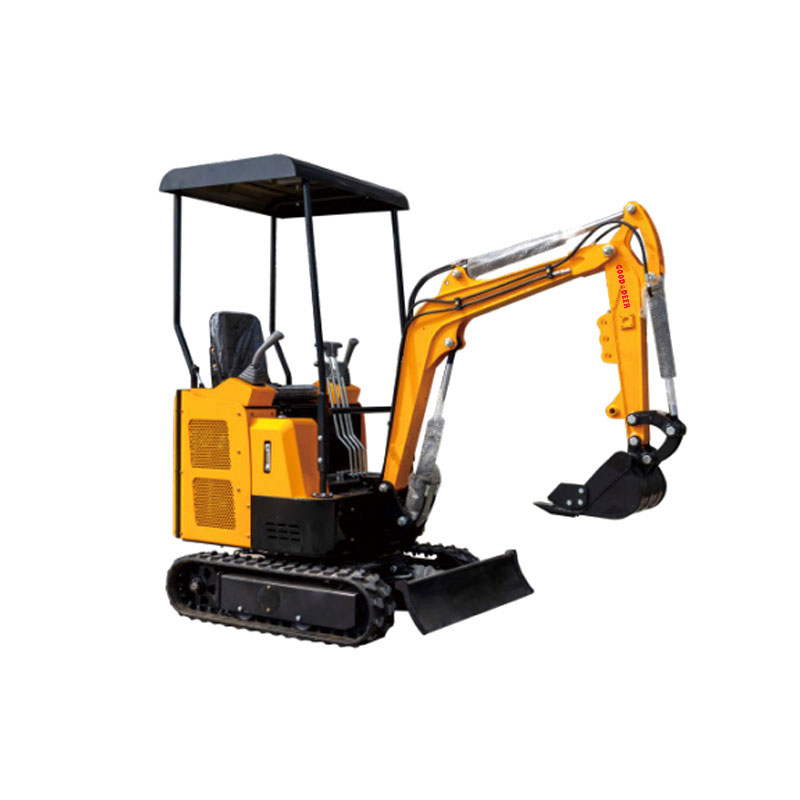
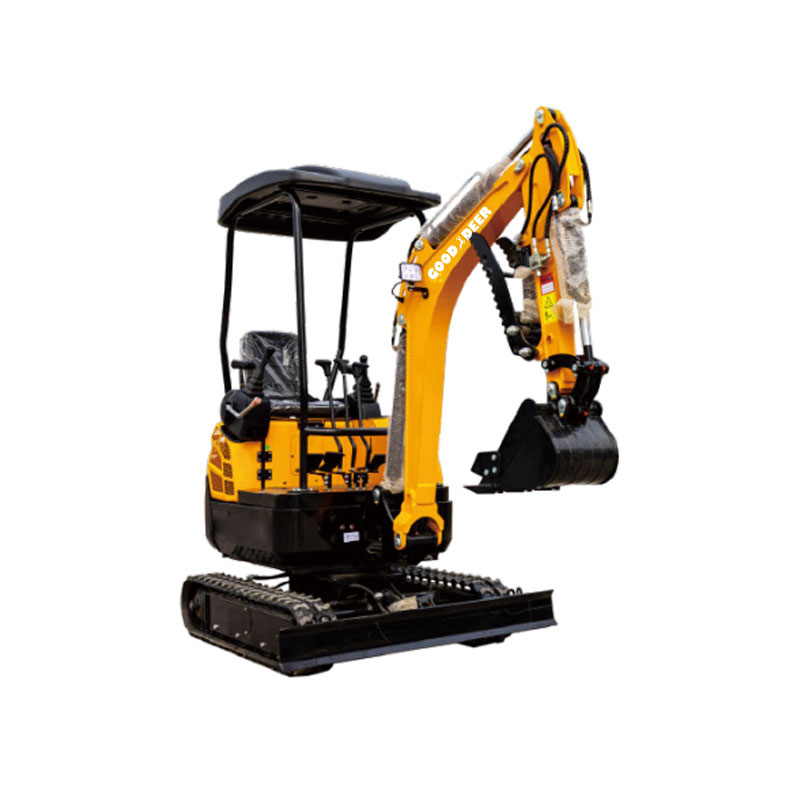
This engine, pump, valve, and actuator chain is exactly what powers our own compact machines, including the hydraulic diesel mini excavator we build for construction and farm work.
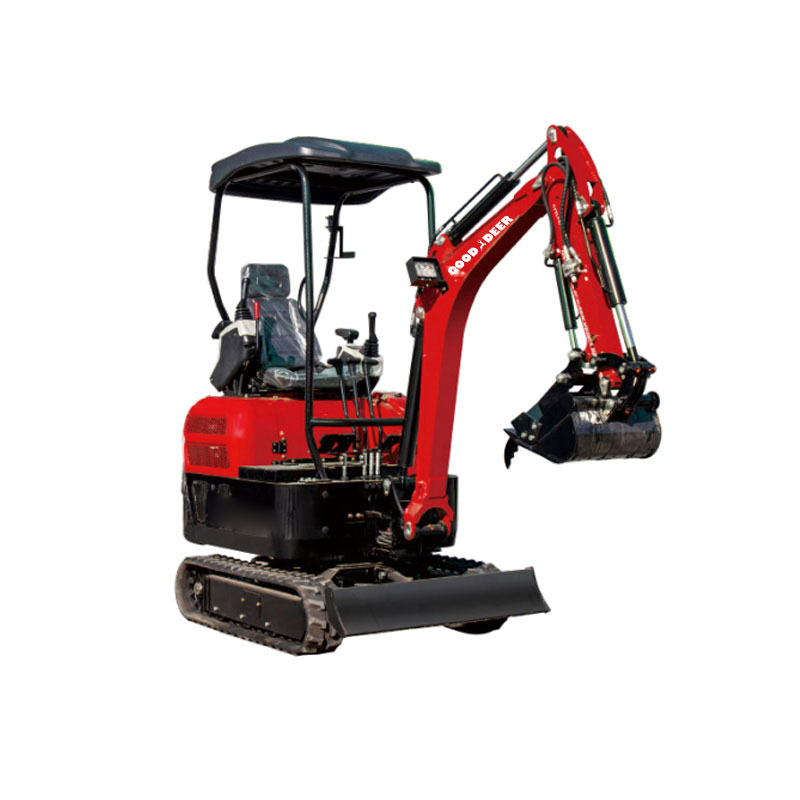 Hydraulic Diesel Mini Excavator for Construction and Farm WorkThis compact diesel-powered excavator uses an advanced hydraulic system for stable, efficient digging in narrow areas, and supports attachments like buckets, grabs, and breakers, illustrating how the engine-pump-valve-actuator chain works in practice.View Product →
The Main Components and What Each One Does
Because every component exists to generate, direct, or use hydraulic power, it helps to think of the machine as a team of assemblies. The table below summarizes the main parts found on virtually any excavator.
| Component | What It Does |
|---|---|
| Engine or electric motor | Supplies the power that drives the hydraulic pump |
| Hydraulic pump | Draws oil from the reservoir and pressurizes it |
| Control valves | Route pressurized oil to specific cylinders or motors |
| Boom, arm, and bucket cylinders | Turn oil pressure into the push and pull used for digging |
| Upper structure (house) | Carries the cab, engine, pump, and counterweight; rotates 360 degrees |
| Counterweight | Balances the machine against the load in the bucket |
| Undercarriage | Tracks, rollers, and travel motors that support and move the machine |
| Dozer blade | Levels ground, adds stability while digging, and assists backfilling |
The Digging Cycle, Step by Step
Knowing the parts is one thing; watching them work together is another. A skilled operator runs a repeating sequence called the digging cycle, which converts hydraulic capacity into productive work:
- Position the machine on stable ground, often with the dozer blade lowered for extra stability.
- Extend the boom and lower it, reaching the arm out so the bucket arrives at the material.
- Dig and curl: the arm cylinder pulls the bucket back through the soil while the bucket cylinder curls it inward to scoop a full load.
- Raise the loaded bucket clear of the ground, then swing the house toward the dump target.
- Open the bucket to release the material, swing back, and start the next pass.
Cycle after cycle, the operator's real skill lies in keeping every motion smooth and eliminating wasted travel. Jerky inputs simply spill pressure over the relief valves, burning fuel without digging faster. If you are new to the controls, our step-by-step beginner's guide to operating a mini excavator covers each movement in greater detail.
Swing, Travel, and the Value of 360-Degree Rotation
What separates an excavator from most other earthmoving machines is full-circle rotation. The upper house sits on a large slewing bearing, essentially a giant ring gear, and a hydraulic swing motor with a planetary gearbox turns it. Because the cab, boom, and bucket can rotate a full 360 degrees, the machine digs in one direction and dumps in another without moving its tracks.
Rotation does raise one packaging question: the counterweight behind the cab needs somewhere to swing. Conventional machines carry a tail that sweeps beyond the tracks, while reduced-tail-swing models keep the rear inside the track width so the house can rotate beside a wall or fence without striking it. On tight sites such as garden renovations, utility trenches, or indoor demolition, that difference matters enormously, and it is exactly the gap our tailless slewing crawler mini excavator was built to fill.
 Tailless Slewing Crawler Mini Excavator for Tight SitesWith zero tail swing, the rear stays within the track width during rotation, allowing safe operation beside walls and fences. Ideal for garden renovations, utility trenches, and other confined spaces where conventional tail swing is a problem.View Product →
Travel across the ground relies on the same principle. Each track is driven by its own travel motor, so the operator can move forward, reverse, or pivot in place by running the tracks at different speeds. Wide tracks also spread the machine's weight, lowering ground pressure on soft soil where wheels would sink.
Mini Excavators: The Same Engineering in a Compact Footprint
Everything described so far applies just as much to a two-ton machine as to a thirty-ton one; only the scale changes. A mini excavator runs the identical chain of engine, pump, valves, cylinders, swing bearing, and travel motors, packaged into a footprint that slips through a garden gate, works beside a barn, or opens a trench on a crowded street. That is why compact models have become the default choice for landscaping, farming, and small construction projects.
Power source is the biggest configuration decision. A diesel-hydraulic layout remains the most popular because it delivers strong digging force and runs anywhere fuel can be carried. An electric drive produces no exhaust fumes and far less noise, making it suitable for indoor work, greenhouses, barns, and residential areas with strict noise rules. For buyers weighing these options, our mini electric excavator shows how capable the configuration has become.
 Mini Electric Excavator for Low-Noise Indoor WorkAn electric-driven mini excavator offering lower noise and no exhaust fumes, suited to greenhouses, barns, urban streets, and underground pipeline work—showing how electric power compares with the diesel-hydraulic layout.View Product →
Beyond power, compact machines come in job-specific shapes: extended-arm versions for extra reach, farm-convertible models for agricultural tasks, and high-roof cabs for taller operators. The right choice depends less on abstract rankings and more on which geometry and power source fit your daily working conditions.
What Determines How Well an Excavator Performs
Two machines built on the same principle can still behave very differently in the field. A handful of factors explain most of that difference:
- Hydraulic pressure and flow: higher pressure means more force at the bucket, while higher flow means faster movement; the balance defines a machine's character.
- Geometry: boom length, arm length, and pivot positions set digging depth and reach; a long-arm setup trades breakout force for distance.
- Bucket selection: width, capacity, and tooth design determine how easily the bucket penetrates hard or rocky ground.
- Ground conditions: soft terrain calls for wider tracks and careful use of the dozer blade, while rocky surfaces stress the undercarriage.
These are the questions we ask first at Gooddeer: What material will you dig? How much room is there to swing the house? Will you work indoors or outdoors, on a farm or a construction site? The answers point straight to the right configuration.
So, how does an excavator work? An engine or motor drives a hydraulic pump; the pump pressurizes oil; valves route that oil to cylinders and motors; and those actuators convert fluid pressure into boom lift, arm crowd, bucket curl, house swing, and track travel. It is an elegant system, consistent across machine sizes, which is why a compact model can deliver real digging capability on a small site or family farm. If you are weighing which configuration suits your projects, the Gooddeer team is glad to talk through the options built on our own production line.