
 English
 русский
 Español
 عربى

A tractor is fundamentally a mobile power source. On its own, it does little more than move forward and back—its real value comes from the implements it can pull, push, or power. Every tractor, from a compact two-wheel walk-behind to a four-wheel utility model, relies on three core systems: an engine to generate torque, a transmission to deliver tractive force, and a power take-off and hydraulic circuit to run attached machinery. Understanding how these systems work together is essential for choosing the right tractor and using it safely and efficiently.
The Diesel Engine and Drivetrain
Nearly all modern tractors use a diesel engine. Diesel engines produce high torque at low RPM, which is exactly what a tractor needs to pull heavy loads across rough terrain. The engine's rotational speed is moderate—typically 1800 to 2200 RPM at rated power—but the torque curve is flat, meaning usable pulling power is available even when the engine lugs down under load.
From the engine, power flows through a clutch or torque converter into the transmission. Most general-purpose tractors use a manual transmission with multiple gear ranges (e.g., 8 forward, 2 reverse) so the operator can match ground speed to the task. A creeper gear may provide speeds as low as 0.1 mph for precise work like transplanting or digging. The transmission sends power to the differential, then to the axles, and finally to the wheels. The combination of high torque, low gearing, and large rear tires creates the tractive effort that defines a tractor.
Why Tractive Effort Matters
Tractive effort is the force the tires can push against the ground before slipping. It depends on engine torque, overall gear ratio, tire contact patch, and weight (including ballast). A typical 40-horsepower utility tractor can generate over 3,000 pounds of drawbar pull in low gear. That force is what allows a tractor to pull a disc harrow through heavy clay or tow a loaded trailer uphill.
Power Take-Off (PTO) and Hydraulics
The PTO shaft is a rotating shaft at the rear of the tractor that delivers engine power directly to implements like mowers, balers, and rotary tillers. Standard PTO speeds are 540 RPM and 1000 RPM. The shaft connects via a splined coupler and a universal joint driveline. When the operator engages the PTO, the implement's working parts begin spinning immediately, independent of the tractor's ground speed.
The hydraulic system uses a pump driven by the engine to pressurize hydraulic fluid, typically to 2,500–3,000 psi. This pressure is directed by control valves to lift arms, tilt buckets, or extend cylinders. On a tractor, the three-point hitch is the classic hydraulic implement connection. The lower arms raise and lower the implement, while the top link stabilizes it. Draft control automatically senses the resistance of the implement and adjusts the hitch height to maintain consistent working depth.
Putting It Together: An Example
Consider using a rotary tiller behind a tractor. The PTO spins the tines at roughly 540 RPM to break up soil. The hydraulic system lifts the tiller for transport and lowers it to the desired depth. Meanwhile, the tractor's own drivetrain moves the whole unit forward at 1–2 mph. The operator adjusts engine throttle and gear range separately to achieve the correct combination of PTO speed and ground speed. This interplay of three independent power circuits is what makes a tractor uniquely versatile.
Tractor Types: Two-Wheel vs. Four-Wheel
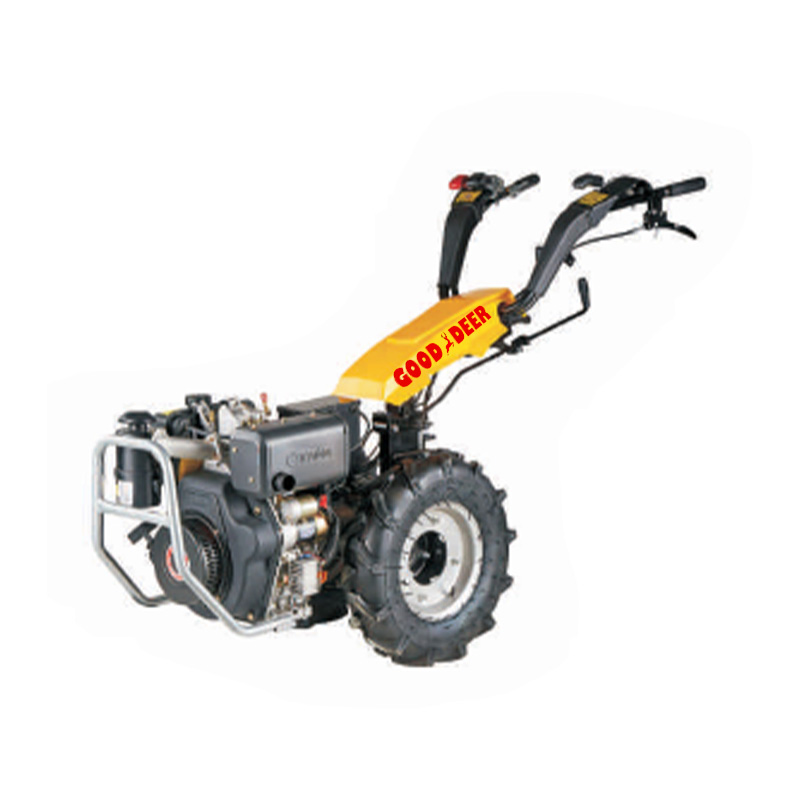
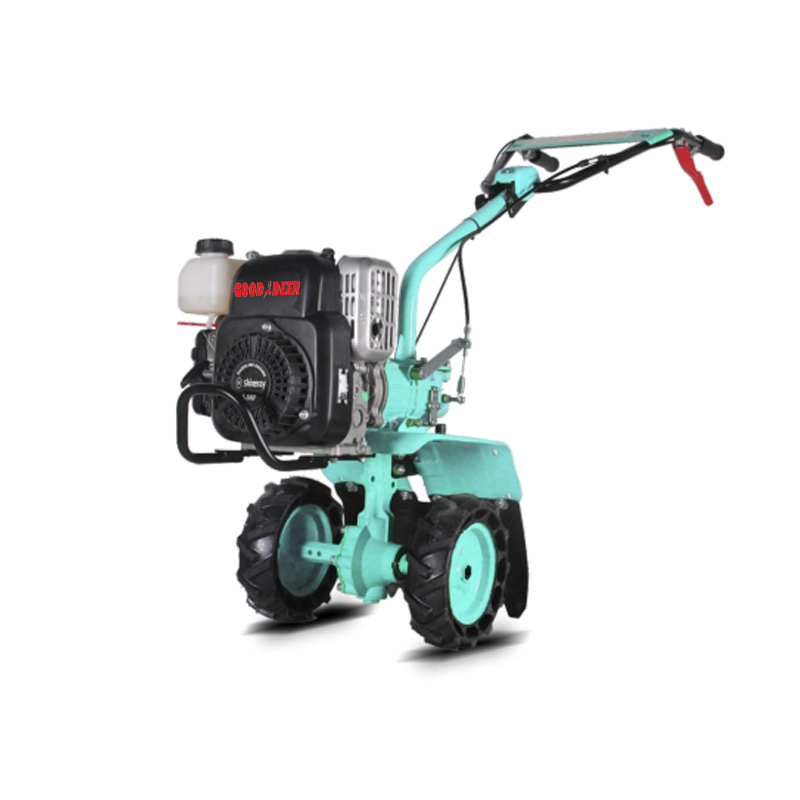
Two-wheel walk-behind tractors—often called two-wheel tractors or multifunctional tractors—are small, single-wheel-drive machines steered by handlebars. They excel in small fields, greenhouses, and row crops where a four-wheel tractor would be too large or cause soil compaction. For example, a 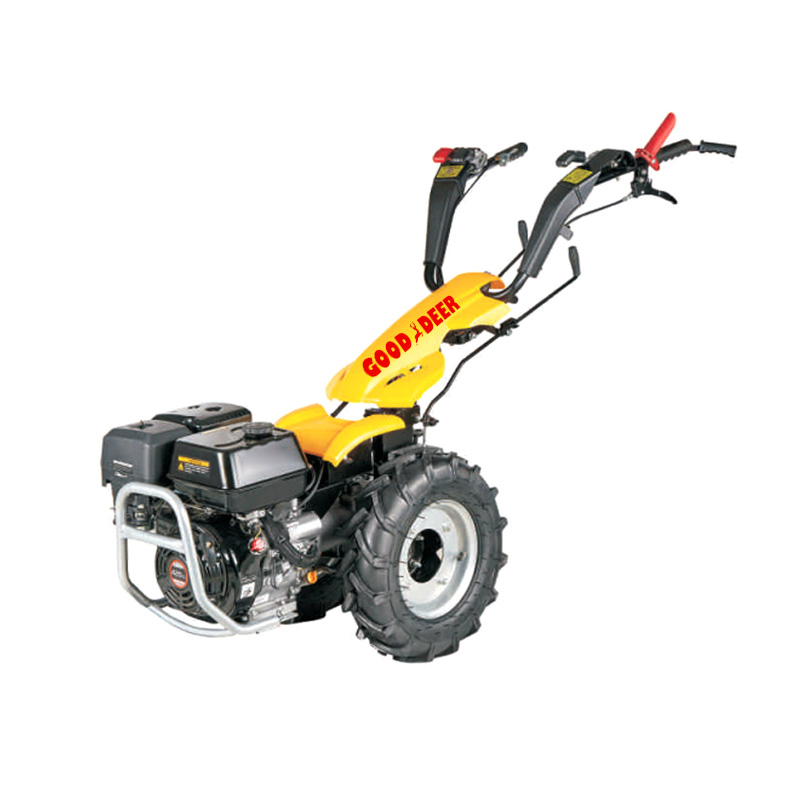 Hand-Pushed Multifunctional Rotary Tractor for Small-Scale FarmingThis compact tractor bridges walk-behind and four-wheel models, offering versatile tillage, seeding, and weeding operations with simple handling ideal for orchards or narrow row crops.View Product → can be fitted with a rotary tiller, plow, mower, or sprayer, all powered by its own engine and a mechanical PTO or belt drive.
Four-wheel tractors range from compact utility models (25–60 hp) to massive row-crop tractors over 300 hp. They provide greater stability, higher pulling power, and the ability to operate larger implements such as disc mowers and round balers. Within the four-wheel category, two-wheel-drive (2WD) is lighter and cheaper, while four-wheel-drive (4WD) offers better traction on slopes and in wet conditions. For many small to mid-size farms, a 4WD compact tractor with a PTO and hydraulic system handles most jobs from tilling to baling.
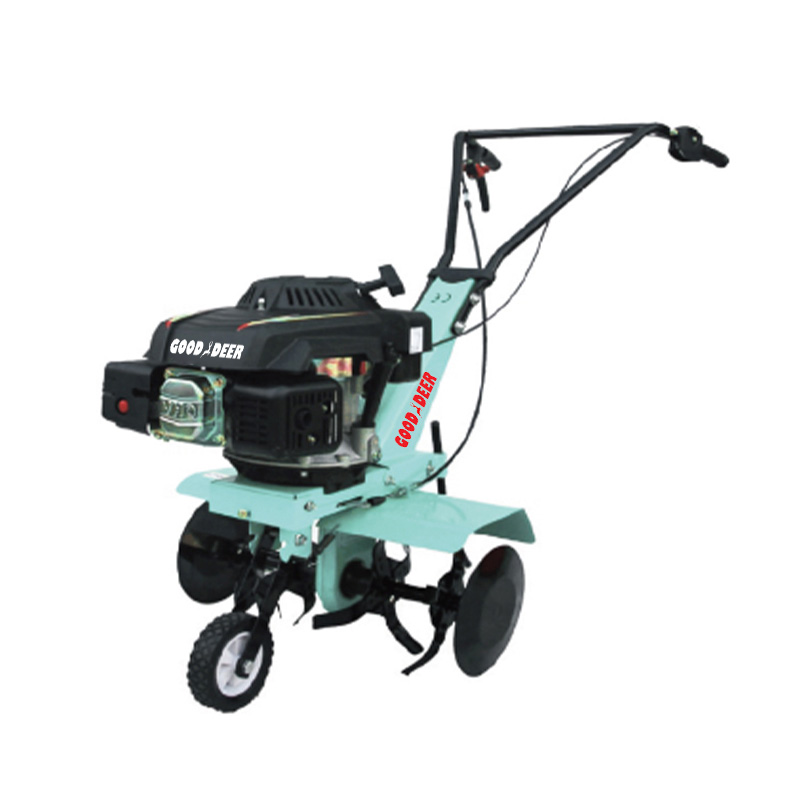
When selecting a tractor, consider the implements you plan to use. If your main tool is a rotary tiller, a small 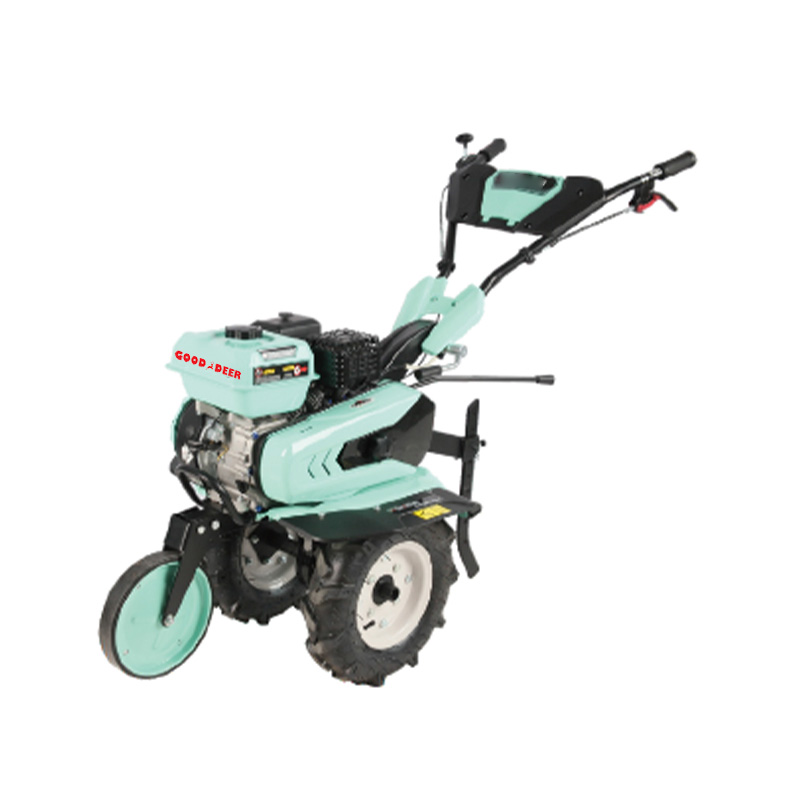 Hand-Push Gasoline Tiller for Light Duty Garden WorkA lightweight alternative to larger tractors, this tiller reduces manual labor for plowing, loosening soil, and fertilizing in small fields, greenhouses, or family farms.View Product → may be a simpler alternative for garden-scale work. For hay and straw management, a
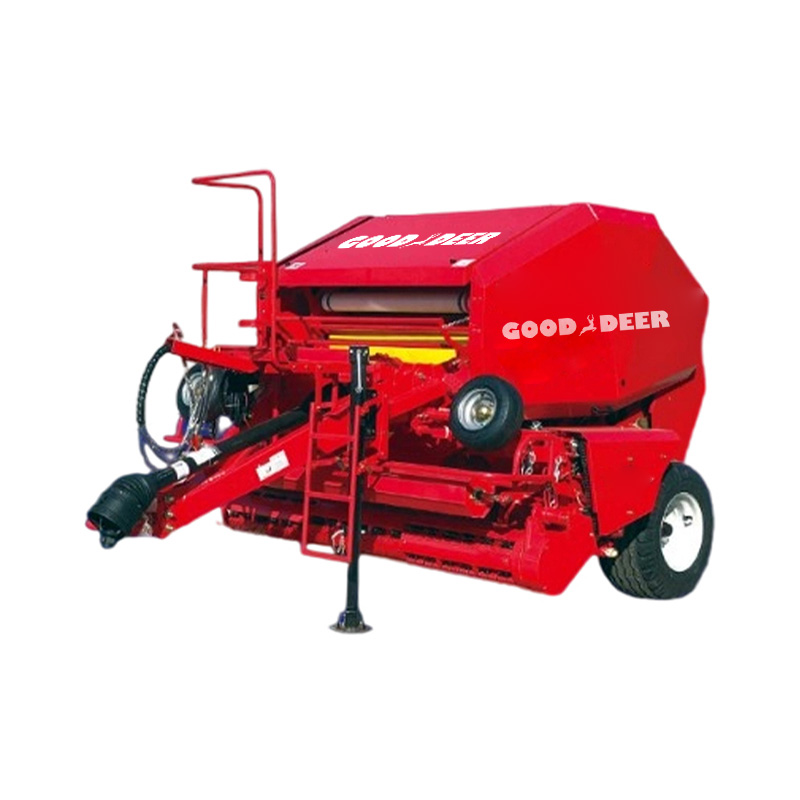 Compact Grass Baler for Efficient Hay and Straw PackingThis baler creates neat round bales from windrows with adjustable density, suitable for limited-space farms needing quick collection and reduced labor effort.View Product → can create neat round bales directly from windrows.
Safety and Maintenance Considerations
Because a tractor couples high torque with rotating PTO shafts and hydraulic pressure, safety protocols are critical. PTO entanglement is one of the most common farm injuries. Always keep PTO shields in place, never step over a spinning shaft, and disengage the PTO before leaving the seat. Hydraulic hoses should be inspected for cracks; a pinhole leak can inject fluid into the skin. Rollover protection structures (ROPS) and seatbelts are mandatory on modern tractors.
Routine maintenance includes oil and filter changes, cooling system checks, and greasing the PTO driveline and three-point hitch pivot points. Diesel fuel systems require water separators to prevent injector damage. Proper storage—especially in winter—involves adding fuel stabilizer and protecting the battery.
Understanding how a tractor works is the first step toward using it effectively and safely. The engine, drivetrain, PTO, and hydraulics form an integrated power platform that can be adapted to almost any agricultural task. Whether you need a two-wheel walk-behind for a small garden or a four-wheel utility tractor for haying and tilling, the same principles apply: torque turns into traction, and that traction powers the implements that do the real work.