
 English
 русский
 Español
 عربى
عربى

Picture an auto repair shop on a busy morning: a technician reaches for an impact wrench to remove lug nuts, another inflates tires, and a third uses a blow gun to clean a brake housing. All three tools are powered by the same source—compressed air from a single air compressor. The same machine could be spray-painting cabinets in a woodshop, driving pneumatic fasteners in a framing crew, or powering a sandblaster on a restoration project.
The short answer to “What does an air compressor do?” is this: it takes ordinary air from the room, squeezes it into a smaller volume, and stores that energy under pressure. When you open a valve, the pressurized air rushes out with enough force to run tools, inflate tires, blow dust, or operate cylinders and valves. In other words, an air compressor is a device that converts mechanical or engine power into dependable pneumatic energy.
The Core Job of an Air Compressor
Compressed air is often called the fourth utility in factories. An air compressor’s job is straightforward: draw in ambient air, compress it, and hold it in a storage tank until a tool needs it. This stored energy can be released as a steady stream or as short bursts, depending on the tool.
Three numbers describe what a compressor can do:
- PSI (pounds per square inch): the pressure the compressor can deliver.
- CFM (cubic feet per minute): the volume of air it can supply at a given pressure.
- Tank size (gallons or liters): the amount of reserve air that prevents the pump from cycling constantly.
Matching these values to your tools matters more than brand or price. A tool rated for 90 PSI and 5 CFM will not run properly on a compressor that delivers only 2 CFM at that pressure, regardless of tank capacity. In practice, the compressor must supply at least as much CFM as the highest-demand tool you use, and ideally more, to avoid pressure drops.
Air tools have a higher power-to-weight ratio than electric tools, so they can be held longer without fatigue. They also do not spark, which makes them safer in flammable atmospheres. And because a single compressor can feed several tools, the cost per tool is often lower.
How an Air Compressor Produces Compressed Air
Two main technologies dominate the market: piston (or reciprocating) compressors and rotary screw compressors. They use different mechanisms to achieve the same result, and each suits specific workloads. A third category, centrifugal compressors, is used mainly in large industrial plants requiring enormous volumes, so most buyers will choose between piston and screw designs.
Piston Air Compressors
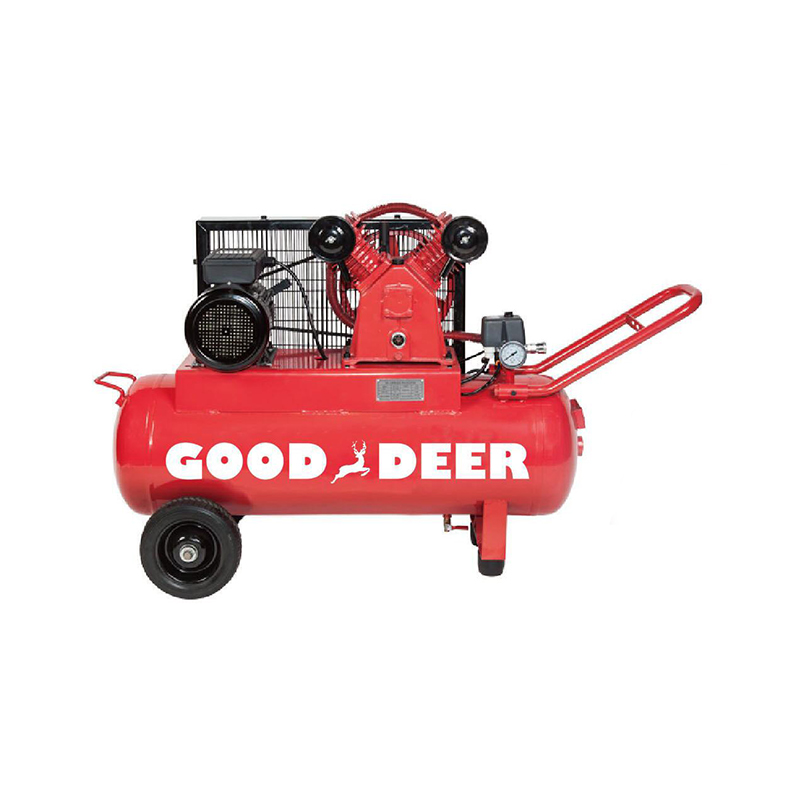
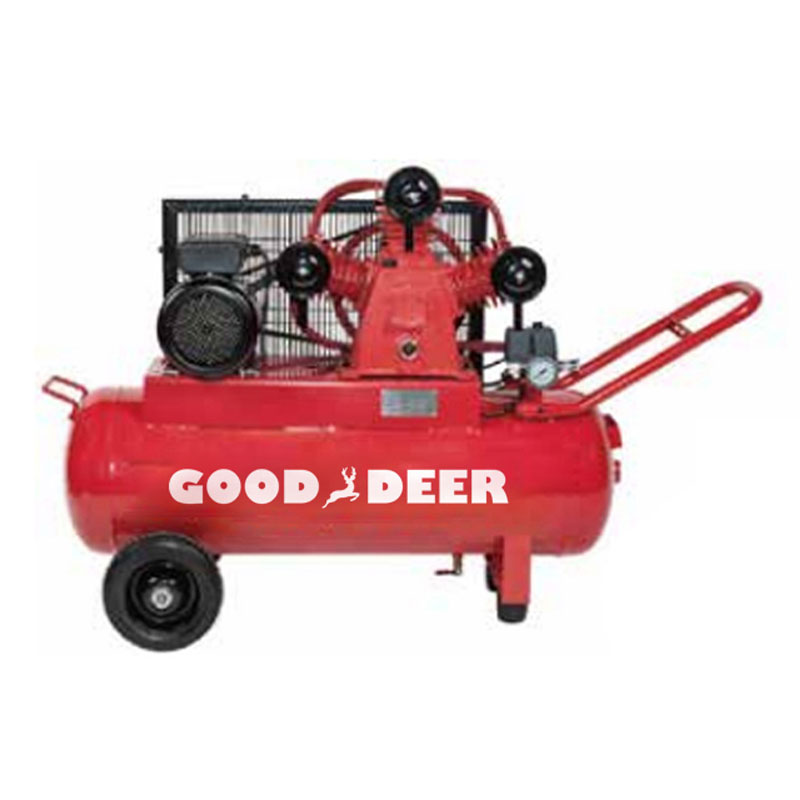
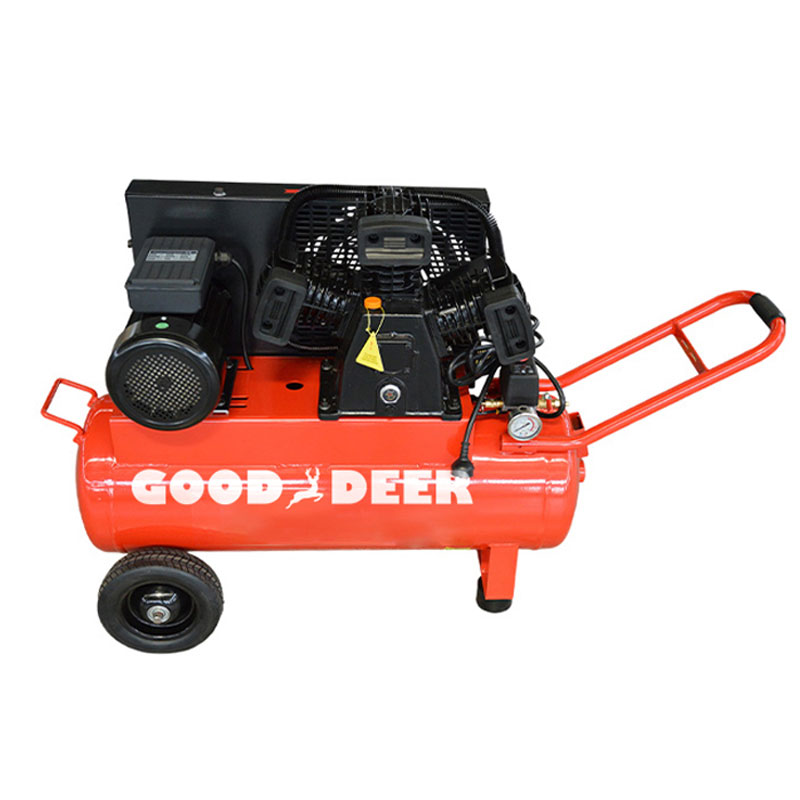
Piston compressors use one or more cylinders and pistons to compress air in stages. They are the most common choice for workshops, small farms, and construction maintenance because they are affordable, simple, and easy to service. For light- to medium-duty tasks in a powered workshop, an electric piston model like our single-phase piston air compressor runs on standard household power and handles typical repair and hobby jobs. If you need continuous operation, look for a heavy-duty industrial three-phase model with a larger tank and longer duty cycle.
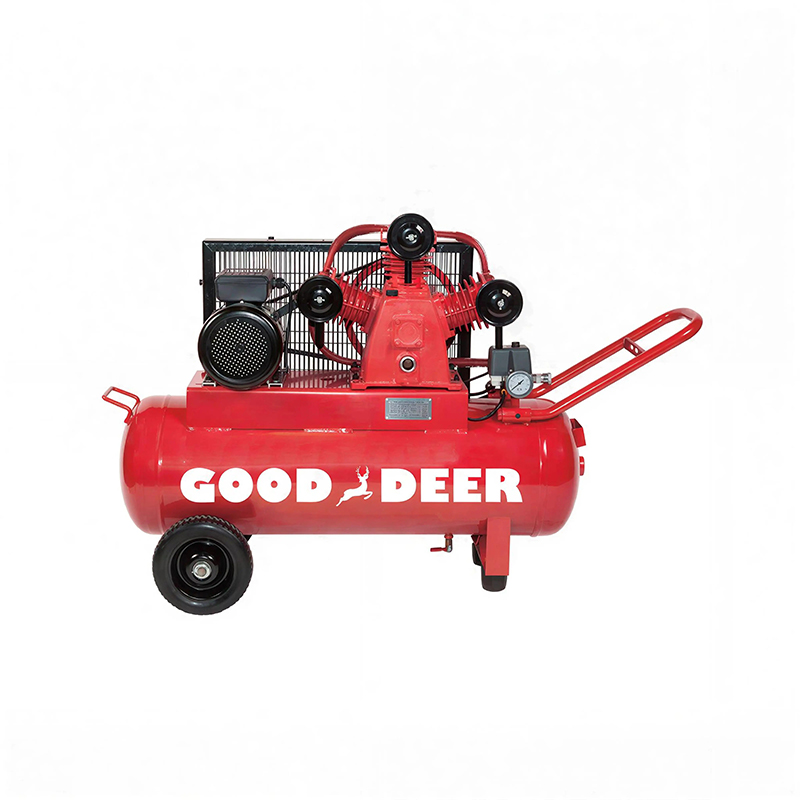 OEM/ODM Single Phase Air Compressor Suppliers, Factory - YANCHENG GOODLARK INTERYANCHENG GOODLARK INTERNATIONAL TRADE CORP.,LTD. is China OEM/ODM Single Phase Air Compressor suppliers and factory, Parameter Type Val...View Product →
Rotary Screw Air Compressors
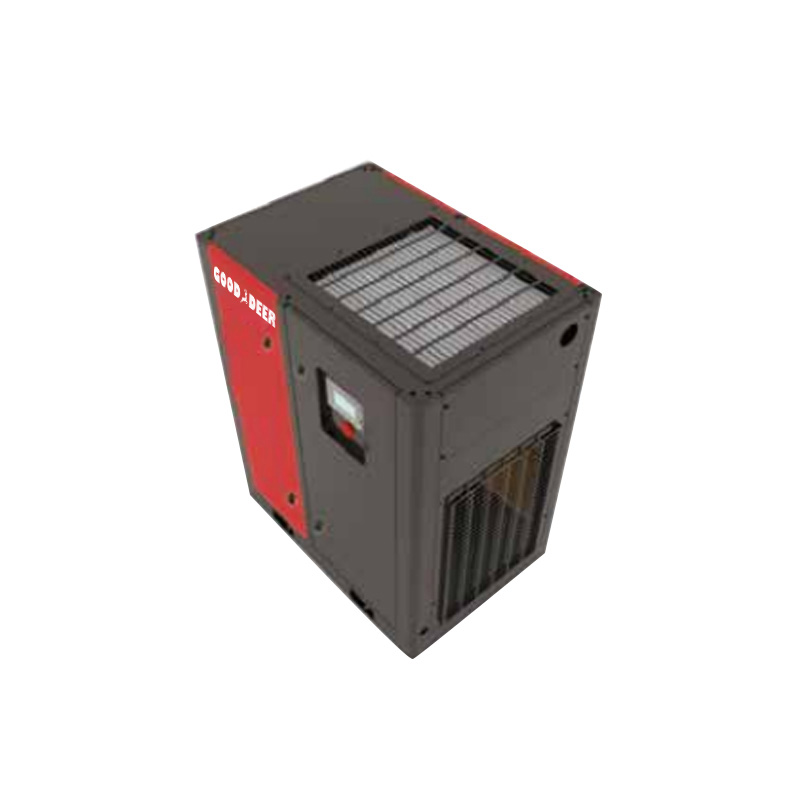
Rotary screw compressors use two interlocking rotors to trap and compress air continuously. They run smoother, cooler, and more quietly than piston units, and they are built for sustained use in manufacturing plants and other high-demand environments. For facilities with fluctuating air demand, a variable-frequency drive rotary screw air compressor adjusts motor speed to match consumption in real time, saving electricity and stabilizing pressure.
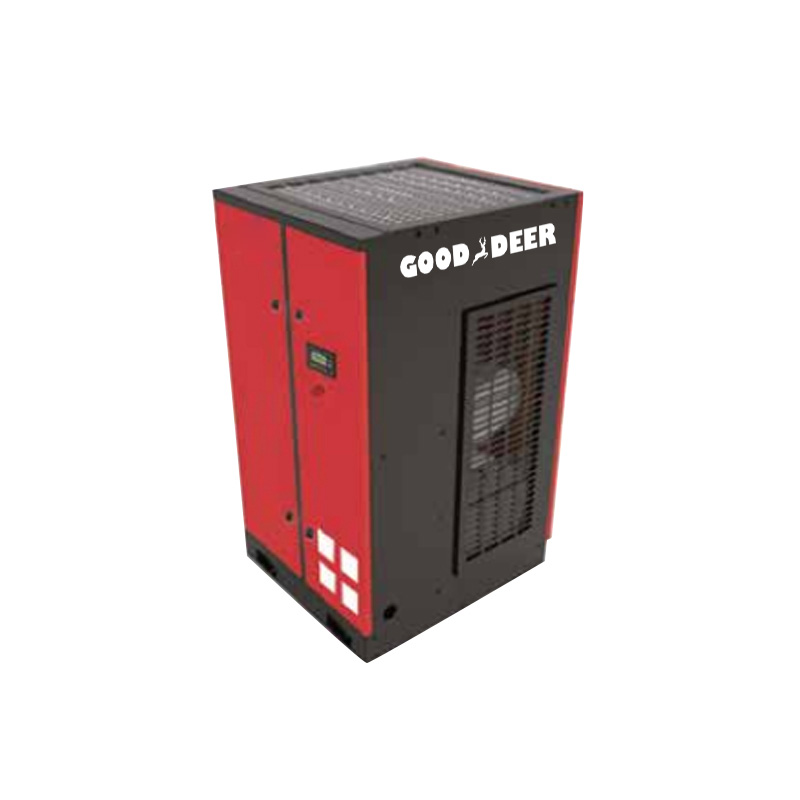 OEM/ODM Variable Frequency Drive Air Compressor Suppliers, Factory - YANCHENG GOYANCHENG GOODLARK INTERNATIONAL TRADE CORP.,LTD. is China OEM/ODM Variable Frequency Drive Air Compressor suppliers and factory, Model ...View Product →
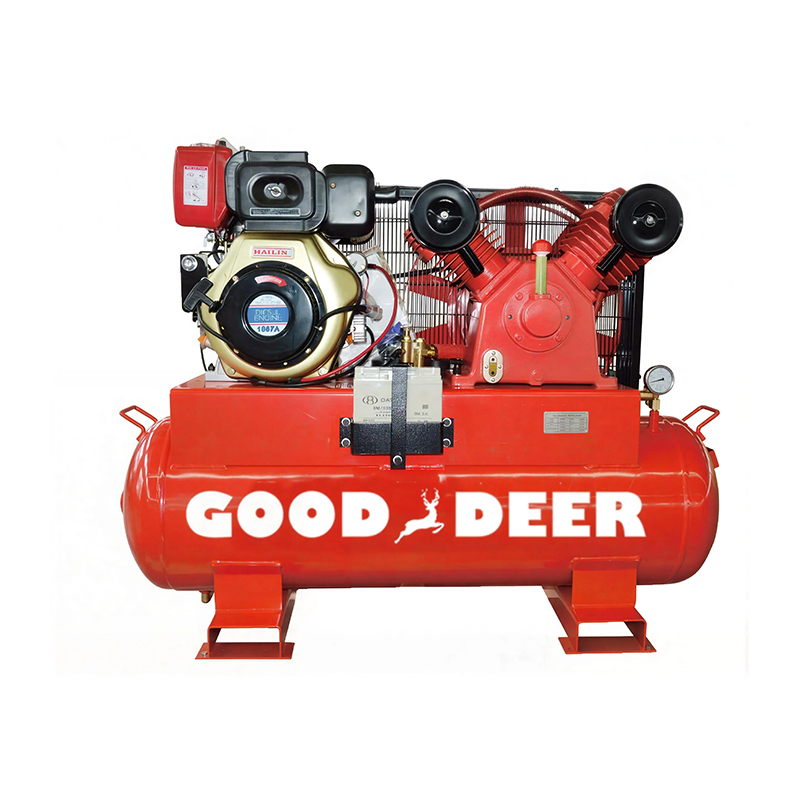
For job sites without power, engine-driven compressors are the answer. A diesel or gasoline piston compressor can operate independently, and some models combine functions. For example, a 3-in-1 diesel double tank air compressor also provides an electrical generator and a welder, making it a compact mobile power station for remote repair and construction crews.
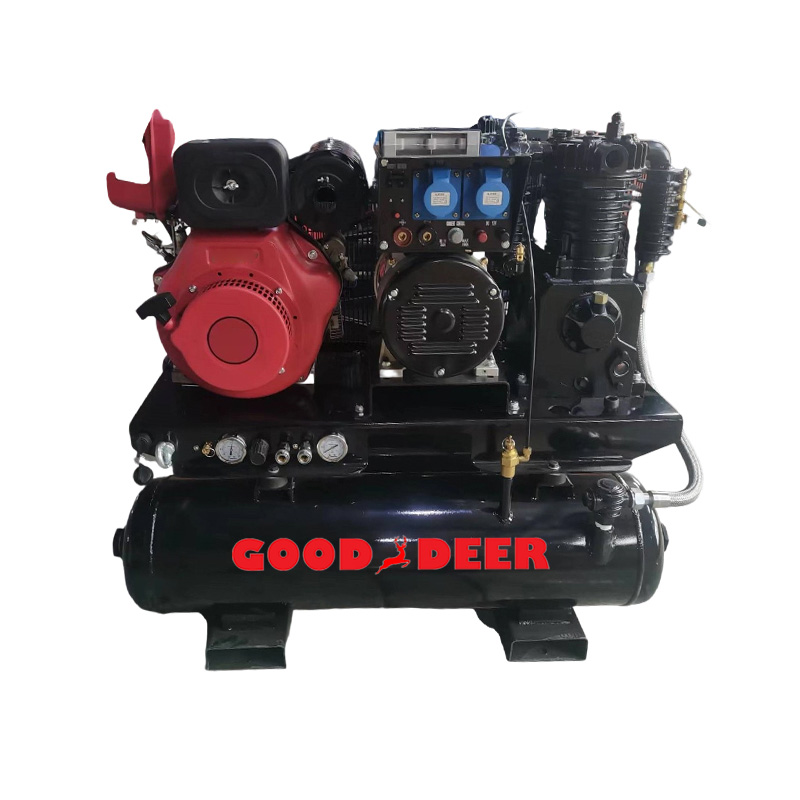 OEM/ODM 3 In 1 Diesel Double Tank Air Compressor Suppliers, Factory - YANCHENG GYANCHENG GOODLARK INTERNATIONAL TRADE CORP.,LTD. is China OEM/ODM 3 In 1 Diesel Double Tank Air Compressor suppliers and factory,View Product →
What an Air Compressor Is Used For Across Industries
Compressed air is versatile because it powers tools that are lighter and often more durable than electric equivalents. Here is a quick overview of common applications.
| Setting | Typical Jobs | Why Compressed Air Helps |
|---|---|---|
| Workshop / garage | Impact wrenches, ratchets, blow guns, spray guns, tire inflation | High power-to-weight ratio; easy to control and maintain |
| Manufacturing | Pneumatic cylinders, actuators, packaging equipment, paint spraying | Reliable, clean power for automated lines; can run multiple tools from one supply |
| Construction | Jackhammers, nail guns, air drills, sandblasting, concrete vibrators | Engine-driven compressors work where grid power is unavailable; rugged and portable |
| Agriculture | Tractor tire inflation, cleaning machines, spraying disinfectants, operating grain equipment | Diesel or gasoline models operate in remote fields; handle harsh conditions |
| HVAC and service vehicles | AC leak testing, brake bleeding, air suspension adjustment | Compact compressors fit in service trucks and provide instant air on site |
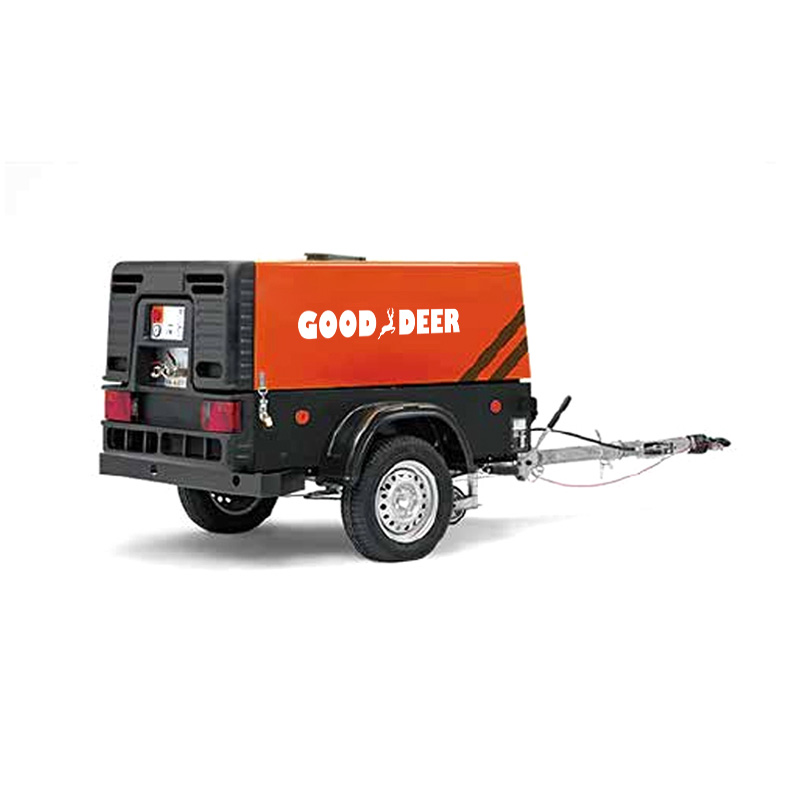
For example, a diesel-driven mobile compressor can run a paving breaker for hours on a highway job, while a compact single-phase model in a home garage can inflate car tires and power a nailer with ease. Moisture is the most common problem in compressed air systems. As air is compressed, its temperature rises, then as it cools in the tank, water vapor condenses. That is why every tank has a drain valve. For painting, instrumentation, or food processing, you will also need a dryer and filter to keep oil and water out of the air stream.
One detail worth noting: automotive air conditioning compressors do something different. They pressurize refrigerant to move heat, not to power tools. When people search “what does an air compressor in a car do,” they are usually asking about the A/C compressor, which is a closed-loop refrigerant pump. This article focuses on the more common type of air compressor that provides pneumatic power for tools and equipment.
How to Choose the Right Air Compressor
Before buying, ask what tools you will run and how long you will run them. The compressor’s job is to meet demand without overheating or short-cycling. Here is a practical checklist:
- Add up the CFM requirements of the tools that might run at the same time, then add a 25–30% safety margin.
- Note the required PSI; most tools operate in the 70–120 PSI range. A regulator lets you set pressure accurately.
- Choose tank size based on duty cycle. For intermittent use, 20–30 gallons is often enough. For continuous blasting or sanding, 60 gallons or more helps.
- Decide on drive type: electric for fixed locations with reliable power; diesel or gasoline for remote sites and mobile crews.
- Check service access: drains, filters, oil, belts, and pressure switch are items you will touch regularly.
If you are still unsure whether piston or screw suits your workflow, our detailed comparison explains piston versus screw compressor differences in more depth. You can also browse our general machinery solutions to see how industrial air systems are configured.
Maintenance Keeps the Compressor Doing Its Job
An air compressor does more than compress air—it also generates heat and moisture. Daily or weekly maintenance is part of the job. Drain water from the tank to prevent rust and protect tools. Replace filters when they clog. Check oil levels in lubricated piston and screw models. Also inspect the safety relief valve monthly, look for cracks in hoses, and clean the intake vent so the machine gets enough fresh air to cool itself.
Whether you need a compact unit for a garage or a heavy-duty screw compressor for a factory floor, the key is to size the machine to the actual work. When you see an air compressor in action, it is easy to understand why compressed air has remained a trusted energy carrier for over a century: it is safe, controllable, and endlessly adaptable.