
 English
 русский
 Español
 عربى
عربى

What Is a Baler Used For? The Core Answer
A hayfield changes quickly once the baler arrives. What was loose, windrowed forage in the morning becomes a line of dense, uniform packages by mid-afternoon. That transformation is what an agricultural baler, commonly called a hay baler, is designed to deliver. The machine picks up cut and raked crops, compresses them under high pressure, and binds them into compact bales that are easier to handle, transport, and store.
Baling exists because loose crop material is inefficient. Loose hay can consume three to five times more storage space than baled hay, stays exposed to rain and humidity, and is awkward to move with ordinary equipment. Compressing the crop cuts the storage footprint, lowers transport costs, limits spoilage, and turns a bulky harvest into a feed resource or a marketable product.
Modern agricultural balers follow the same basic process: a pickup lifts the windrow off the ground, a feeding system carries the material into a compression chamber, a plunger or belt system applies the pressure, and a binding mechanism ties or wraps the finished bale. The operator controls the sequence from the tractor seat, but the baler does the heavy work.
Main Uses of an Agricultural Baler
The basic job is always the same, but the practical uses of a baler vary with the crop and the farming system. The most common applications are:
- Hay-making for livestock feed. This is the most widespread use. Alfalfa, clover, timothy, orchard grass, and mixed meadow hays are baled when their moisture drops to roughly 15 to 20 percent, preserving protein, color, and palatability for cattle, horses, sheep, and goats. Timing is critical: bale too wet and the hay can mold; wait too long and leaves shatter.
- Straw collection after grain harvest. Once wheat, barley, rice, or oats are combined, the straw left in the field can be baled for animal bedding, erosion control, mushroom production, or export. Straw is more abrasive than hay, so wear resistance becomes a priority.
- Silage and balage production. Forage harvested at 40 to 60 percent moisture is baled, wrapped in plastic film, and fermented into a stable, long-lasting feed. This is a flexible alternative to pit or tower silos, especially for beef and dairy farms that want storage options.
- Crop residue management. Corn stalks and other residues can be baled for feed, bedding, or biomass energy. Baling also clears the field faster for the next planting season.
Each application places different demands on the machine. Dry hay needs gentle handling to keep leaves attached; silage needs heavy-duty components that cope with wet material; straw needs resistance to abrasive stems. That is why most farms start by reviewing agricultural machinery matched to local crop conditions, rather than assuming one universal baler fits every job.
What Is a Round Baler Used For?
A round baler produces cylindrical bales, typically 4 to 6 feet in diameter and 4 to 5 feet wide. Bale weights range from about 400 pounds for light dry hay to more than 2,000 pounds for dense silage. The shape is not cosmetic. Round bales shed rainwater effectively, so they can be stored outdoors for months with far less spoilage than square bales. That makes them the standard choice for beef herds and sheep flocks that keep forage outside.
Round bales are also easy to feed. A tractor fitted with a bale spear can lift a bale, carry it to the feeding area, and set it at a bale feeder in a few minutes, which makes the system highly labor-efficient during the winter feeding season.
Round balers for silage and straw
Many farms use a round baler to make silage. Forage is baled at 40 to 60 percent moisture, wrapped in several layers of plastic film, and left to ferment for several weeks. The result is silage that keeps for months and preserves more nutrients than dry hay in many conditions. Straw from rice or wheat can also be baled round, although rice straw is abrasive and heavy enough to wear out standard parts quickly.
If the plan includes regular silage or straw baling, choosing a silage and straw round baler with reinforced components makes more sense than pushing a light-duty machine beyond its limits. Farms that shift to this method often find that one operator can manage the entire harvest with an automatic round baler, which takes over the tying cycle and keeps output consistent.
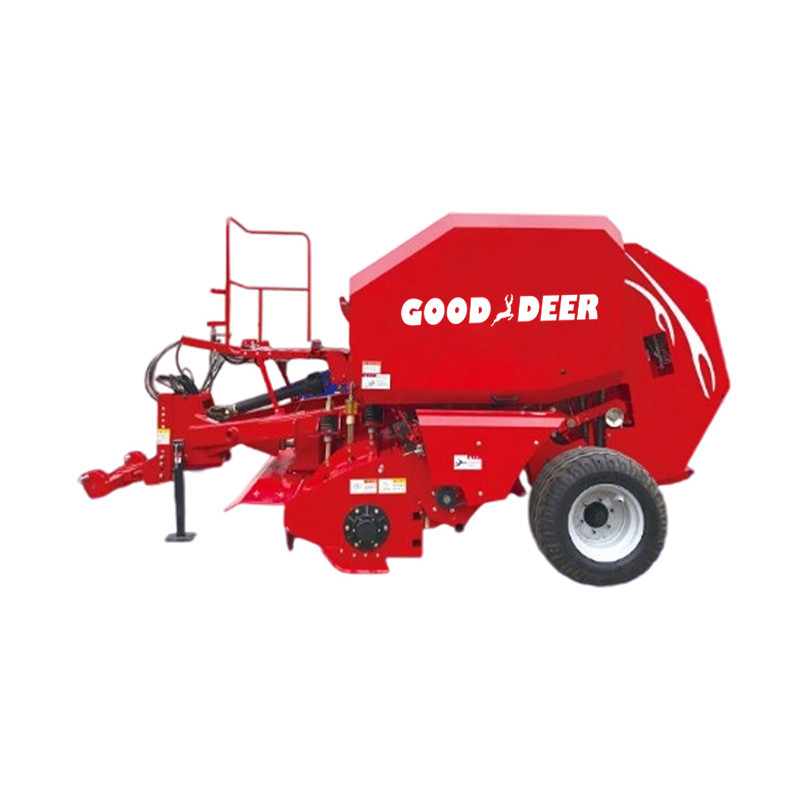 OEM/ODM Silage Straw Round Baler Suppliers, Factory - YANCHENG GOODLARK INTERNATYANCHENG GOODLARK INTERNATIONAL TRADE CORP.,LTD. is China OEM/ODM Silage Straw Round Baler suppliers and factory, Model 9Y-2220Q Min....View Product →
What Is a Square Baler Used For?
Square balers form rectangular bales and serve two very different markets.
Small square balers
Small square balers make bales around 14 by 18 inches in cross-section, typically weighing 40 to 80 pounds. These are the classic bales that can be lifted and stacked by hand. They are common on smaller farms, horse properties, and direct-sale hay operations where bales are sold individually. Their compact size stacks neatly in lofts and barns without specialized handling equipment.
Large square balers
Large square balers produce bales with cross-sections of about 3 by 4 feet and weights of 1,000 to 2,000 pounds or more. Because the rectangular shape packs with almost no wasted space, these bales load efficiently into barns, flatbed trailers, and sea containers. Commercial hay growers, feedlots, and exporters therefore rely on large squares for high-volume production and long-distance transport. A hay, rice straw, and grass square baler of this class handles both soft forage and stiff crop residue in a single pass.
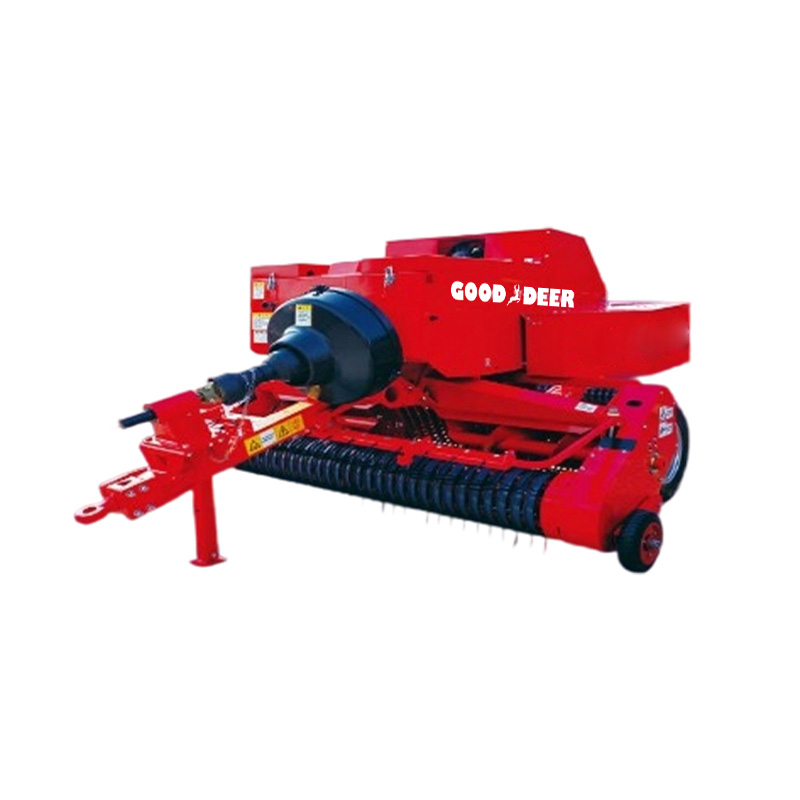 Hay Rice Straw Grass Baler Suppliers, Hay Straw Baler FactoryGooddeer is China hay straw baler suppliers and hay rice straw grass baler factory, we offer OEM/ODM hay rice straw grass baler, offering...View Product →
Round vs Square Baler: Key Differences
Choosing between round and square comes down to how the bales will be fed, stored, transported, and sold. The table below summarizes the practical trade-offs.
| Aspect | Round baler | Square baler |
|---|---|---|
| Bale shape | Cylindrical | Rectangular |
| Typical weight | 400 to 2,000+ lb | 40 to 80 lb (small); 1,000 to 2,000+ lb (large) |
| Storage efficiency | Lower; round bales leave gaps | High; bales pack tightly together |
| Weather resistance | Excellent; sheds rain | Moderate; better in a barn |
| Handling method | Tractor bale spear | Bale fork, grappler, or conveyor |
| Best fit | Livestock feeding, silage | Commercial hay, export, long-distance transport |
For a closer look at specific options, the round and square balers in the Gooddeer product range cover compact grassland machines through high-output residue balers, so the choice can be matched to the actual scale of the operation.
What Else Can a Baler Be Used For?
Beyond hay and straw, agricultural balers handle cotton, flax straw, energy grasses, and shredded crop residue. In recycling and waste management, similar machines compress cardboard, paper, plastic, and scrap metal. The density principle is identical, but industrial balers use different construction and safety systems than farm balers.
When someone asks what a baler is used for, context matters. On a farm, it means forage and residue; in a warehouse, it means recyclables. This article focuses on the agricultural side of that question, because that is where the baler earns its keep as a harvesting tool rather than a waste management device.
How to Choose the Right Agricultural Baler
Five practical factors should guide the purchase decision.
- Crop type and moisture. Dry hay needs gentle handling to preserve leaves; silage needs a heavy-duty baler; straw needs extra resistance to abrasion.
- Bale size. Match bale weight to your loader capacity, barn openings, and feeding system, not to the largest bale on the market.
- Tractor power. Balers run from the tractor PTO, and each model has a minimum power requirement. Large square balers can need 80 horsepower or more.
- Throughput. A custom operator covering thousands of acres per season needs a high-capacity machine; a small farm does not need the same output.
- Transport and market. If hay will be sold off the farm or shipped long distances, large square bales are more economical per ton.
For operations that value consistent bale shape and simpler operation, an automatic grass baler is a practical starting point because it produces uniform bales with automatic tying and requires less experience to run well. Whichever format you choose, inspect the pickup, compression system, and tying mechanism before each season. Baling windows are short, and mechanical downtime is expensive.
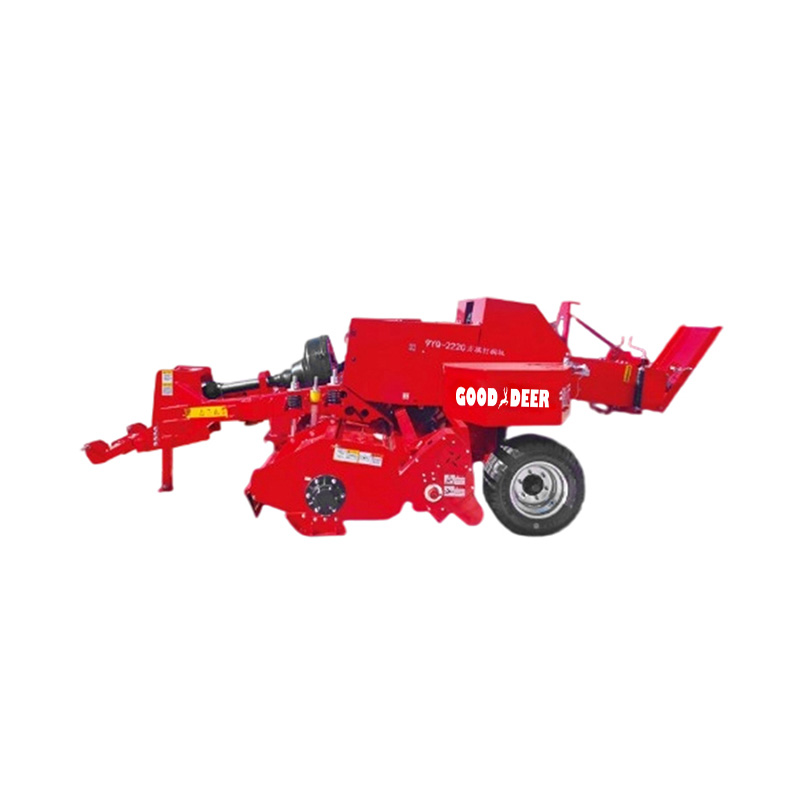 OEM/ODM Automatic Grass Baler Suppliers, Factory - YANCHENG GOODLARK INTERNATIONYANCHENG GOODLARK INTERNATIONAL TRADE CORP.,LTD. is China OEM/ODM Automatic Grass Baler suppliers and factory, Model 9YQ-2220 9YQ-2200A...View Product →