
 English
 русский
 Español
 عربى
عربى

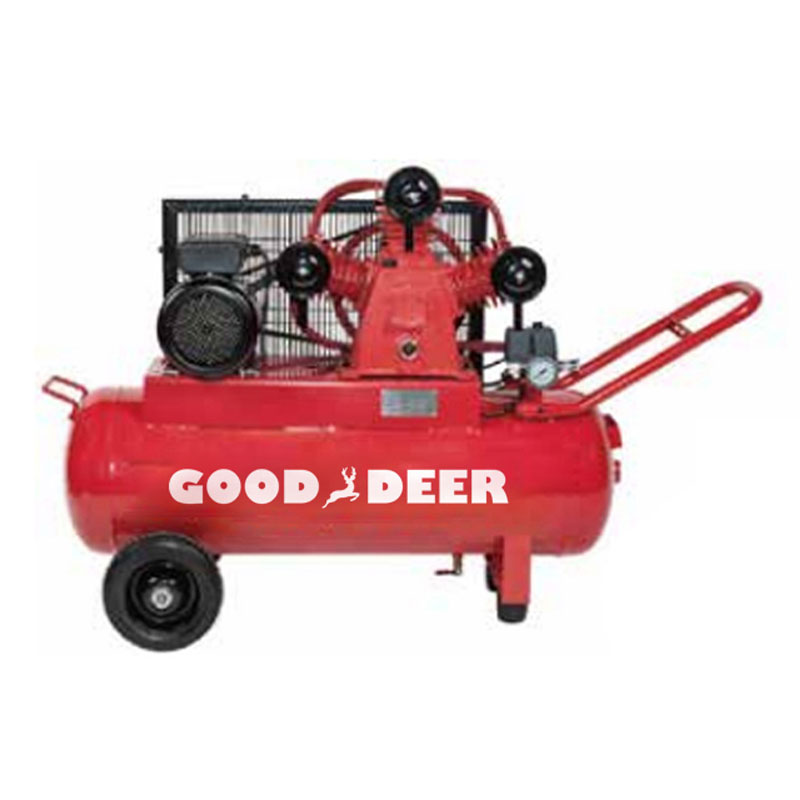
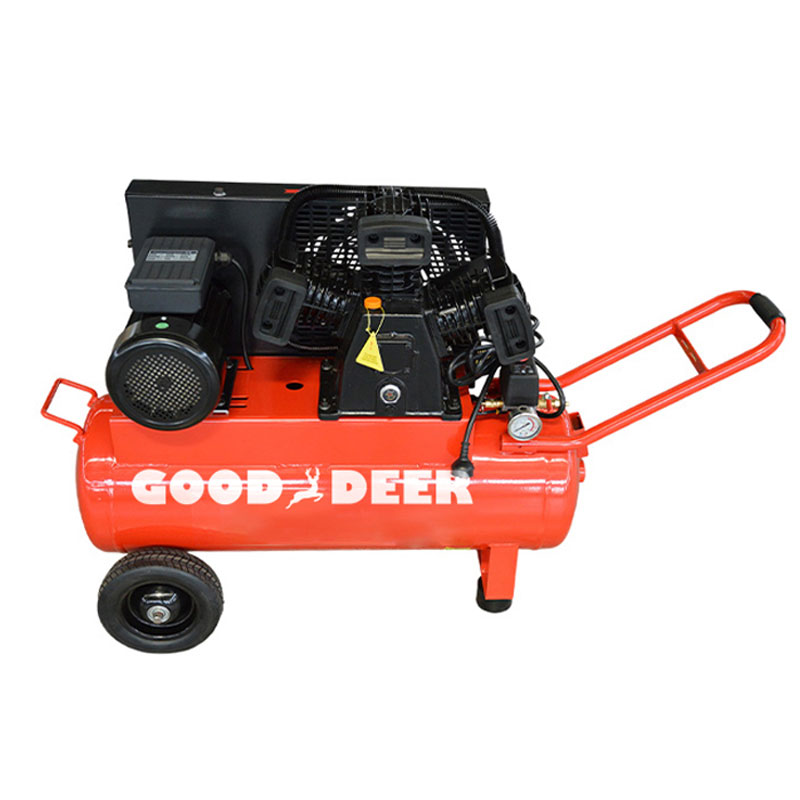
When choosing between a piston air compressor and a screw air compressor, the decision comes down to three core factors: duty cycle, air demand volume, and budget. As a direct answer: piston compressors are the right choice for intermittent, lower-volume applications with a limited upfront budget, while screw air compressors are purpose-built for continuous, high-volume industrial operation where energy efficiency and uptime over years of service justify the higher capital cost. Choosing the wrong type for your application leads to premature failure, excessive energy costs, or chronically undersupplied air — all expensive problems to fix after installation.
How Each Compressor Type Works
How a Piston Air Compressor Works
A piston air compressor — also called a reciprocating compressor — uses one or more pistons driven by a crankshaft to compress air inside a cylinder. As the piston moves down, it draws air in through an intake valve. As it moves back up, it forces air through a discharge valve into a storage tank. This is a fundamentally intermittent, cyclical process: the piston compresses a fixed volume of air per stroke, stores it in a receiver tank, then cycles off when the tank reaches its cut-out pressure.
Piston compressors are available in single-stage configurations (pressures up to 150 psi / ~10 bar) and two-stage configurations (up to 175–200 psi / 12–14 bar), where air is compressed twice with intercooling between stages for higher efficiency at elevated pressures.
How a Screw Air Compressor Works
A rotary screw air compressor uses two meshing helical rotors — one male, one female — that rotate in opposite directions inside a precisely machined housing. As the rotors turn, air is drawn in at one end, trapped in the progressively reducing space between the rotor lobes, and discharged at higher pressure from the other end. This is a continuous compression process with no pulsation and no need for a receiver tank in many applications. Most industrial screw compressors are oil-injected (oil floods the compression chamber to seal clearances, cool the air, and lubricate the rotors), though oil-free variants exist for sensitive applications.
Screw compressors typically operate at 100–200 psi (7–14 bar) for standard industrial use, with specialized high-pressure models reaching 500 psi (35 bar) or more.
Piston vs Screw Compressor: Direct Specification Comparison
| Parameter | Piston Air Compressor | Screw Air Compressor |
|---|---|---|
| Compression method | Reciprocating (intermittent) | Rotary (continuous) |
| Typical duty cycle | 25–75% (model dependent) | 100% continuous |
| Flow rate (FAD) | 0.5–50 CFM (small to medium) | 10–3,000+ CFM (medium to large) |
| Operating pressure | Up to 200 psi (standard); higher with multi-stage | 100–175 psi typical; up to 500 psi specialty |
| Energy efficiency (specific power) | Higher kW per CFM (less efficient at full load) | Lower kW per CFM; VSD models save up to 35% |
| Noise level | 70–90 dB(A) | 60–75 dB(A) |
| Air delivery quality | Pulsating; requires tank and aftercooler | Smooth, consistent; minimal pulsation |
| Upfront cost (10 hp) | $800–$3,000 | $4,000–$12,000 |
| Service life | 5,000–10,000 hours typical | 60,000–100,000 hours with proper maintenance |
| Maintenance complexity | Higher (valves, rings, pistons wear) | Lower (primarily oil, filter, separator changes) |
| Footprint | Compact (with tank); portable options available | Larger; floor-mounted industrial units |
Duty Cycle: The Most Critical Differentiator
Duty cycle is the percentage of time a compressor can run within a given period without overheating or causing premature wear. It is the single most important factor that determines which compressor type belongs in your application — more important than price or brand.
- Consumer-grade piston compressors typically carry a 50% duty cycle — they must rest as long as they run. A compressor rated at 50% duty cycle running 8 hours per day can only actively compress for 4 of those hours.
- Industrial piston compressors (heavy-duty two-stage models) may reach 75% duty cycle, suitable for demanding workshops but still requiring cooling periods.
- Rotary screw compressors operate at 100% duty cycle indefinitely. They are designed for continuous production environments where the compressor runs all day, every day.
Running a 50%-rated piston compressor at 90% duty cycle in a production setting does not just reduce efficiency — it destroys the machine. Overheated cylinder walls, scored pistons, and burned valve plates are the predictable result. This is why any application requiring more than 6–7 hours of daily compressor runtime should default to a screw machine unless there is a compelling reason otherwise.
Energy Efficiency and Operating Cost Over Time
Upfront purchase price is only a fraction of a compressor's total cost of ownership. Energy typically accounts for 70–80% of a compressor's lifetime cost in continuous industrial use, dwarfing maintenance and capital expenditure. This is where screw compressors gain a decisive long-term advantage.
Specific Power: The Efficiency Benchmark
Specific power (kW per 100 CFM of output) is the standard efficiency metric. Modern fixed-speed screw compressors deliver approximately 15–18 kW per 100 CFM, while equivalent piston compressors typically require 20–25 kW per 100 CFM at comparable pressures. At industrial scale, this difference translates to thousands of dollars in annual electricity savings.
Variable Speed Drive (VSD) Screw Compressors
The most significant energy development in compressed air is the VSD (also called variable frequency drive, VFD) screw compressor, which modulates motor speed to match real-time air demand rather than running at fixed speed and unloading when demand drops. In facilities with variable air demand — which describes most manufacturing operations — VSD screw compressors reduce energy consumption by 20–35% versus fixed-speed alternatives. On a 50 hp compressor running 6,000 hours per year at $0.12/kWh, a 30% energy saving represents roughly $8,000–$12,000 per year in reduced electricity cost.
Piston Compressor Efficiency Reality
Piston compressors waste energy during their unload and idle phases. Many consumer and light-industrial models have no unloading mechanism at all — the motor simply stops and restarts, causing high inrush current at every cycle. Frequent starts degrade motor windings and increase electrical demand charges. For intermittent use, this inefficiency is acceptable; for continuous use, it makes the operating economics untenable.
Maintenance Requirements and Long-Term Reliability
Piston Air Compressor Maintenance
Piston compressors have more wear components — valves, piston rings, cylinder walls, connecting rods, and wrist pins all experience mechanical stress with every stroke. Typical maintenance intervals and actions include:
- Every 500 hours: Check and replace intake filter; drain tank moisture; inspect belt tension (belt-drive models).
- Every 1,000 hours: Change compressor oil (lubricated models); inspect valves for carbon buildup or damage.
- Every 2,000–3,000 hours: Valve replacement — a common failure point. Reed valves crack and lose efficiency, causing reduced output pressure and increased power draw.
- Every 5,000–8,000 hours: Full overhaul potentially required — piston rings, cylinder bore inspection, bearing replacement.
Valve failure is the most frequent unplanned maintenance event on piston compressors. A single cracked discharge valve on a two-stage machine can eliminate 30–40% of output capacity while the machine continues running and consuming power — a hidden inefficiency that many operators don't detect until performance problems become acute.
Screw Air Compressor Maintenance
Rotary screw compressors have far fewer wear parts in the compression element itself. The rotor profiles are designed for long-term clearance stability, and the oil injection system handles lubrication and sealing continuously. Standard maintenance for an oil-injected screw compressor includes:
- Every 1,000–2,000 hours: Air/oil separator element replacement; oil filter change; air inlet filter replacement.
- Every 4,000–8,000 hours: Full oil change (synthetic oil extends intervals); cooler inspection and cleaning.
- Every 20,000–40,000 hours: Airend (rotor element) overhaul or replacement — the major capital maintenance event.
The airend overhaul is expensive — $3,000 to $15,000 depending on compressor size — but at 20,000+ hours it represents a far lower maintenance cost per operating hour than the cumulative parts and labor on a piston machine over the same period.
Air Quality Considerations
The quality of compressed air — oil content, moisture, particulates — matters critically in applications like painting, food processing, pharmaceutical manufacturing, electronics assembly, and medical equipment.
- Oil-lubricated piston compressors introduce oil aerosols into the air stream. Residual oil content at the outlet is typically 3–5 ppm without downstream filtration, and higher if rings are worn. Suitable for general shop air and pneumatic tools; not appropriate for painting or food contact without proper filtration.
- Oil-injected screw compressors achieve 2–3 ppm oil carryover with a standard separator element in good condition. With high-efficiency coalescing filters downstream, this can be reduced to 0.01 ppm — suitable for most industrial quality standards.
- Oil-free screw compressors eliminate oil from the compression chamber entirely, delivering Class 0 air per ISO 8573-1 — the standard required in semiconductor fabs, food and beverage bottling lines, and pharmaceutical cleanrooms. These units cost 40–80% more than equivalent oil-injected models and require more intensive maintenance of their dry rotor coatings.
- Oil-free piston compressors (PTFE-coated rings, no lubrication in cylinder) provide oil-free air at lower flow rates and are common in dental, laboratory, and small medical applications.
Which Applications Suit Each Compressor Type
| Application | Recommended Type | Reason |
|---|---|---|
| Home garage / DIY workshop | Piston | Low duty cycle; low volume; low cost justified |
| Auto body repair shop | Piston (small shop) / Screw (busy shop) | Depends on number of bays and hours of air use |
| Tire shop / service center | Screw | High cycle count; continuous demand from multiple bays |
| Manufacturing / assembly line | Screw | 100% duty cycle; consistent pressure critical |
| Sandblasting / abrasive work | Screw or heavy-duty piston | High CFM demand; piston viable if runtime is limited |
| Food & beverage production | Oil-free screw | ISO 8573 Class 0 air required; continuous duty |
| Dental office | Oil-free piston or oil-free scroll | Low flow, oil-free air; intermittent demand |
| Construction site (portable) | Piston (portable diesel or electric) | Portability essential; intermittent tool use |
| High-pressure applications (>200 psi) | Multi-stage piston | Multi-stage piston can reach 3,000–6,000 psi for PET blow molding, breathing air |
Total Cost of Ownership: A 10-Year Example
To make the financial comparison concrete, consider a 10 hp compressor running 2,000 hours per year for 10 years at an electricity cost of $0.12/kWh:
| Cost Category | Piston Compressor | Screw Compressor (Fixed Speed) | Screw Compressor (VSD) |
|---|---|---|---|
| Purchase price | $2,000 | $7,500 | $11,000 |
| 10-year energy cost | ~$26,400 | ~$21,600 | ~$15,600 |
| 10-year maintenance | ~$6,000 (valves, rings, rebuilds) | ~$4,500 (oils, filters, separator) | ~$5,000 (oils, filters, VSD service) |
| 10-year total cost | ~$34,400 | ~$33,600 | ~$31,600 |
The data illustrates a counterintuitive reality: at even moderate run hours, the piston compressor's lower purchase price is entirely offset by higher energy and maintenance costs within 3–5 years. At higher run hours (4,000–6,000 hours per year, typical in shift manufacturing), the gap widens dramatically in favor of the screw compressor.
Sizing Your Compressor Correctly
Undersizing a compressor — whether piston or screw — is as damaging as selecting the wrong type. These steps ensure correct sizing:
- Calculate total air demand (CFM). List every pneumatic tool and process, note its CFM consumption and usage factor (how much of the time it actually runs), and sum the simultaneous demand. Add a 25–30% safety margin for future expansion and system leaks (leakage in typical industrial systems accounts for 20–30% of compressed air production).
- Determine required pressure. Size for the highest-pressure requirement in your system. Every 2 psi of excess pressure above what is needed costs approximately 1% in energy. Avoid oversizing pressure just for comfort.
- Assess duty cycle. If total air demand calculations show the compressor will need to run more than 70% of the time, move up one size or switch to a screw compressor.
- Account for altitude. At elevations above 1,000 m (3,300 ft), air density decreases and compressor output (CFM) drops proportionally. A compressor delivering 100 CFM at sea level may deliver only 85–90 CFM at 1,500 m.
- Include downstream treatment in the system design. Dryers (refrigerated or desiccant), filters, and drain traps must be sized to match the compressor's output, not added as afterthoughts. An undersized dryer on a correctly sized compressor leaves you with wet air — a frequent and costly oversight.
When a Piston Compressor Is Still the Right Answer
Despite the long-term efficiency advantages of screw compressors, piston machines remain the correct choice in several well-defined situations:
- Very high pressure requirements (>200 psi): Multi-stage piston compressors can reach 3,000–6,000 psi for breathing air filling stations, PET bottle blowing, and hydraulic accumulator charging — pressures that standard industrial screw compressors cannot achieve.
- Portable and remote site use: Diesel-powered portable piston compressors remain the standard for construction, well drilling, and remote pipeline work where facility infrastructure doesn't exist.
- Genuine intermittent use (under 4 hours per day): A small workshop that uses air for 30–60 minutes per day does not need a screw compressor. A quality 60-gallon two-stage piston machine will serve reliably for decades under these conditions.
- Extremely limited capital budgets: When capital is genuinely constrained and operating conditions are within duty cycle limits, a piston compressor can bridge the gap — provided the operator understands and respects its duty cycle rating.