
 English
 русский
 Español
 عربى

Almost everyone who asks this question is standing in front of a real job: a garden bed that needs reshaping, a drainage trench that needs cutting, a shed pad that needs levelling. The honest answer is that a mini excavator is not hard to operate, but it is unfamiliar, and unfamiliar things easily feel hard. Give yourself a few focused hours on soft, open ground and the machine stops feeling like a puzzle and starts feeling like a tool.
The Honest Answer: Awkward at First, Natural Within a Day
Operating a mini excavator is really four simple motions combined: swinging the upper house left or right, raising or lowering the boom, extending or retracting the dipper arm, and curling or dumping the bucket. Not one of those motions is difficult on its own. The skill lies in doing them together, smoothly, without stopping to think about which hand does what.
Compared with driving a car, a mini excavator asks more of you. You are using two hands and two feet on separate controls at the same time, and the machine moves in ways a car never does. Compared with any other earthmoving machine, though, a mini excavator is one of the most forgiving platforms you can learn on. It is small, light, slow, and it lets you see exactly what the bucket is doing. Most first-time operators can dig a usable trench within their first hour. The difference between hour one and hour ten is smoothness, not ability. If you can pat your head and rub your belly, you already have the coordination for this.
What Actually Feels Hard in the First Hour
When beginners say it is hard, they are usually describing one of these five things rather than the machine itself:
- Two-hand coordination: the left joystick runs the swing and the arm, the right runs the boom and the bucket, and neither hand does what the other is doing.
- Track steering: the travel levers or pedals move the machine, and on many models the tracks react in reverse when the house is turned around.
- Depth judgement: it is surprisingly difficult to know how deep the bucket is until you climb out and look.
- Smoothness: new operators work in jerks, and jerky digging is what spills spoil and digs a ragged trench.
- Balance awareness: the machine tips forward as you reach out, and you must feel that before it happens rather than after.
Every item on that list fades with repetition. None of them require talent, only time on the seat.
What Makes the Learning Curve Steeper or Gentler
Difficulty is rarely about the operator alone. The machine, the ground and the task set most of the challenge, and it helps to know which variable you can control.
| Factor | Gentler | Steeper |
|---|---|---|
| Ground condition | Soft loam, sand, loose topsoil | Hard clay, compacted gravel, rock, roots |
| Machine size | 1 to 2 tonne class, narrow tail swing | 3 tonne plus, wide body, tight clearance |
| Control layout | One familiar pattern, well labelled levers | Unfamiliar pattern, worn or vague linkages |
| Worksite space | Open field, no obstacles overhead | Fenced garden, utility lines, walls nearby |
| Task type | Backfilling, spreading, rough levelling | Fine grading, precision trenching, demolition |
| Hydraulics | Proportional, progressive response | On-off feel with abrupt pressure spikes |
A Realistic Timeline for a Complete Beginner
Every operator is different, but the general shape of the curve is remarkably consistent:
- First 15 minutes: you learn which lever does what, and everything feels clumsy.
- First hour: you can dig and dump soil in a straight line, slowly, with a few jerks.
- First afternoon: travel and digging feel separate instead of simultaneous, and you stop looking at the joysticks.
- First week of regular use: trench edges look tidy, you can backfill and grade without leaving the cab.
- First month: you are working around obstacles, feathering the controls, and judging depth by feel.
The jump from hour one to hour five is far bigger than the jump from hour five to hour fifty. Most of the difficulty is front-loaded and then disappears.
The Controls, Explained in Plain Language
Left Joystick
Push it forward or back and the dipper arm extends or retracts. Move it left or right and the whole upper house swings. This hand does the most work during a dig cycle, so it is usually the one that feels clumsy first.
Right Joystick
Forward and back raises and lowers the boom; left and right curls and dumps the bucket. Coordinating the boom with the bucket curl is what produces a clean, flat cut rather than a scoop-shaped hole.
Travel Levers or Pedals and the Dozer Blade
Two travel controls move the tracks, and pushing both forward drives you ahead. On a compact machine, the dozer blade at the front is your friend: drop it to stabilise the machine while digging, then use it to push and level soil when you are finished. If your machine has an offset boom or boom swing pedal, that is what lets you dig beside a wall without repositioning the tracks.
A Simple First-Day Routine That Works
- Walk around the machine cold and check tracks, hoses, pins, fluid levels and greasing points.
- Start it, let it idle and warm up, and confirm the pattern selector matches what you expect.
- Practise raising, lowering, extending and curling for five minutes without digging anything.
- Travel forward and backward for another five minutes until the track response stops surprising you.
- Dig a shallow trench on soft ground, keeping the bucket flat and the machine square to the line.
- Backfill that same trench and level it, which teaches grading faster than any other drill.
- Shut down on level ground, lower the bucket, and clean the tracks before you park it.
Mistakes That Make It Feel Harder Than It Is
- Using swing force to break ground instead of pulling with the arm and bucket.
- Driving the bucket into the ground with the tracks rather than the boom.
- Working with the machine on uneven ground, which makes every movement unpredictable.
- Fighting hard clay with a narrow bucket when a wider one would cut it more cleanly.
- Skipping the warm-up on a cold engine, which makes the hydraulics feel stiff and jumpy.
- Trying to be precise on day one. Rough work first, precision later.
Picking a Machine That Is Easy to Learn On
Some compact excavators are simply kinder to beginners than others. A machine with a short tail swing lets you work next to walls and fences without constantly checking what is behind you, which removes a large share of the mental load in a small garden. Machines in the one to two tonne class are also light enough that a mistake rarely costs more than a scuffed patch of grass.
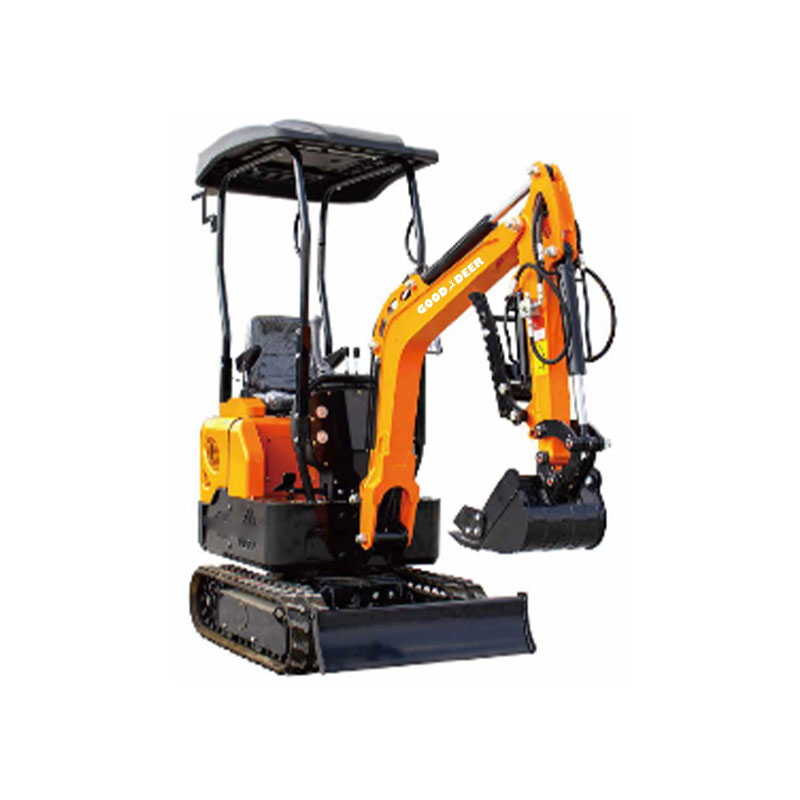
 HT-10C Compact Crawler Mini ExcavatorA 1-tonne HT-10C mini excavator for small earthwork, with 0.025 cbm bucket and KOOP 192F engine; a compact option for residential or rural digging.View Product →
If your work is mostly residential, a compact crawler model with proportional hydraulics and a well-labelled joystick layout is the easiest place to start. If access is tight, a tailless or zero-tail-swing machine is worth the extra cost, because it turns a difficult manoeuvring problem into a simple one.
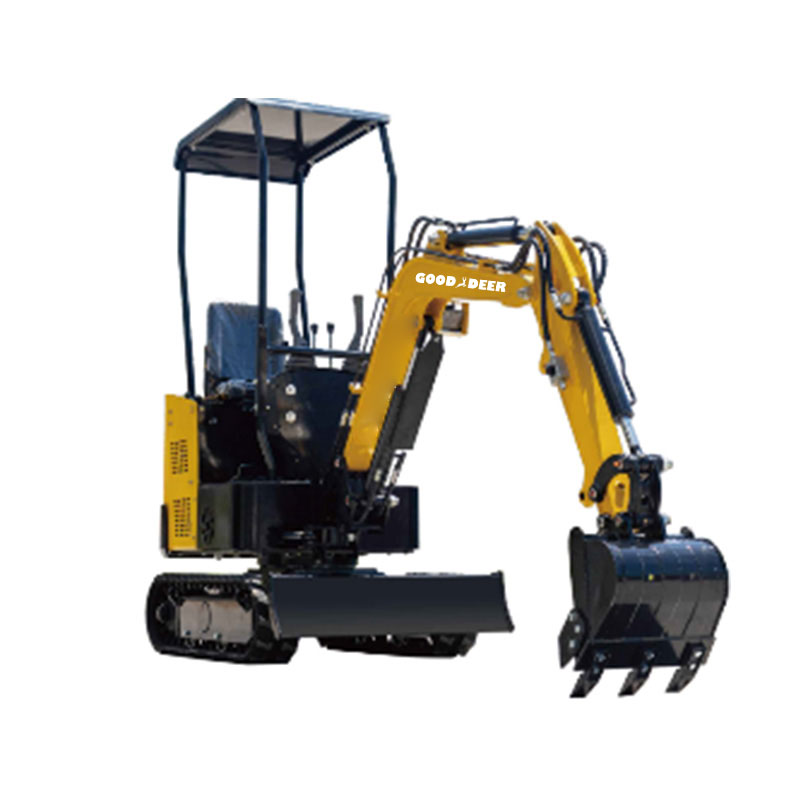
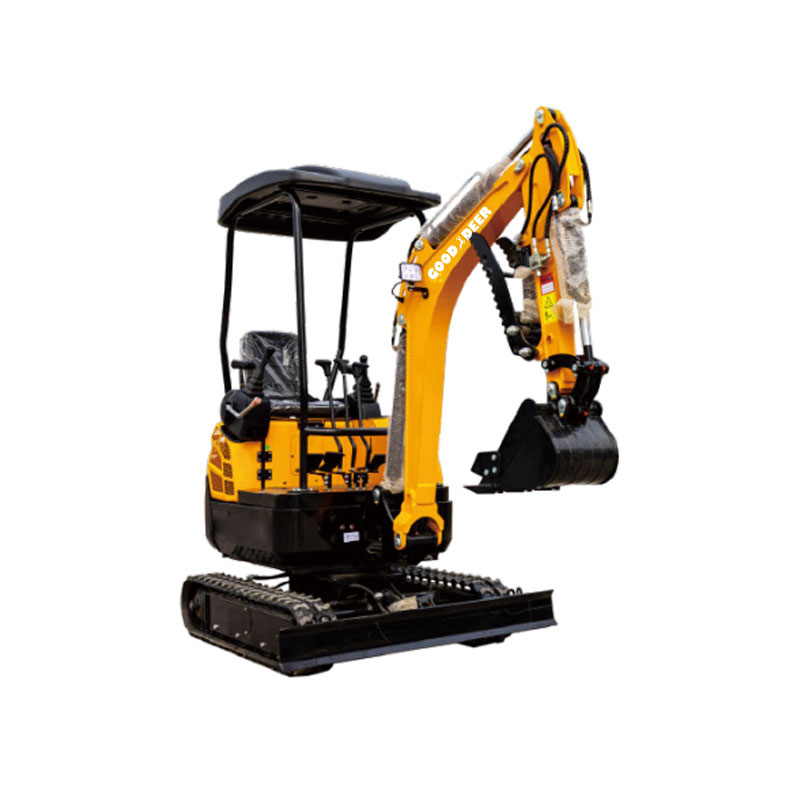 Tailless Slewing Crawler Mini Excavator HT18-1A 1.8-tonne tailless mini excavator for narrow sites, with 0.03 m³ bucket and Kubota or KOOP engine; its swing keeps the tail within track width.View Product →
For gardens, smallholdings and landscaping work, a lighter garden-class machine with a dozer blade gives you the digging you need plus a levelling tool that keeps you from doing everything by hand at the end. The same logic applies across many of the small construction projects we see customers take on, where a compact machine does the work of a crew of three.
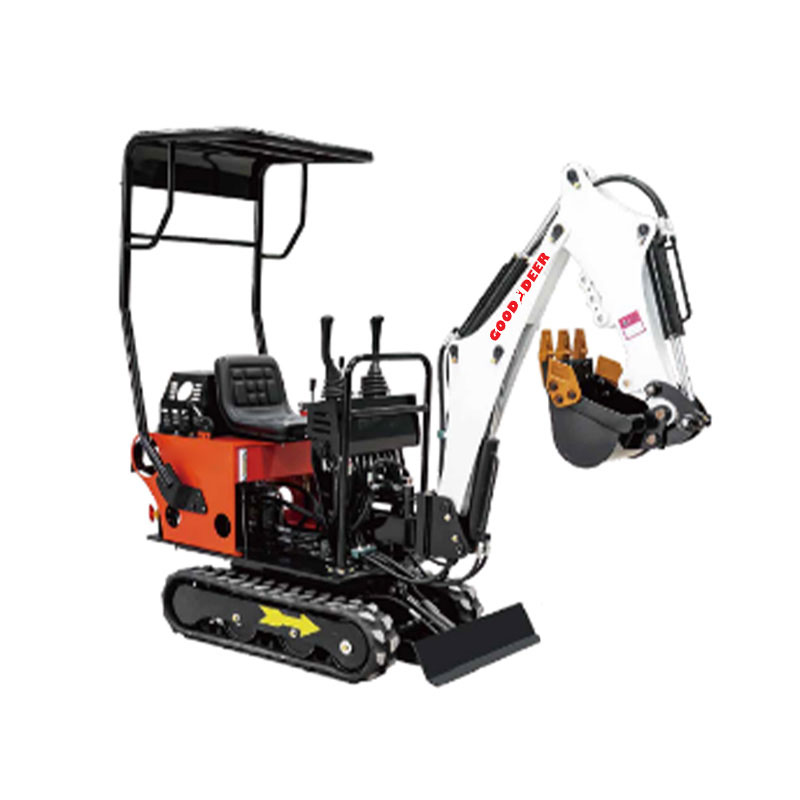
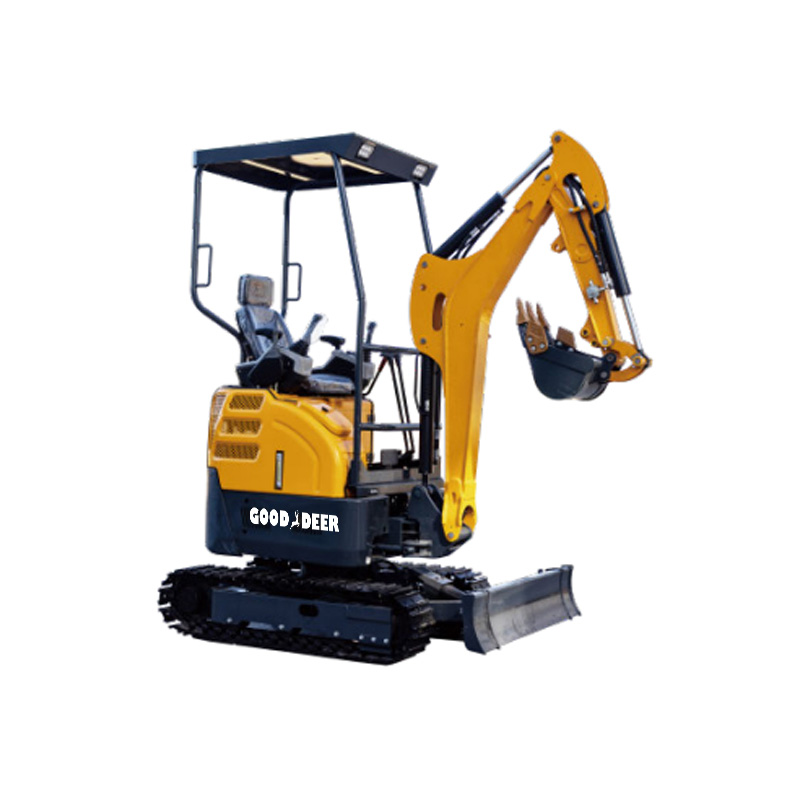 HT22 Compact Garden Mini ExcavatorA 2.17-tonne garden excavator for landscaping and small construction, with 0.056 m³ bucket and KUBOTA D1105 engine; suits narrow green belts and urban parks.View Product →
Safety and Paperwork Worth Checking
Learning difficulty is one question; legal permission is another. On private property, many regions do not require a licence for a mini excavator, but public roads, commercial sites and utility corridors usually have their own rules. Before you dig anywhere, call your local utility locating service and mark any buried lines, because the most expensive mistake in this trade is not a ragged trench. Keep the load low while travelling, never swing over people, and wear the seatbelt even at walking pace; tip-overs on slopes happen slowly and then all at once.
Final Thoughts
So, how hard is it to operate a mini excavator? For most people it is a day of awkwardness followed by years of useful work. The machine is patient, the controls are logical, and the learning curve flattens quickly. Start on soft ground with an easy task, accept a few clumsy scoops, and you will be surprised how soon the movements stop being decisions and start being habit. If you would like a more detailed sequence to follow, our walkthrough on running a mini excavator step by step takes the same first day and breaks it into smaller pieces you can practise one at a time.