
 English
 русский
 Español
 عربى

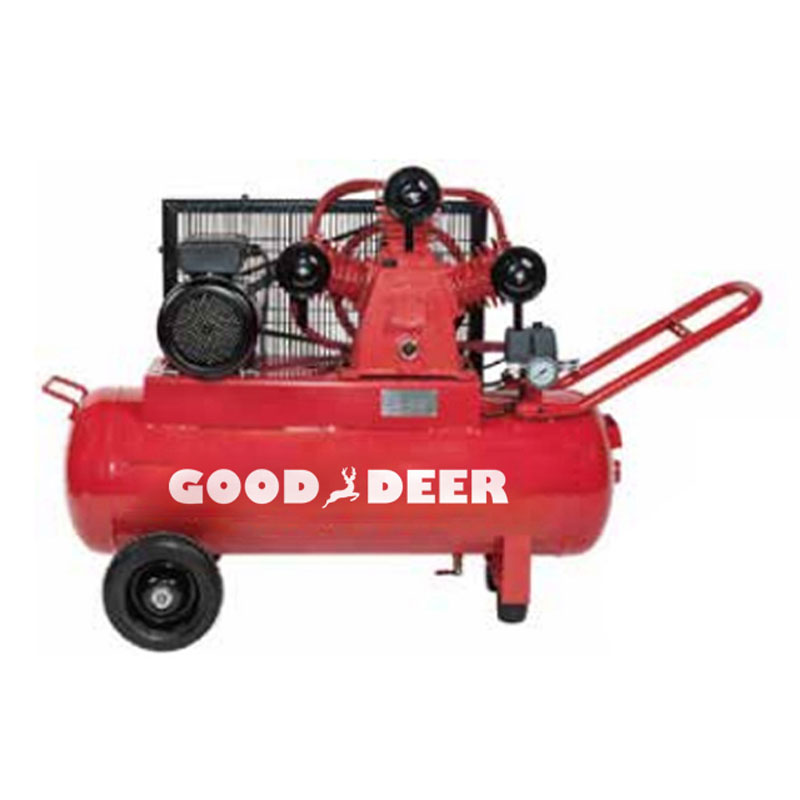
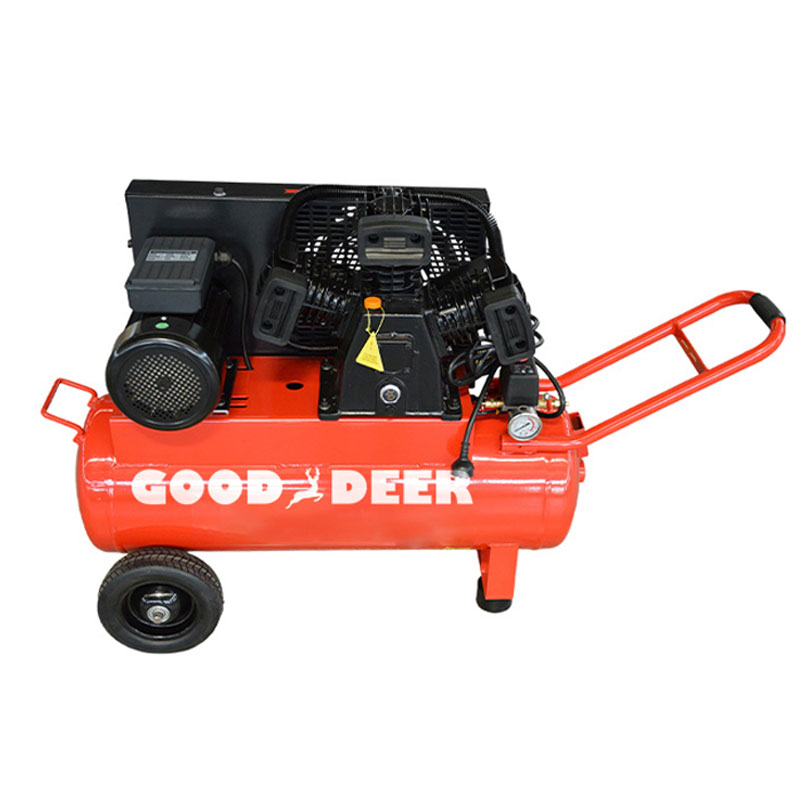
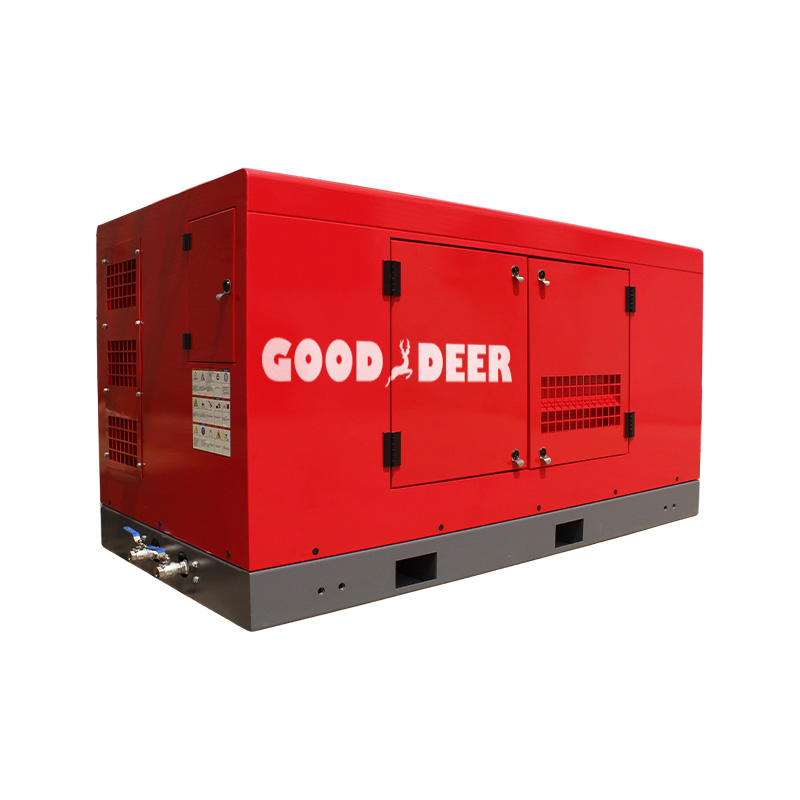
Every air compressor has a heart, and in most machines that heart is the motor. The motor supplies the rotating power that drives the pump, and the pump does the actual compression. If you have ever wondered how a compressor motor works, this guide is for you. We will look at electric motors, starting systems, single-phase and three-phase power, and the maintenance that keeps a compressor going. At Gooddeer, we build piston and screw compressors in our own factory in Yancheng, so these are the details we check on every unit before it ships.
If you are ready to think about applications, our general machinery section can help you match a machine to a factory or workshop layout.
What Does the Compressor Motor Actually Do?
The motor is not the compressor. The compressor is the pump. The motor's job is to convert electrical energy into mechanical torque. That torque rotates a shaft. In a belt-driven piston compressor, the motor shaft carries a small pulley that turns a larger flywheel on the pump. This lowers pump speed and gives the pump a mechanical advantage. In a direct-drive design, the motor shaft connects straight to the pump rotor. Either way, the motor sets the power ceiling.
If the motor is too small, it will struggle, trip overloads, and overheat. If the motor is too large, you pay for capacity you do not use. That is why motor selection is a real engineering decision, not just a horsepower number.
How an Electric Motor Works Step by Step
Most stationary compressors use an AC induction motor. It has two main parts: the stator and the rotor. The stator is the stationary outer part with copper windings. When alternating current passes through the windings, it creates a rotating magnetic field. The rotor sits inside that field. The rotating field induces a current in the rotor, and the rotor begins to turn. Because the rotor is mounted on the output shaft, the shaft spins the pump.
Single-phase motors need help to start. In a single-phase supply, the magnetic field does not rotate by itself at standstill. A start capacitor creates a temporary phase shift so the motor develops enough starting torque. Once the motor reaches about 75 percent of full speed, a centrifugal switch disconnects the start capacitor. A run capacitor may remain in the circuit to improve power factor and smooth operation.
Starting, Running, and Protecting the Motor
The motor is not supposed to run without control. A pressure switch controls the cycle. When tank pressure reaches the cut-out setting, the switch opens and stops the motor. When pressure drops to the cut-in setting, the switch closes and restarts the motor. This is why compressor motors cycle on and off during normal use.
Thermal protection is also essential. A thermal overload protector monitors current and heat. If the motor gets too hot or draws excessive current, it disconnects the circuit until the motor cools. The key electrical parts include:
- Start capacitor, for extra starting torque.
- Run capacitor, for efficiency and stable running.
- Centrifugal switch, to disconnect the start capacitor at speed.
- Thermal overload protector, to guard against overheating.
- Pressure switch, to cycle the motor based on tank pressure.
When a compressor hums but will not start, these components are usually the first place to look.
Single-Phase vs. Three-Phase Compressor Motors
One of the first decisions is the power supply. Single-phase motors are common in home garages, small workshops, and light commercial sites because they can run from a standard outlet. Three-phase motors are common in industrial plants where three-phase wiring is available. The table below summarizes the difference.
| Feature | Single-Phase Motor | Three-Phase Motor |
|---|---|---|
| Power supply | Standard single-phase outlet | Industrial three-phase supply |
| Common size range | Up to about 5-7.5 hp | Higher horsepower available |
| Starting torque | Lower, capacitor-assisted | Higher and more uniform |
| Efficiency | Good for intermittent duty | Better for continuous duty |
| Typical use | Garage, repair shop, small jobs | Factory, production line, heavy cycles |
For a workshop with single-phase power, a dependable piston compressor is often the best first machine.
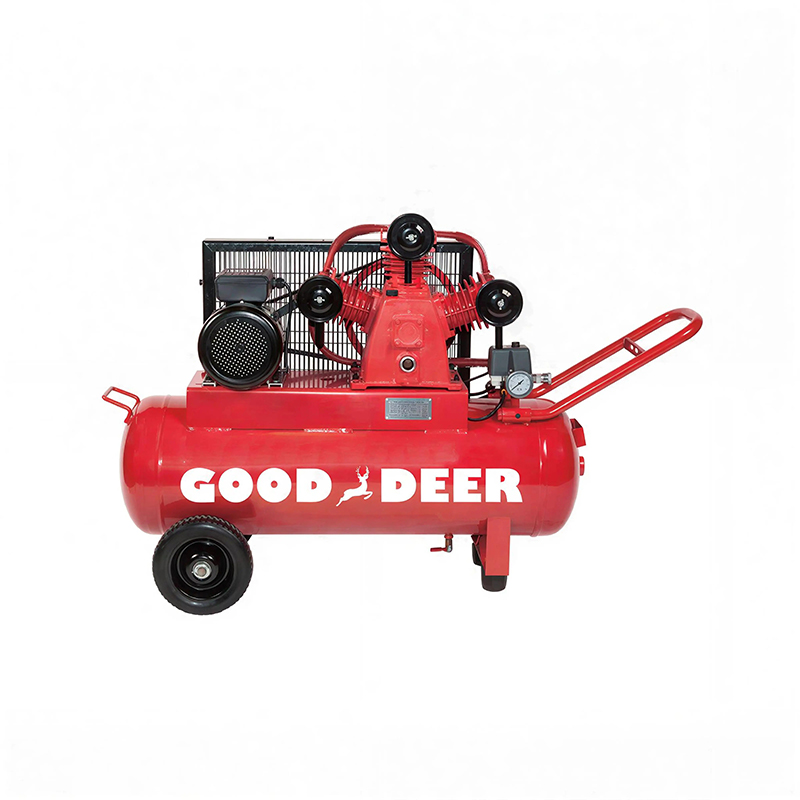 Single-Phase Piston Air Compressor for WorkshopsThis compressor suits single-phase power workshops. Its piston mechanism delivers pulsed compression, so the motor needs good starting torque and a flywheel for stable operation in light-duty tasks.View Product →
How Piston and Screw Pumps Affect the Motor
The pump type changes the way the motor delivers power. In a piston compressor, compression happens in pulses. On the compression stroke, the motor works hard. On the return stroke, the load drops. That is why piston compressors use flywheels and why starting torque matters. In a rotary screw compressor, two rotors trap air and compress it continuously. The load is much smoother. The motor can run at a steadier speed, and the pump can be direct-driven. Fewer moving parts also means less maintenance.
For continuous industrial use, a direct-drive screw compressor offers a lower total cost of ownership because there is no belt to replace and no pulley alignment to check.
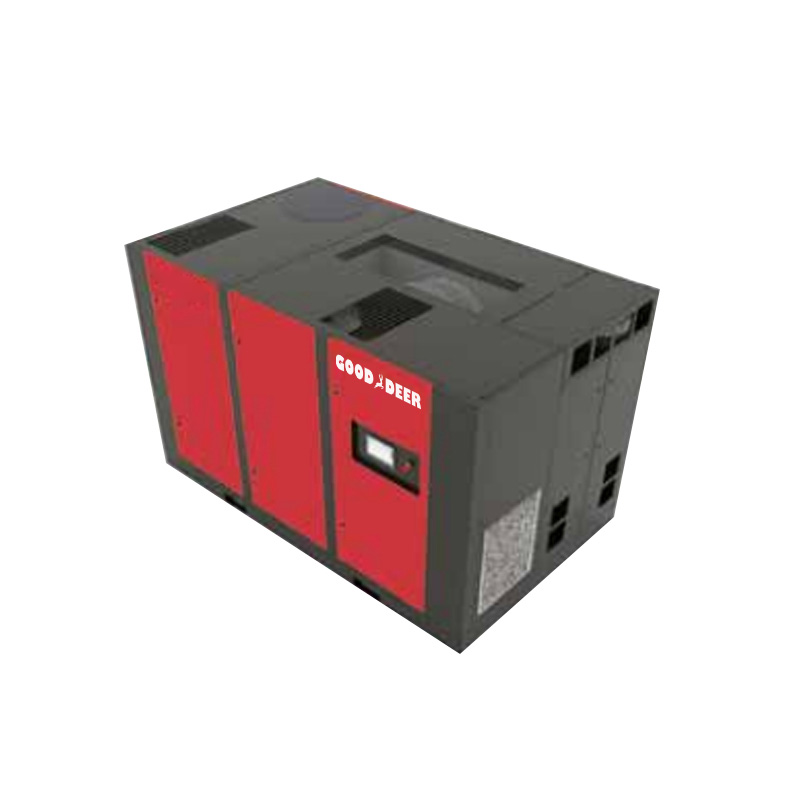 Direct-Drive Rotary Screw Air CompressorThis direct-drive screw compressor eliminates belts and couplings, reducing energy loss and maintenance. Smooth continuous compression suits industrial use and pairs well with variable speed control for fluctuating demand.View Product →
Variable Frequency Drive and Motor Speed
Not every compressor motor has to run at one fixed speed. A variable frequency drive, or VFD, changes the frequency and voltage supplied to the motor. Lower frequency means slower motor speed and lower air output. Higher frequency means faster motor speed and more output. When air demand is low, the VFD slows the motor down instead of repeatedly starting and stopping it. When demand rises, the motor speeds up smoothly. This reduces electrical stress, keeps pressure stable, and saves energy in shops with variable compressed air use.
VFD screw compressors are especially useful in production environments where the air demand changes during the day.
 Variable Frequency Inverter Rotary Screw CompressorThis inverter-driven screw compressor adjusts motor speed to match air demand, saving energy and stabilizing pressure. Its precision-coated rotors run smoothly, making it ideal for production lines with changing loads.View Product →
Motor Maintenance and Troubleshooting
A compressor motor can last for years if it is treated well. Keep the motor vents free of dust, because dust traps heat. Check the supply voltage and make sure the motor is wired for the correct phase. Listen for bearing noise or unusual vibration. On belt-driven units, check belt tension and alignment. If a single-phase motor trips its overload again and again, suspect the start capacitor before replacing the motor. If a three-phase motor runs hot, check the supply voltage balance and the pump load.
For engine-driven compressors, the same basic idea applies, but the prime mover is a gasoline or diesel engine. Fuel supply, air filters, oil, and cooling systems need attention instead of capacitors. Gooddeer offers both electric-driven and engine-driven piston and screw compressors for sites without a reliable electrical grid.
Choosing the Right Compressor Motor
The right motor depends on the power supply, the duty cycle, and the amount of air you need over a typical day. Duty cycle matters especially. A motor rated for continuous duty can run with only normal on/off cycling throughout a shift. An intermittent-duty motor is designed for shorter runs. If you need compressed air for long periods, choose a continuous-duty unit. And remember that motor horsepower is not the same as output airflow. The output in CFM depends on the pump, motor speed, and operating pressure.
If you are still comparing pump technologies, our detailed piston vs. screw comparison may help you decide which motor-load profile fits your work.
The compressor motor is not just a box that spins a shaft. It is the system that converts electrical power into reliable compressed air. The next time you hear a compressor start, think about the sequence: the pressure switch closes, the motor spins up, the pump builds pressure, and the cycle repeats. Understanding that sequence helps you buy the right machine, run it safely, and fix problems before they stop production.