
 English
 русский
 Español
 عربى
عربى

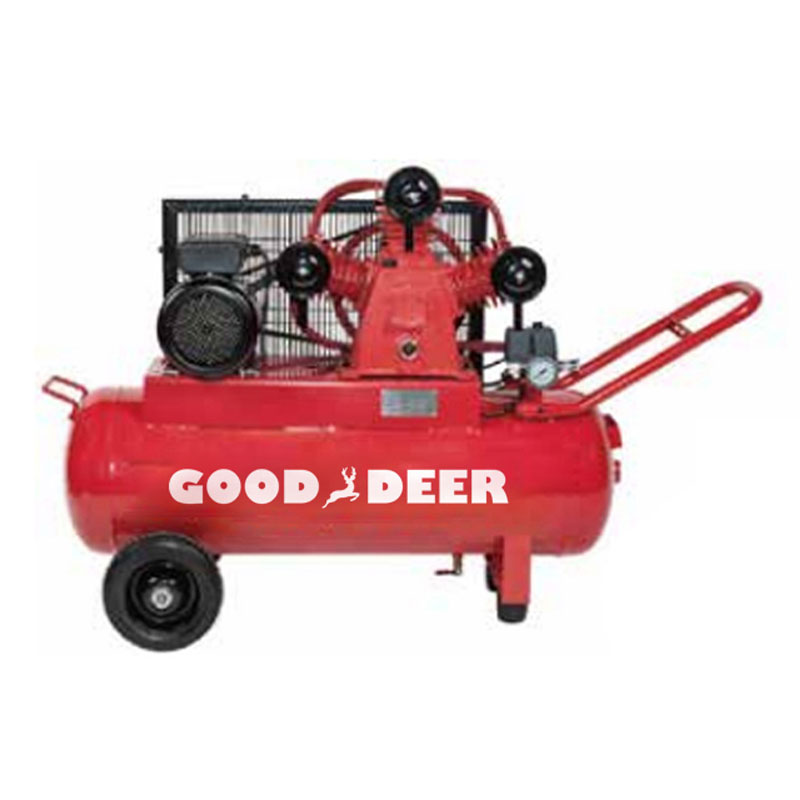
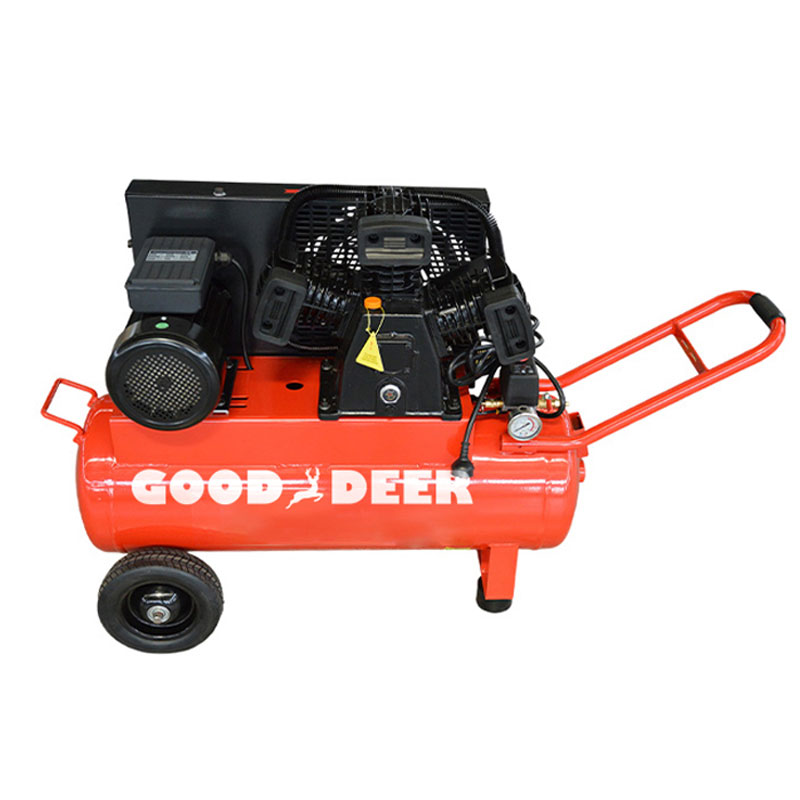
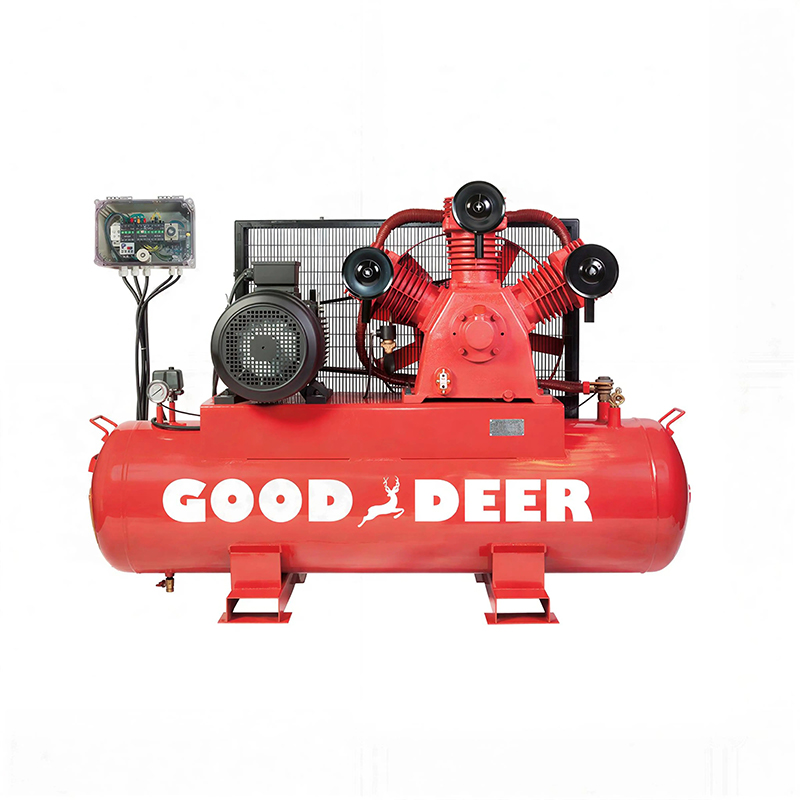
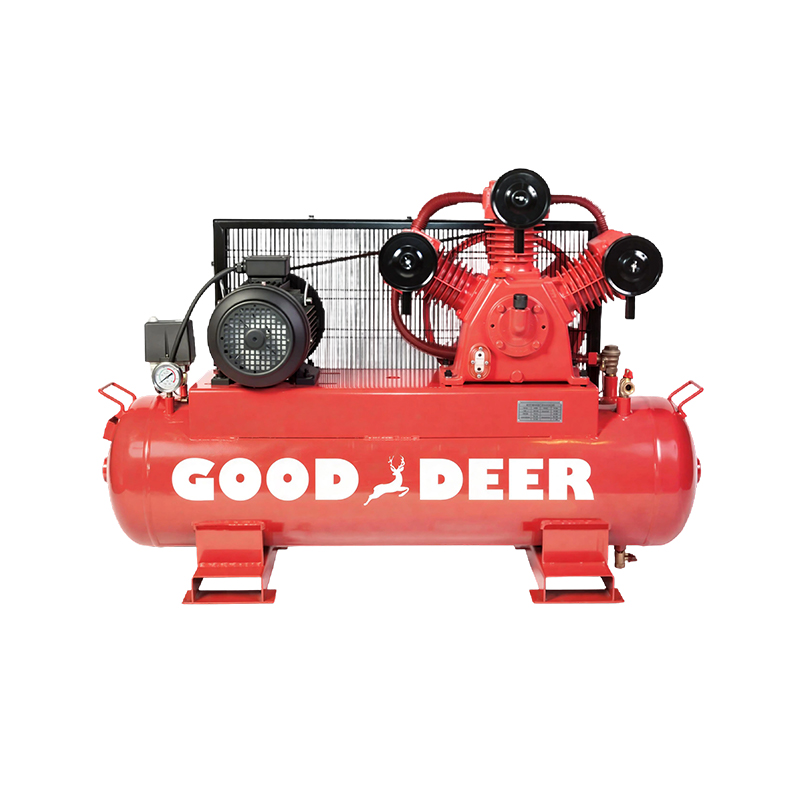
Single phase air compressors run on standard 120V or 240V household power and suit home garages, small workshops, and light-duty commercial use up to about 5 HP. Three phase compressors run on 208V, 240V, or 480V three-phase power and are the right choice for industrial facilities, production floors, and any application requiring continuous duty above 5 HP. The core difference is not just voltage — it is motor efficiency, duty cycle capability, starting torque, operational smoothness, and long-term cost of ownership. Choosing the wrong phase for your application leads to either unnecessary infrastructure expense or a compressor that overheats, trips breakers, and wears out prematurely.
How Single Phase and Three Phase Power Differ
Single phase power delivers electricity through two conductors — one live and one neutral — producing a single sinusoidal AC waveform that rises to peak voltage and falls to zero 120 times per second (60 Hz). During each cycle, power delivery momentarily drops to zero, which creates torque pulsation in motors and limits how efficiently they can be scaled up.
Three phase power uses three live conductors carrying waveforms offset by 120 degrees from each other. Because each phase peaks at a different moment, power delivery is continuous and never drops to zero. This produces a rotating magnetic field in the motor stator that is smoother, more powerful per frame size, and inherently self-starting — without the capacitors and starting windings that single phase motors require. The result is a motor that runs cooler, starts under heavier loads, and delivers consistent torque throughout its duty cycle.
Head-to-Head Comparison: Key Parameters
| Parameter | Single Phase | Three Phase |
|---|---|---|
| Supply voltage (US) | 120V or 240V | 208V, 240V, or 480V |
| Typical power range | Up to 5 HP (practical limit ~7.5 HP) | 1 HP to 500+ HP |
| Motor efficiency | 85–90% | 90–96% |
| Starting current surge | 600–800% of full-load amps | 300–600% of full-load amps |
| Duty cycle capability | 50–75% typical | 75–100% continuous |
| Motor complexity | Requires start capacitor / run capacitor | No capacitors; self-starting |
| Vibration and torque smoothness | Moderate pulsation | Smooth, continuous torque |
| Motor lifespan (typical) | 10,000–15,000 hours | 20,000–40,000+ hours |
| Power availability | Universal (homes, small shops) | Industrial facilities; may require utility upgrade |
| Compressor purchase cost | Lower | Moderate to high |
| Installation cost | Low (existing household circuits) | High if three phase not available on site |
| Operating cost per HP | Higher | Lower (greater efficiency) |
Motor Starting: Why Three Phase Has a Decisive Advantage
Starting an air compressor motor is the most electrically demanding moment in its operation. The motor must accelerate the compressor pump from zero RPM to full speed — often against residual tank pressure — in a fraction of a second. During this inrush period, the motor draws a current spike several times larger than its normal running amperage.
Single Phase Starting Challenges
Single phase motors cannot self-start because a single-phase magnetic field oscillates rather than rotates. To create the initial rotating force, single phase compressor motors rely on a start capacitor that creates a phase shift in a secondary starting winding. Once the motor reaches approximately 75% of full speed, a centrifugal switch disconnects the start winding and capacitor. On larger single phase motors, a run capacitor remains in circuit to improve running efficiency.
This capacitor-and-switch system is a known wear point. Start capacitors fail from repeated thermal stress, particularly in high-cycle applications. A failed start capacitor is one of the most common single phase compressor service calls. Beyond reliability, the starting current surge for a 5 HP single phase motor can reach 60–80 amps on a 240V circuit — requiring dedicated 60–80A breaker protection and appropriately sized wiring.
Three Phase Starting Advantages
Three phase motors produce a naturally rotating magnetic field and start without capacitors. Their inrush current is lower relative to rated power — typically 300–600% of full-load amps versus 600–800% for single phase equivalents. More importantly, three phase motors can be fitted with soft starters or variable frequency drives (VFDs) that ramp motor speed gradually, reducing starting current to as low as 150% of full-load amps and virtually eliminating mechanical shock loads on the compressor pump and drive components. VFD control on three phase compressors also enables variable-speed operation that matches air output precisely to demand — delivering energy savings of 20–50% in variable-load applications.
Duty Cycle and Continuous Operation
Duty cycle — the percentage of time a compressor can run within a given period without overheating — is a critical specification that directly limits how a compressor can be used in production environments.
Most single phase compressors carry duty cycle ratings of 50–75%, meaning they require rest periods equal to 25–50% of run time. A 50% duty cycle compressor running for 10 minutes must rest for 10 minutes before restarting. This is acceptable for intermittent shop use but becomes a production bottleneck when air demand is continuous.
The reason single phase motors run hotter is fundamental to their design. The torque pulsation from single-phase power delivery creates harmonic currents in the motor windings that generate heat beyond what the rotor's mechanical work alone would produce. Additionally, the starting and running capacitors generate heat during every start cycle.
Three phase motors produce continuous, smooth torque with minimal harmonic losses. Industrial three phase compressors are routinely rated for 100% continuous duty and run 24 hours a day, 7 days a week in manufacturing plants with no thermal throttling. This is why three phase is the only practical choice for any production environment with sustained air demand.
Power Availability and Installation Considerations
Single Phase: Plug-and-Play for Most Locations
Single phase power is available at virtually every residential and light commercial location in North America. A 240V single phase compressor up to 5 HP typically requires a dedicated 30–60A, 240V circuit — an electrical panel upgrade most homeowners and small shops can accomplish for $200–$800 in materials and electrician labor. No utility coordination is required; the existing service entrance handles the load.
Three Phase: Infrastructure Requirements
Three phase power requires either an existing three-phase utility service or a conversion solution. In industrial zones and commercial buildings, three phase is typically available at the meter. In residential areas and many light commercial properties, it is not. Bringing three phase service from the utility can cost $5,000–$50,000 or more depending on distance to the nearest three-phase distribution line, local utility fees, and permitting requirements.
For locations without three phase utility power, three practical alternatives exist:
- Phase converter (static or rotary) — converts single phase utility power to three phase for the equipment. A rotary phase converter sized for a 10 HP motor costs $800–$2,000 and produces true three phase output; static converters are cheaper but less efficient and suitable only for moderate loads.
- Variable frequency drive (VFD) — a VFD can accept single phase input and synthesize three phase output for a motor up to approximately 50% of the VFD's rated capacity. For example, a 10 HP VFD powered by single phase 240V can drive a 5 HP three phase motor — effectively delivering three phase performance from single phase supply at modest additional cost ($400–$1,200 for the VFD).
- Digital phase converter — solid-state units that produce balanced three phase from single phase with near-utility-quality output; costs range from $1,500–$6,000 depending on horsepower but require no mechanical maintenance.
Energy Efficiency and Operating Cost Over Time
The efficiency difference between single and three phase motors has real dollar consequences over the operating life of a compressor. Consider a concrete example:
A 5 HP compressor running 2,000 hours per year at an average load of 75% — a realistic scenario for a busy auto body shop or small production facility. The single phase motor at 87% efficiency draws approximately 3.16 kW of electrical power to deliver 5 HP (3.73 kW) of mechanical output. The three phase equivalent at 93% efficiency draws 2.95 kW for the same output. At $0.12/kWh, the annual operating cost difference is approximately $50 per year — modest at 5 HP, but scaling rapidly. A 25 HP three phase compressor compared to its single phase equivalent (if one existed at that size) would show annual savings exceeding $600–$800 in electricity alone.
Additionally, three phase motors run cooler, reducing insulation degradation and extending motor winding life. The reduced thermal stress translates directly into fewer motor rewinds and replacements — a service that costs $500–$3,000 per motor depending on frame size.
CFM Output and Tank Size by Phase Type
Air output capacity (CFM at a given PSI) scales with compressor pump displacement and motor horsepower — both of which are constrained differently by phase type. The following table shows realistic performance ranges for compressors in each category:
| Phase Type | Motor Range | Typical CFM @ 90 PSI | Tank Size Range | Typical Application |
|---|---|---|---|---|
| Single Phase | 1–2 HP | 3–6 CFM | 6–20 gal | Nail guns, inflation, light finishing |
| Single Phase | 3–5 HP | 10–18 CFM | 60–80 gal | Auto body, general shop, spray painting |
| Three Phase | 5–10 HP | 20–40 CFM | 80–120 gal | Small manufacturing, multi-tool shops |
| Three Phase | 15–25 HP | 60–100 CFM | 120–240 gal | Production lines, body shops, foundries |
| Three Phase | 50–100 HP | 200–400 CFM | Receiver tanks or plant piping | Large industrial plants, automation |
Maintenance Differences Between the Two Types
Single Phase Maintenance Points
- Start and run capacitors — must be inspected periodically and typically replaced every 3–7 years in moderate-use applications; replacement cost is $15–$60 per capacitor
- Centrifugal starting switch — contact points can pit or stick after extended use, preventing proper switching between starting and running mode
- Thermal overload protection — single phase motors run hotter and trip thermal protection more frequently; overload relays should be checked and reset intervals monitored
- Motor windings — higher operating temperatures accelerate winding insulation degradation; motors in high-cycle applications may require rewinding in 8–12 years
Three Phase Maintenance Points
- No capacitors or starting switches — eliminates the most common single phase failure modes entirely
- Bearing lubrication — the primary maintenance item; ball bearing motors should be re-greased per manufacturer schedule, typically every 2,000–4,000 hours
- Phase imbalance monitoring — unequal voltages across the three phases cause excess current in the highest-loaded winding; phase imbalance above 2% should be investigated and corrected
- Contactor inspection — the motor contactor (three-pole) controls starting; contact tips should be inspected for pitting and replaced when worn, typically every 5–10 years in standard applications
Which Phase Is Right for Your Application
Use the following decision framework to determine which compressor type suits your specific situation:
- Check your power supply first. If your facility has only single phase service and upgrading to three phase would cost more than $5,000, factor that infrastructure cost into the total project budget before comparing compressor prices alone.
- Determine your required CFM and duty cycle. Calculate the total CFM demand of all tools that may run simultaneously. If this exceeds 18–20 CFM or if demand is continuous rather than intermittent, three phase is the appropriate tier regardless of current power availability.
- Assess HP requirements. For applications under 5 HP with intermittent use — home garage, small auto shop, cabinet maker — a single phase unit is fully adequate and dramatically simpler to install. For 7.5 HP and above, three phase is always the preferred choice on efficiency and reliability grounds.
- Evaluate the VFD conversion option. If you want three phase performance without utility infrastructure costs, a VFD converting single phase 240V input to three phase output for a compressor up to 5–7.5 HP is a proven, cost-effective solution that many shops use successfully.
- Consider total cost of ownership. A three phase compressor at the same HP rating as a single phase model may cost 15–25% more at purchase, but lower operating costs, reduced maintenance, and longer motor life typically make it the better economic choice over a 10-year ownership horizon in any application with moderate-to-high utilization.
Common Applications by Phase Type
| Application | Recommended Phase | Typical HP Needed | Key Reason |
|---|---|---|---|
| Home garage / DIY | Single Phase | 1–3 HP | Standard household power; low duty cycle |
| Small auto body shop | Single Phase (or 3Ø via VFD) | 3–5 HP | Intermittent demand; single phase adequate |
| Production auto body / frame shop | Three Phase | 10–25 HP | Continuous duty; multiple tools simultaneous |
| Woodworking / cabinet shop | Single Phase | 2–5 HP | Moderate intermittent demand; light finishing |
| Manufacturing / assembly line | Three Phase | 25–100 HP | 100% duty cycle; high CFM demand |
| Tire shop / service station | Single or Three Phase | 3–7.5 HP | Depends on bays served and lift frequency |
| Dental / medical | Single Phase (oil-free) | 0.5–2 HP | Low HP demand; standard building power |
| Large foundry / stamping plant | Three Phase | 100–500 HP | Only viable option at this scale |