
 English
 русский
 Español
 عربى
عربى

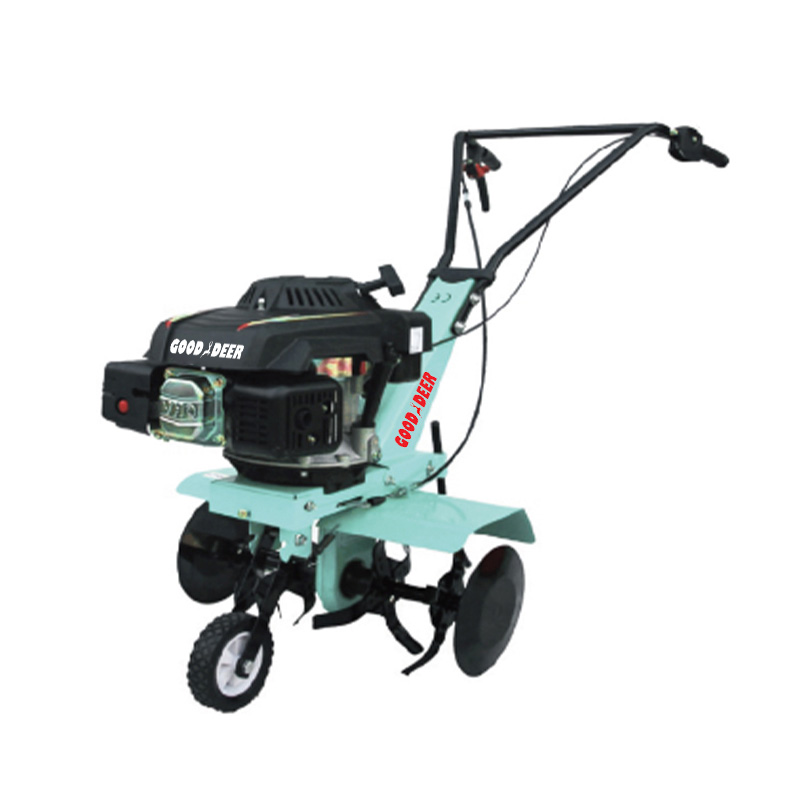
A multifunctional tractor is an agricultural and utility vehicle engineered to perform a wide range of tasks by powering, pulling, or carrying various implements and attachments — including tillage equipment, loaders, mowers, balers, sprayers, snowblowers, and material handling tools. The right multifunctional tractor eliminates the need for multiple specialized machines, reducing capital investment, maintenance overhead, and operational complexity on farms, estates, municipalities, and construction sites.
The global tractor market exceeded $75 billion in 2023, driven by mechanization of smallholder farming in Asia, replacement cycles in North American and European agriculture, and the expanding use of compact tractors in landscaping, municipal maintenance, and hobby farming. Whether you are managing a 500-acre grain operation, a mixed livestock and arable farm, or a 10-acre smallholding, choosing the right multifunctional tractor — matched to your power needs, implement requirements, and terrain — is one of the most consequential equipment decisions you will make.
What Makes a Tractor "Multifunctional"
A tractor's multifunctionality is defined by its ability to interface with diverse implements and power sources through standardized connection systems. Four systems are fundamental to this versatility:
- Three-Point Hitch (3PH): The universal rear attachment system (ISO 730) that connects implements to the tractor's hydraulic lift linkage. Implements on the 3PH are raised, lowered, and precisely positioned by the hydraulic system, enabling depth control for tillage, headland management, and transport. Category I, II, III, and IV hitches accommodate different tractor and implement sizes.
- Power Take-Off (PTO): A rotating shaft at the tractor's rear (and sometimes front) that transfers engine power to driven implements — mowers, balers, sprayer pumps, augers, wood chippers, and generators. Standard speeds are 540 RPM (small to mid-size tractors) and 1,000 RPM (large tractors), with many modern tractors offering both.
- Hydraulic System: Provides flow and pressure to operate remote cylinders (for trailers, front loaders, and external hydraulic implements), control 3PH position, and in modern tractors, supply electro-hydraulic implement control. Hydraulic flow capacity — measured in liters per minute (L/min) — determines how many hydraulic functions can be operated simultaneously.
- Front Loader Quick Attach: A standardized bracket system that allows rapid attachment and detachment of front loaders, buckets, forks, bale spears, and sweepers. Euro (universal) and proprietary quick-attach systems allow a wide range of front tools without tools or repositioning.
A tractor that combines all four of these systems with adequate horsepower can realistically perform 50 or more distinct tasks across farming, landscaping, construction, and maintenance applications — making it the single most versatile piece of power equipment available to a farm or rural operation.
Tractor Size Classes and Their Multifunctional Capabilities
Tractors are primarily classified by engine horsepower, which determines both the physical scale of implements they can handle and the breadth of tasks within their practical capability. Matching tractor size to the full range of intended tasks — not just the primary use — is the most important selection criterion.
| Size Class | Engine HP Range | Weight Range | Typical Applications | Key Limitation |
|---|---|---|---|---|
| Sub-compact | 15–25 HP | 400–900 kg | Garden maintenance, small plots, orchard rows, hobby farms | Limited hydraulic flow; light PTO capacity; small implement compatibility |
| Compact | 25–60 HP | 900–2,500 kg | Small farms, landscaping, equine properties, municipal maintenance | Insufficient drawbar pull for large tillage; limited ballast |
| Utility | 60–100 HP | 2,500–5,000 kg | Mixed arable and livestock farms, contractor use, large estates | Too heavy for some horticultural tasks; higher fuel consumption than compact |
| Mid-range | 100–160 HP | 5,000–8,000 kg | Full arable farming, silage, contractor, large livestock units | High capital cost; requires adequate field sizes to justify efficiency |
| Large / High-HP | 160–600+ HP | 8,000–20,000+ kg | Large-scale arable, prairie farming, commercial contracting | Soil compaction concerns; impractical for small fields; very high capital cost |
For most mixed farming and smallholding operations seeking maximum multifunctionality, the compact to utility range (40–100 HP) represents the best balance of versatility, fuel economy, operating cost, and access to a wide implement ecosystem. Below 40 HP, hydraulic flow and PTO power begin to limit which implements can be used effectively. Above 100 HP, the tractor becomes increasingly specialized toward arable field work at the expense of maneuverability in confined spaces.
Transmission Types: How Power Gets to the Ground
The transmission system determines how the tractor's engine power is translated into ground speed and drawbar pull — and significantly affects operator fatigue, fuel efficiency, and suitability for different tasks. Modern multifunctional tractors offer four main transmission types.
Gear (Synchromesh) Transmission
Traditional gearbox with a fixed number of gear-range combinations — typically 12×12 to 24×24 forward/reverse combinations in modern utility tractors. The operator manually selects the appropriate gear for each task. Gear transmissions are mechanically robust, straightforward to maintain, and provide a direct mechanical connection from engine to wheels that gives experienced operators precise control. They remain common in smaller and mid-range tractors where the cost premium of more advanced systems is not justified.
Power Shuttle Transmission
Adds a hydraulically operated forward/reverse shuttle mechanism to a standard gearbox, allowing the operator to change direction quickly without using the clutch pedal — simply moving a lever from forward to reverse. This feature is particularly valuable for loader work and in-field turning, where frequent direction changes are required. Power shuttle transmissions are standard in many compact and utility tractors used for mixed work.
Power Shift Transmission
Power shift transmissions allow gear changes under load without interrupting power flow — the operator presses a button or moves a lever and the transmission shifts without releasing the throttle or stopping forward movement. This is critical for maintaining consistent speed during draft-sensitive operations (plowing, seed drilling) where speed variation affects work quality. Power shift tractors typically offer 16–32 power-shiftable gears, enabling the operator to match ground speed to varying soil conditions without interruption.
Continuously Variable Transmission (CVT)
CVT (also called stepless transmission by manufacturers like John Deere IVT, Fendt Vario, and New Holland Auto Command) eliminates fixed gear steps entirely — the operator sets a target speed and the transmission automatically maintains it regardless of load variations, keeping the engine at its optimal efficiency RPM. CVT tractors reduce operator workload significantly in complex multi-task operations and can reduce fuel consumption by 10–15% compared to power shift equivalents in varied-load applications. The trade-off is higher initial cost and more complex transmission servicing.
Four-Wheel Drive and All-Wheel Drive: Traction for Every Condition
Traction capability determines what a multifunctional tractor can do in adverse conditions and heavily influences implement performance during draft-intensive operations. Modern tractors offer three drive configurations.
Two-Wheel Drive (2WD)
Rear-wheel drive only. Adequate for flat, firm terrain with moderate implement loads. The non-driven front wheels steer but do not contribute to traction, leading to front axle lift under heavy rear-mounted implement loads. 2WD tractors are lighter, less expensive, and sufficient for many road transport and light field applications — but they are increasingly rare in modern multifunctional designs because their traction limitations significantly restrict the range of usable implements.
Mechanical Front-Wheel Drive (MFWD / 4WD)
Engageable front axle drive — the standard configuration on modern utility and mid-range tractors. MFWD can be engaged or disengaged by the operator, with most modern systems featuring automatic engagement when wheel slip is detected. MFWD increases traction efficiency by 20–35% over 2WD in field conditions and is essential for effective operation of large front loaders, which shift the weight balance forward. The front wheels in MFWD tractors are typically 60–70% of the rear wheel diameter.
Equal Wheel (Articulated 4WD)
Large articulated tractors (such as John Deere 9-Series, Case IH Steiger) use equal-diameter four-wheel drive with chassis articulation for steering. Maximum traction and drawbar pull for very large-scale operations, but extremely poor maneuverability in confined spaces — not suitable for multifunctional mixed-use operations. Their application is specifically large-acreage arable and row-crop farming where straight-line pulling power is the primary requirement.
Essential Implements That Define Multifunctionality
A multifunctional tractor's real value is realized through the implements it operates. The following categories represent the core implement types that transform a tractor from a transport vehicle into a comprehensive land management system.
Tillage and Soil Preparation
- Moldboard plow: Inverts soil to bury crop residue and weeds. Requires significant drawbar pull — a 3-furrow plow typically needs 50–70 HP minimum; a 5-furrow plow requires 100+ HP.
- Disc harrow: Breaks up soil surface and incorporates residue without full inversion. More versatile and less power-demanding than a plow for secondary tillage.
- Rotary tiller (rotavator): PTO-driven tines that thoroughly cultivate the topsoil — ideal for seedbed preparation in market gardens and small farms. A 1.8m rotavator requires approximately 40–50 HP PTO.
- Subsoiler: Shatters compacted subsoil layers without inversion — critical for improving drainage and root penetration in heavy soils.
Grass and Forage Management
- Mower-conditioner: Cuts and crimps grass for hay or silage making, simultaneously crushing stems to accelerate drying. PTO-driven; a 2.4m cut mower-conditioner requires 50–70 HP PTO.
- Tedder: Spreads and aerates cut grass to accelerate field drying. Relatively low power requirement — 4–6 rotor tedders work effectively behind 40 HP tractors.
- Round baler: Collects and rolls dried hay or haylage into cylindrical bales. A standard 1.2m diameter baler requires approximately 60–80 HP PTO for reliable operation in heavy crops.
- Forage harvester: Chops green crop for silage — the most PTO-intensive common implement, requiring 100–150+ HP for reliable throughput.
Material Handling and Loading
- Front loader with bucket: The single most used front attachment — loading manure, grain, compost, aggregate, and general materials. Lift capacity ranges from 500 kg (compact tractors) to 5,000+ kg (large utility tractors).
- Pallet forks: Replace the loader bucket for handling bales, pallets, and bagged materials. An essential quick-attach accessory for livestock and mixed farms.
- Rear-mounted bale spike / grab: 3PH-mounted spear or grab for moving and stacking round or square bales.
- Slurry tanker: Distributes liquid manure from storage to fields — requires significant PTO power for agitation and a high-capacity hydraulic system for distribution control.
Seeding and Crop Establishment
- Seed drill: Places seed at precise depth and spacing in prepared seedbeds. Precision seed drills with GPS section control require tractors with ISOBUS compatibility.
- Spreader (centrifugal fertilizer spreader): Distributes granular fertilizer, lime, or seed — PTO-driven; width-section control on modern units requires tractor ISOBUS connectivity for precision application.
- Trailed sprayer: Applies crop protection products or liquid fertilizer. Requires adequate hydraulic flow for boom folding and typically a tractor with remote hydraulic spools for boom leveling.
Seasonal and Non-Agricultural Functions
- Snowblower: PTO-driven blower for road and yard snow clearing — a compact 50 HP tractor with a 1.5m snowblower can clear 1,500–2,000 tonnes of snow per hour.
- Road sweeper / brush: Front or rear-mounted rotating brushes for road and yard cleaning — widely used by municipalities and airport authorities.
- Hydraulic breaker / post driver: Rear 3PH-mounted tools for breaking concrete or driving fence posts — uses the tractor's hydraulic system as a power source.
- Stationary PTO generator: Converts the tractor's PTO output to electricity via a PTO generator set — useful as emergency power for farm buildings, averaging 20–50 kW output from utility tractors.
Hydraulic System Capacity: The Hidden Limit on Multifunctionality
While engine horsepower gets the most attention in tractor specifications, the hydraulic system capacity is often the real constraint on multifunctional capability — particularly as implements become more hydraulically demanding with precision section control, variable-rate application, and electronic management systems.
Key hydraulic specifications to evaluate:
- Total hydraulic flow (L/min): Determines how many hydraulic functions can operate simultaneously and at adequate speed. A front loader bucket that tilts slowly frustrates operators. Compact tractors typically provide 20–40 L/min; utility tractors 60–80 L/min; large tractors 100–200+ L/min.
- Number of remote spools: Each remote spool independently controls a separate hydraulic circuit for external implements. More spools = more simultaneously controllable functions. A tractor with only 2 remote spools cannot simultaneously control a front loader, a rear implement, and a trailer's tipping cylinder — a limitation that genuinely restricts multifunctionality.
- 3PH lift capacity: The maximum weight the rear hydraulic linkage can lift at the industry-standard measurement point (610mm behind the link balls). This must exceed the heaviest 3PH-mounted implement by a significant margin — not just the implement's operating weight but the dynamic loading during field entry and exit.
- ISOBUS / HEADLAND management: Modern precision implements communicate with the tractor via the ISOBUS (ISO 11783) data bus, allowing automated section control, rate adjustments, and headland sequences. A tractor without ISOBUS connectivity cannot fully utilize modern precision implements.
Cab Technology and Operator Features in Modern Multifunctional Tractors
Modern tractor cabs have evolved from simple weather shelters into integrated control environments that significantly affect operator productivity, accuracy, and fatigue over long working days. For multifunctional tractors expected to perform diverse tasks, cab design and control integration are key selection factors.
GPS Guidance and Auto-Steer
GPS auto-steer systems maintain precise straight-line and contour tracking, enabling the operator to focus on implement monitoring rather than steering. Accuracy levels range from ±30cm (basic SBAS/WAAS guidance) to ±2.5cm (RTK correction). For precision planting, spraying, and strip tillage, RTK accuracy dramatically reduces overlap, input waste, and crop damage. Auto-steer pays for itself fastest in high-value crop production and in operations with high input costs where precision significantly reduces waste.
ISOBUS Terminal (Virtual Terminal)
An ISOBUS-compatible virtual terminal in the tractor cab displays implement control interfaces on a single screen, eliminating the need for separate implement control boxes. This is critical for multifunctional tractors because it allows a single control interface to manage any ISOBUS-compatible implement from any manufacturer — seed drills, sprayers, spreaders, and mowers all display their controls in the same consistent environment.
Suspension Systems
Front axle suspension and cab suspension significantly reduce operator fatigue in rough field conditions and on road transport. Research indicates that suspended tractors reduce whole-body vibration exposure by 30–50% compared to rigid axle tractors — an important health and safety consideration given that extended tractor operation is a known risk factor for spinal disorders.
Fuel Efficiency and Operating Costs
Fuel consumption is the largest ongoing operating cost for tractor-intensive operations. Understanding what drives fuel consumption helps compare tractors more accurately than headline horsepower figures suggest.
Reference fuel consumption data from independent testing (OECD tractor tests, Nebraska Tractor Tests) provides standardized performance comparisons. Typical diesel consumption by tractor class:
- Compact (40–60 HP): 4–8 liters/hour at typical field loads
- Utility (60–100 HP): 7–14 liters/hour at typical field loads
- Mid-range (100–160 HP): 12–22 liters/hour at typical field loads
- Large (160–300 HP): 20–45 liters/hour at typical field loads
Beyond engine efficiency, transmission type significantly affects real-world fuel consumption. CVT tractors typically use 10–15% less fuel than comparable power-shift tractors in mixed-load operations because they continuously optimize the engine operating point. Over a 1,000-hour working year at 12 liters/hour average consumption and €1.20/liter fuel price, a 12% fuel saving represents approximately €1,700 in annual savings — a meaningful contribution toward the CVT premium recovery.
Electric and Hybrid Tractors: The Emerging Multifunctional Platform
Electric and hybrid tractors represent the next generation of multifunctional capability, adding electrical power distribution to their mechanical capabilities. Several manufacturers have introduced or announced commercial electric tractor platforms, and the technology is advancing rapidly.
Key developments in electric tractor multifunctionality:
- Electric PTO: Replaces the mechanical PTO shaft with an electrical power output that can be connected to electrically-driven implements — enabling finer speed control, remote operation, and integration with precision farming data systems. John Deere's eAutoPower transmission offers 100 kW of electric output for implements via electrical connectors.
- Battery-electric compact tractors: Several manufacturers (Fendt e100, Kubota LXe, Solectrac) have released or demonstrated battery-electric compact tractors in the 20–75 HP equivalent range, with typical battery capacities of 60–100 kWh providing 4–8 hours of field operation per charge for light to medium tasks.
- Hydrogen fuel cell tractors: New Holland's T6 Methane Power and several research prototypes demonstrate alternative fuel paths for large tractors where battery weight and charging infrastructure make pure battery-electric impractical.
For the near term (2024–2030), diesel-powered tractors remain the practical choice for most multifunctional applications due to their proven range, refueling speed, and comprehensive implement ecosystems. However, operators making new tractor purchases should verify that chosen models are compatible with future electrical implement standards and data connectivity platforms that will become increasingly important.
How to Choose the Right Multifunctional Tractor: Decision Framework
Choosing a multifunctional tractor requires a structured evaluation that accounts for current needs, future growth, available support, and total lifetime cost. Use the following framework:
- List every task the tractor must perform — current and projected. Identify the most power-demanding implement in each category (tillage, forage, loading) and add the combined PTO and hydraulic requirements. Size the tractor to the highest combined demand, not the average task.
- Define the space constraints. Orchards, vineyards, and confined farmyards require narrow-track tractors with tight turning circles. A 100 HP utility tractor with a 2.4m wide turning footprint is useless in a 2.8m vine row spacing.
- Specify hydraulic requirements before engine HP. Count the number of remote spool circuits needed for all planned implements simultaneously. Check that the tractor's hydraulic flow is adequate to operate all planned functions at acceptable speeds. Many buyers discover hydraulic deficiency only after purchase.
- Match transmission type to operational style. Operations with frequent direction changes or precision field work justify CVT or power shift investment. Simpler operations with consistent loads can use synchronized transmissions cost-effectively.
- Verify dealer service network and parts availability. A tractor breakdown during silage or harvest has a cost far exceeding the daily machine rate. Choose a brand with an established dealer network within 50–80 km that maintains workshop parts stock for the specific model range.
- Calculate total 10-year cost of ownership, not purchase price. Include fuel, maintenance, parts, depreciation, and financing costs. A premium tractor that costs 15% more to purchase but uses 12% less fuel and has lower maintenance frequency often has a lower 10-year cost than the cheaper alternative.
- Evaluate connectivity and compatibility with future precision systems. If GPS guidance, variable-rate application, or remote monitoring are planned within the tractor's service life, verify ISOBUS compatibility, GNSS receiver mounting provisions, and telematics connectivity at the time of purchase — retrofitting these systems is significantly more expensive than selecting them as factory options.