
 English
 русский
 Español
 عربى
عربى

How Big of an Air Compressor Do You Need? The Direct Answer
The size of air compressor you need depends on two critical numbers: CFM (cubic feet per minute) — how much air your tools consume — and PSI (pounds per square inch) — the pressure those tools require. Match both, and you have the right compressor. Get either one wrong, and your tools will underperform or your compressor will burn out prematurely.
As a quick reference:
- Home DIY use (nail guns, tire inflation, blow guns): a 1–2 HP compressor with a 6–20 gallon tank delivering 2–5 CFM at 90 PSI is typically sufficient.
- Auto body and garage work (sanders, spray guns, impact wrenches): a 3–5 HP compressor with a 20–60 gallon tank delivering 6–14 CFM at 90 PSI is the standard recommendation.
- Industrial air compressor applications (continuous production lines, multiple simultaneous tools, heavy manufacturing): systems rated at 10–100+ HP delivering 40–500+ CFM are commonly required.
The sections below explain exactly how to calculate your specific requirement — so you buy exactly what you need, not what a salesperson guesses.
The Two Numbers That Determine Compressor Size: CFM and PSI
CFM — Cubic Feet Per Minute (Airflow)
CFM measures the volume of air the compressor can deliver per minute. This is the most important sizing metric. Every pneumatic tool has a rated CFM requirement — typically listed in the tool's manual or on its housing. If your compressor cannot sustain the required CFM, the tool will stall, cycle erratically, or lose power mid-operation.
There are two CFM figures you'll see on compressor spec sheets:
- Displacement CFM — theoretical output based on piston size and speed. This number is always optimistic and not useful for real-world sizing.
- SCFM (Standard CFM) or ACFM (Actual CFM) — the real delivered airflow at a specific pressure, measured under standard conditions. Always use SCFM or ACFM for sizing calculations.
PSI — Pounds Per Square Inch (Pressure)
PSI measures the pressure at which air is delivered. Most pneumatic tools operate at 90 PSI, though some (like certain sandblasters or chipping hammers) require up to 120–150 PSI. A compressor with a maximum pressure of 135 PSI and a regulator set to 90 PSI covers nearly all standard tools. Industrial applications — such as sandblasting, plasma cutting air supply, or high-cycle assembly tools — may require sustained delivery at higher pressures.
The key rule: your compressor's rated working pressure must exceed the tool's minimum PSI requirement by at least 20–25% to account for pressure drop across fittings, hoses, and regulators.
Step-by-Step: How to Calculate the Air Compressor Size You Need
- List every pneumatic tool you plan to use. Include all tools, even rarely used ones — you need to account for worst-case simultaneous demand.
- Find the CFM requirement for each tool from its manual or manufacturer's data. Use the CFM at 90 PSI rating.
- Identify which tools might run simultaneously. In a one-person shop, this may be just one or two tools. On a production line, it could be ten or more stations.
- Add up the CFM of all simultaneously running tools. This is your peak demand CFM.
- Multiply by a safety factor of 1.25–1.30 (25–30% buffer) to account for system leaks, hose friction loss, altitude effects, and future expansion. This is your target compressor SCFM rating.
- Confirm the PSI requirement — select a compressor whose maximum pressure exceeds your highest-PSI tool by at least 20–25 PSI.
- Select tank size based on duty cycle — see the tank sizing section below.
Example calculation: A two-bay auto body shop runs an orbital sander (11 CFM), a spray gun (12 CFM), and an impact wrench (5 CFM) simultaneously. Total demand: 28 CFM × 1.25 safety factor = 35 CFM minimum SCFM rating. A 5 HP, 80-gallon compressor rated at 17 CFM would be severely undersized; a 7.5 HP rotary screw or 5 HP two-stage reciprocating compressor rated at 30–40 SCFM at 90 PSI is the correct fit.
CFM Requirements for Common Pneumatic Tools
The table below lists typical CFM consumption for frequently used tools. These are averages — always confirm with your specific tool manufacturer's data.
| Tool | CFM at 90 PSI | Min. PSI Required | Usage Pattern |
|---|---|---|---|
| Nail gun (framing) | 2–3 CFM | 70–120 PSI | Intermittent |
| Tire inflator / blow gun | 1–2 CFM | 30–90 PSI | Intermittent |
| Impact wrench (½") | 4–6 CFM | 90 PSI | Intermittent |
| Impact wrench (1") | 10–12 CFM | 90 PSI | Intermittent |
| Orbital / DA sander | 10–14 CFM | 90 PSI | Continuous |
| Spray paint gun (HVLP) | 10–14 CFM | 29–45 PSI | Continuous |
| Air ratchet | 3–5 CFM | 90 PSI | Intermittent |
| Die grinder | 4–8 CFM | 90 PSI | Continuous |
| Sandblaster (small) | 10–25 CFM | 100–125 PSI | Continuous |
| Plasma cutter (air supply) | 4–8 CFM | 60–90 PSI | Continuous |
| Pneumatic conveying line | 50–500+ CFM | Varies | Continuous |
How Tank Size Affects Performance — And How to Choose It
The air receiver tank (storage tank) does not determine the compressor's sustained output — the pump and motor do. What the tank determines is how long you can run a high-demand tool before the compressor motor must cycle on. A larger tank provides a buffer — stored compressed air — that smooths out pressure fluctuations and reduces motor start/stop cycles.
General tank size guidelines by use case:
- 6–20 gallons: Portable compressors for nail guns, inflation, trim work. Tools are intermittent and low-CFM. Tank refills quickly between uses.
- 20–60 gallons: Single-user garage or workshop compressors. Adequate for most automotive tools and spray applications at moderate duty cycles.
- 60–120 gallons: Heavy shop use, small body shops, two-person operations. Reduces motor cycling frequency for continuous-use tools like sanders and spray guns.
- 120–500+ gallons: Industrial air compressor installations, production facilities, multi-station manufacturing lines. Often combined with a separate remote receiver tank to further stabilize system pressure.
A critical rule for continuous-use tools: If your tool's CFM demand exceeds the compressor's sustained SCFM output, no tank size will solve the problem — the compressor will simply run continuously and eventually overheat. Tank size only helps with intermittent demand spikes. For continuous operation, the compressor pump rating must meet or exceed demand.
Compressor Types and Which Size Class They Cover
Pancake and Hot Dog Compressors (1–2 Gallon, Under 2 CFM)
These ultraportable units are designed for single intermittent tools: brad nailers, staple guns, and tire inflation. With tanks under 6 gallons and output under 2 SCFM, they are not suited for any grinders, sanders, or spray guns. They are the wrong choice if you plan to do any sustained pneumatic work.
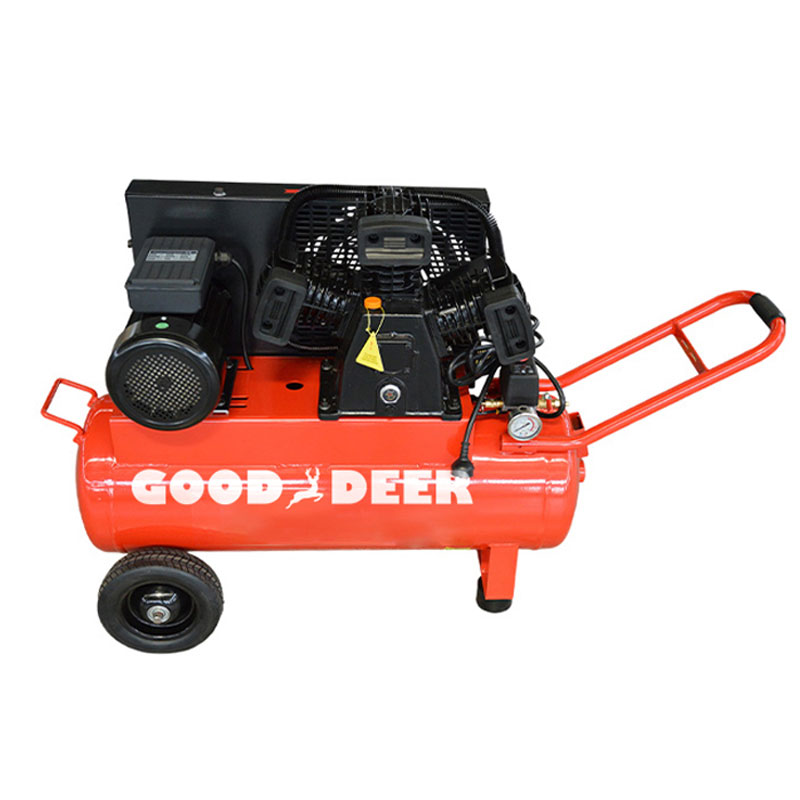
Portable Single-Stage Reciprocating Compressors (1–3 HP, 6–30 Gallon)
This is the most common compressor type for home garages and DIY use. Single-stage piston compressors typically deliver 4–7 SCFM at 90 PSI. They handle framing nailers, finish nailers, inflation, blow guns, and light impact wrenches comfortably. They struggle with continuous-duty tools like orbital sanders or HVLP spray guns unless you run them in short bursts with rest periods.
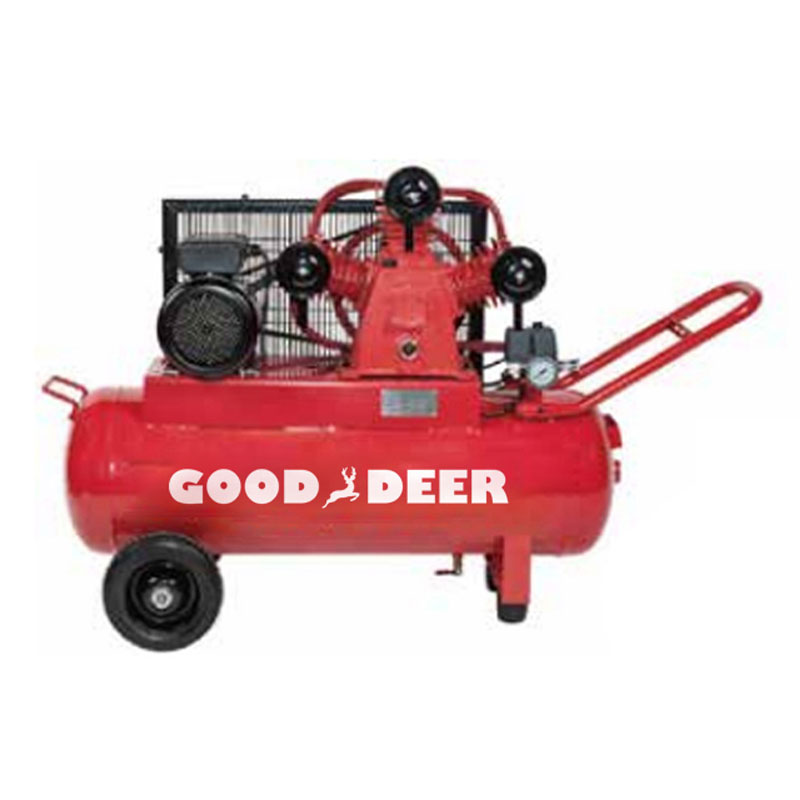
Two-Stage Reciprocating Compressors (3–7.5 HP, 60–120 Gallon)
Two-stage piston compressors compress air twice — once to an intermediate pressure and again to full pressure — achieving higher efficiency at pressures up to 175 PSI. They deliver 12–25 SCFM at 90 PSI and are the workhorse of serious garages, auto body shops, and small manufacturing operations. A 5 HP, 80-gallon two-stage compressor is the most popular configuration for professional single-user shops and typically costs $800–$1,800.
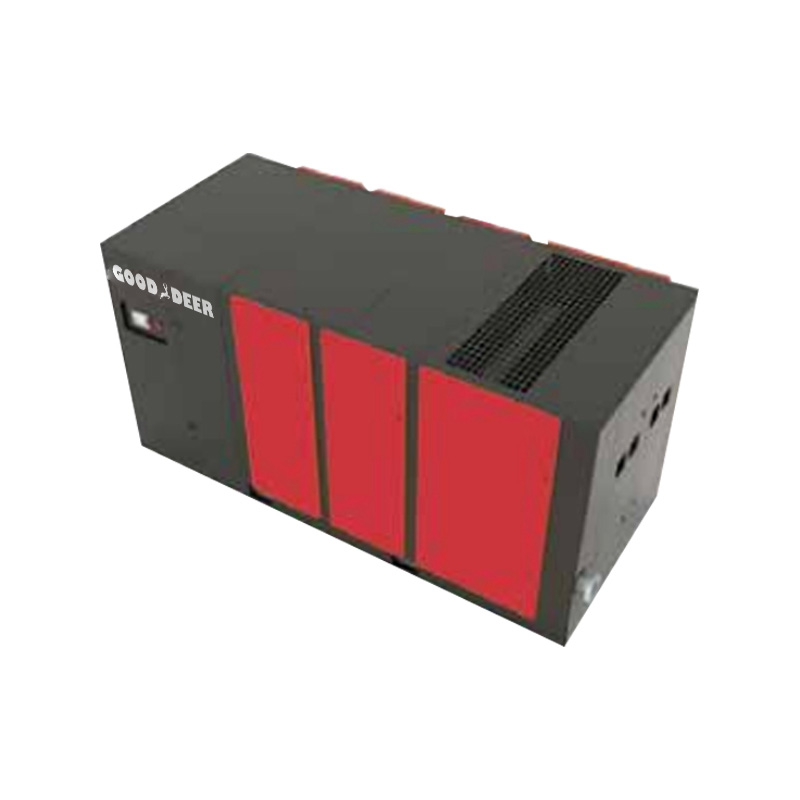
Rotary Screw Compressors (5–500+ HP) — The Industrial Air Compressor Standard
Rotary screw compressors use two interlocking helical rotors to compress air continuously, rather than the intermittent piston action of reciprocating compressors. This makes them ideal for 100% duty-cycle industrial applications. Key advantages:
- Continuous, pulse-free air delivery from 25 to 1,500+ SCFM
- Much quieter operation: typically 62–72 dB(A) vs. 80–90 dB(A) for reciprocating units
- Lower maintenance intervals — typically 2,000–8,000 hours between service vs. 500–1,000 hours for reciprocating compressors
- Variable speed drive (VSD) models can reduce energy consumption by 35–50% in facilities with variable air demand
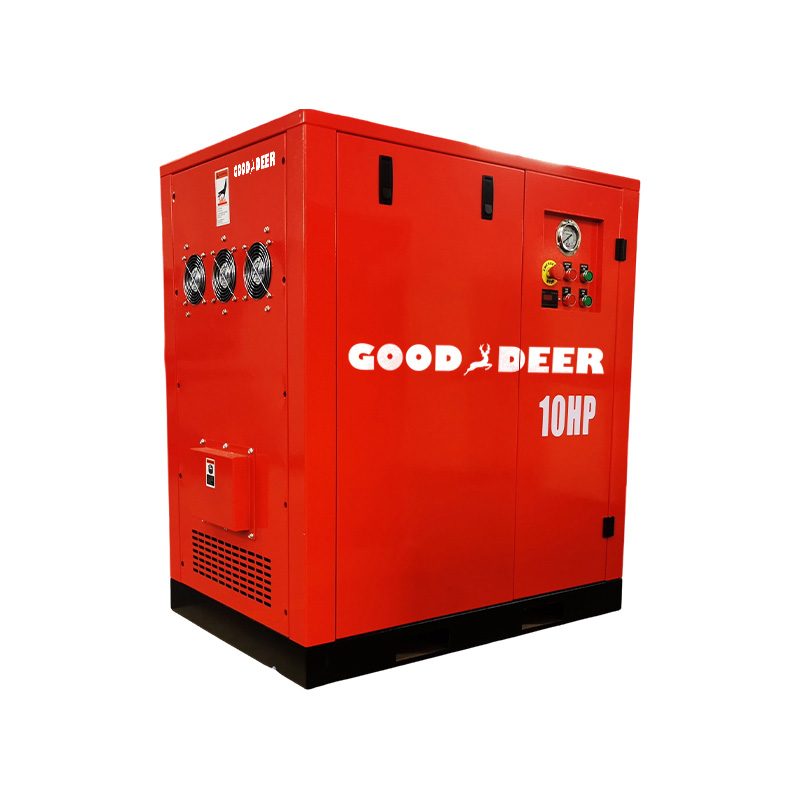
A 10 HP rotary screw compressor delivers approximately 40–46 SCFM at 125 PSI — equivalent in output to a much larger reciprocating unit. For facilities running more than 6–8 hours per day, the rotary screw is almost always the more cost-effective long-term choice despite the higher initial purchase price ($3,000–$30,000+ depending on size).
Centrifugal Compressors (200+ HP)
Used in large-scale industrial applications — chemical plants, food processing, large automotive assembly lines — centrifugal compressors are oil-free and deliver 500–50,000+ SCFM. They are engineered systems requiring professional installation and are outside the scope of most facility buyers.
Compressor Sizing by Application and Industry
| Application | HP Range | SCFM Required | Tank Size | Compressor Type |
|---|---|---|---|---|
| Home DIY / trim work | 1–2 HP | 2–5 SCFM | 6–20 gal | Single-stage piston |
| Home garage / general repair | 2–3 HP | 5–10 SCFM | 20–30 gal | Single-stage piston |
| Auto body shop (1 user) | 3–5 HP | 12–20 SCFM | 60–80 gal | Two-stage piston |
| Auto body shop (2–3 bays) | 5–10 HP | 25–50 SCFM | 80–120 gal | Rotary screw |
| Woodworking shop | 2–5 HP | 5–15 SCFM | 30–60 gal | Single or two-stage piston |
| Small manufacturing (5–10 stations) | 10–25 HP | 50–120 SCFM | 120–240 gal | Rotary screw |
| Large manufacturing / plant | 50–200+ HP | 200–1,000+ SCFM | 500+ gal receiver | Rotary screw / centrifugal |
| Sandblasting operation | 5–25 HP | 25–100 SCFM | 80–200 gal | Two-stage or rotary screw |
Industrial Air Compressor Sizing: Special Considerations
Sizing an industrial air compressor — one serving a production facility, manufacturing plant, or multi-shift operation — involves several factors beyond simply adding up tool CFM values:
Demand Profile and Load Factor
Industrial facilities rarely run all tools at 100% capacity simultaneously. A load factor or demand factor of 60–80% is typical — meaning if your theoretical peak demand is 200 SCFM, your average sustained demand may be 120–160 SCFM. Compressor manufacturers and compressed air auditors use measured demand profiles (from data loggers installed on existing systems) to right-size replacement or new compressors. Oversizing a compressor causes it to run at low load, which in oil-flooded rotary screw compressors can lead to oil carryover and premature failure.
Compressed Air Quality Requirements
Industrial applications often require specific air quality classes per ISO 8573-1:
- Class 1 (oil-free, very dry): Required for food and beverage contact, pharmaceutical manufacturing, electronics assembly, and medical devices. Requires oil-free compressors (scroll, water-injected screw, or dry screw) plus refrigerant dryers and filtration.
- Class 2–3 (instrument quality): Laboratory instruments, painting robots, precision pneumatics. Requires oil-flooded compressor with coalescing filters and a refrigerant or desiccant dryer to achieve dew points of −20°F to −40°F (−29°C to −40°C).
- Class 4–5 (general plant air): Most tool-driving applications. Standard oil-flooded rotary screw with a refrigerant dryer and particulate filter is sufficient.
Air quality requirements directly affect equipment selection — an oil-free compressor at the same SCFM rating costs 30–60% more than an oil-flooded equivalent.
Pressure Drop in Distribution Piping
In large industrial facilities, compressed air travels through hundreds of feet of distribution piping. Friction losses, fittings, and leaks reduce the pressure at the tool below the compressor's discharge pressure. A well-designed industrial compressed air system limits total pressure drop to no more than 10% of the system pressure — approximately 10–12 PSI on a 100 PSI system. Undersized pipe or excessive fittings can cause drops of 25–40 PSI, forcing operators to raise compressor pressure (and energy consumption) to compensate.
System Leakage
Industry data from the Compressed Air Challenge (CAC) and the U.S. Department of Energy indicates that the average industrial compressed air system loses 20–30% of its total compressed air output to leaks. In poorly maintained systems, leakage rates can exceed 50%. Any accurate industrial sizing calculation must include a leakage allowance — typically 10–20% of total system demand — on top of tool requirements.
Electrical Requirements: Matching the Compressor to Your Power Supply
Compressor sizing is not just about air output — it must also match your facility's electrical infrastructure. Key checkpoints:
- Single-phase 120V: Supports compressors up to approximately 1.5 HP. Suitable only for small portable units.
- Single-phase 240V: Supports compressors up to approximately 5 HP. Common for home garages and small workshops; requires a 30–60A dedicated circuit.
- Three-phase 208/230/460V: Required for most compressors above 5 HP. Provides better motor efficiency, smoother starting, and lower electrical stress. Industrial air compressors of 7.5 HP and above almost always require three-phase power.
A 10 HP, 460V three-phase rotary screw compressor draws approximately 14–16 amps at full load and requires a 20–25A dedicated circuit with appropriate wire gauge. Always verify electrical requirements with your facility's electrician before purchasing, as retrofitting three-phase power can add $2,000–$10,000+ to installation costs.
The Most Common Air Compressor Sizing Mistakes — And How to Avoid Them
Mistake 1: Sizing Based on HP Instead of CFM
Horsepower is a motor rating, not an air output rating. Two compressors with the same HP can have very different CFM outputs depending on pump efficiency and design. Always size on SCFM first, then verify HP and power requirements.
Mistake 2: Ignoring Continuous vs. Intermittent Duty
Many consumer-grade compressors are rated for 50% duty cycles — they must rest for as long as they run. Using a 50% duty cycle compressor continuously causes overheating and motor failure within months. For continuous or near-continuous operation, select a compressor rated for 100% duty cycle — virtually all rotary screw compressors and some heavy-duty two-stage reciprocating units meet this standard.
Mistake 3: Forgetting Future Expansion
Facilities that buy a compressor sized exactly for current needs often find themselves undersized within 2–3 years as production expands. The standard recommendation is to build in a 25–30% capacity buffer above current calculated demand, and to select a compressor platform that can be expanded (either by adding a second unit or by upgrading a modular VSD rotary screw).
Mistake 4: Ignoring Ambient Temperature
Air compressor output decreases as inlet air temperature rises. At 100°F (38°C) ambient, a compressor's actual SCFM output can be 5–10% lower than its rated capacity at standard conditions (68°F / 20°C). For facilities in hot climates or with poor ventilation around the compressor, this performance derating must be factored into the sizing calculation.
Quick Sizing Summary: Which Air Compressor Is Right for You?
If you've read through the sections above and want a fast decision framework, use these rules of thumb:
- Running 1–2 intermittent tools occasionally at home → 2–3 HP, 20–30 gallon, single-stage piston compressor delivering 5–8 SCFM at 90 PSI.
- Running continuous tools (sander, spray gun) in a personal shop → 5 HP, 60–80 gallon, two-stage piston delivering 14–18 SCFM at 90 PSI.
- Running a professional garage or body shop with 2–3 tools simultaneously → 5–10 HP rotary screw delivering 25–46 SCFM at 100–125 PSI.
- Running a small industrial operation with 5–15 tool stations → 15–30 HP rotary screw industrial air compressor delivering 60–120 SCFM, ideally with a VSD drive for energy savings.
- Running a large manufacturing or production facility → commission a compressed air audit from a qualified engineer before purchasing. Oversized or undersized industrial compressors represent tens of thousands of dollars in wasted energy annually.
The most important step before any purchase is simply this: total your simultaneous CFM demand, add 25–30%, and buy a compressor rated to deliver that SCFM at 90 PSI continuously. Everything else — tank size, HP, type, features — follows from that number.