
 English
 русский
 Español
 عربى
عربى

Round balers are the better choice for most livestock and hay operations due to lower cost, minimal labor, and good weather resistance, while square balers — particularly large square balers — are preferred for high-volume commercial hay sales, long-distance transport, and operations that demand maximum storage density. The decision ultimately hinges on your operation's scale, labor availability, storage infrastructure, and whether you're feeding your own animals or selling bales into commercial markets. Neither machine is universally superior; each excels in a specific context.
How Round Balers and Square Balers Work
Understanding the mechanical differences between the two baler types clarifies why each one produces different results in terms of bale density, handling requirements, and forage quality.
How Round Balers Work
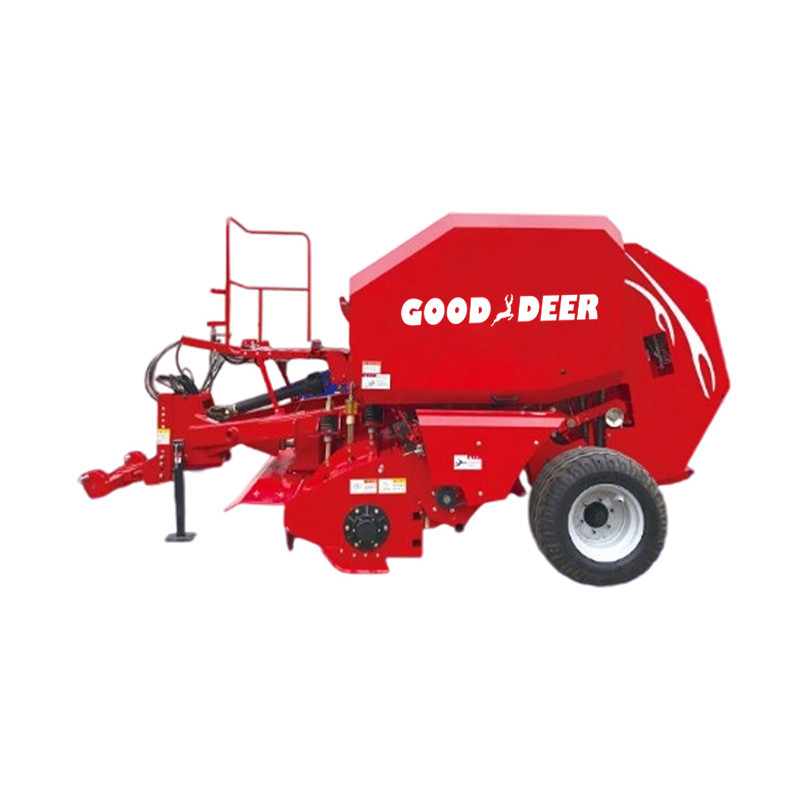
A round baler picks up a windrow of cut forage and feeds it into a baling chamber where a series of belts, rollers, or chains rotate the material continuously in a circular motion. As the crop is added, the bale grows in diameter. When it reaches the preset size — typically 4 to 6 feet in diameter — the machine wraps the bale automatically in twine or net wrap, opens its rear gate, and ejects the finished bale onto the field. The operator keeps moving without stopping. Modern round balers can produce a bale in as little as 60–90 seconds under good conditions.
How Square Balers Work
Square balers — whether small or large — compress forage into rectangular blocks using a reciprocating plunger mechanism. Crop is gathered from the windrow, fed into a pre-compression chamber, and then pushed into the bale chamber by the plunger. Twine or wire is tied around the completed bale at set intervals. Small square balers produce bales weighing 40–75 lbs that must be handled manually or with a bale thrower. Large square balers (also called "big square" or "3-string" and "4-string" balers) produce bales weighing 800–2,000 lbs that require a tractor loader or telehandler to move.
Key Differences: Round Balers vs. Square Balers at a Glance
The table below summarizes the most critical operational differences between round and square baling systems to help frame the detailed discussion that follows.
| Factor | Round Balers | Small Square Balers | Large Square Balers |
|---|---|---|---|
| Typical bale weight | 800–1,500 lbs | 40–75 lbs | 800–2,000 lbs |
| Labor requirement | 1 operator | 2–4 people | 1–2 operators |
| Equipment cost (new) | $25,000–$65,000 | $10,000–$25,000 | $60,000–$150,000+ |
| Storage efficiency | Moderate (gaps between bales) | High (stackable) | Very high (stackable, dense) |
| Weather resistance (field) | Good (when net wrapped) | Poor (needs barn) | Moderate (needs cover) |
| Transport efficiency | Low (round shape wastes space) | High (stackable) | Very high (fits flatbeds tightly) |
| Best use case | Own-use livestock feeding | Horse hay, small farms, retail | Commercial hay sales, export |
Cost Comparison: Purchase Price, Operating Costs, and ROI
The total cost of ownership extends well beyond the purchase price. Labor, twine or net wrap consumables, maintenance, and storage infrastructure all factor into the real cost per bale — the metric that actually determines profitability.
Round Baler Costs
New round balers from major manufacturers (John Deere, Vermeer, New Holland, AGCO) range from $25,000 to $65,000 depending on chamber type and technology. Used round balers in good working condition can be found for $8,000–$20,000. Net wrap costs approximately $0.50–$1.00 per bale, while twine is slightly cheaper at $0.30–$0.60 per bale. Because a single operator can bale continuously without stopping to collect bales, labor cost per ton is significantly lower than with small square balers. Maintenance costs are moderate, with belts and rollers being the most common wear items — belt replacements typically cost $1,500–$4,000 per set.
Small Square Baler Costs
Small square balers are the most affordable entry point at $10,000–$25,000 new, or under $5,000 used for older models. However, they are the most labor-intensive option. Stacking a full wagon of small squares manually is physically demanding and requires 2–4 additional workers during peak season. On operations producing 10,000+ bales annually, labor can become the dominant cost, often exceeding the equipment investment within a few years.
Large Square Baler Costs
Large square balers carry the highest capital cost — $60,000 to over $150,000 new for top-end models with in-cab monitoring and automatic knotter systems. They also require a compatible tractor with at least 150–200 PTO horsepower, which adds further cost if an upgrade is needed. However, on large-scale operations producing thousands of tons per year, large square balers typically achieve the lowest cost per ton of all three types, due to their speed, density, and minimal labor requirement per bale moved.
Forage Quality: Which Baler Preserves Nutritional Value Better?
Forage quality after baling depends on dry matter content at baling, wrapping method, and how the bale is stored. The baler type itself plays a role in two important ways: bale density and leaf loss during baling.
Bale Density and Dry Matter Loss
Large square bales are the densest of the three formats, achieving dry matter densities of 9–12 lbs per cubic foot in premium systems. Round bales typically reach 7–10 lbs per cubic foot. Small square bales fall in a similar range to round bales but with more variability depending on operator skill and windrow consistency. Higher density reduces surface-area-to-volume ratio, which means less oxidation and weathering damage over time in outdoor storage.
Leaf Loss During Baling
Leaves are the most nutritious part of legume hays like alfalfa, containing 70% of the plant's protein content. Small square balers tend to cause the least leaf loss when hay is baled at the correct moisture level (18–20%), because their gentle compression minimally disturbs dry, brittle leaves. Round balers and large square balers, due to higher speeds and more aggressive pickup mechanisms, can cause slightly greater leaf shatter in very dry alfalfa. For premium alfalfa hay, baling in early morning when relative humidity is higher reduces leaf loss across all baler types.
Silage and Haylage: Where Round Balers Excel
For baled silage and haylage (fermented forage baled at 40–65% moisture), round balers paired with inline or individual stretch-wrap systems are the dominant system worldwide. The round shape conforms well to stretch film, creating an effective oxygen-free fermentation environment. Square silage bales require specialist wrapping equipment and are less common in practice. For livestock producers who want to capture high-moisture forage without a silo or bunker, a round baler with a bale wrapper is the most practical solution.
Storage and Handling: The Practical Realities
How bales are stored and moved after baling is often underestimated in the baler-choice decision. The labor, equipment, and infrastructure needs at the storage end can be just as significant as the baling operation itself.
Round Bale Storage
Net-wrapped round bales can be stored outdoors in rows on well-drained ground for 6–12 months with acceptable dry matter losses of 5–15% depending on climate and ground conditions. Storing round bales on gravel or tires reduces ground contact spoilage significantly. Unlike square bales, round bales cannot be efficiently double-stacked without specialized equipment, so they require more ground space per ton stored. A single 5×6 foot round bale weighing 1,200 lbs takes up approximately 28 square feet of floor space.
Small Square Bale Storage
Small square bales must be stored under cover — a barn or hay shed is essentially mandatory. Outdoor storage causes rapid quality deterioration due to weathering from the top and moisture absorption from the ground. On the positive side, small square bales stack extremely efficiently. A standard barn bay can hold 3–5 times more dry matter in small squares than in round bales for the same floor area. For operations with good covered storage, small squares deliver excellent forage quality preservation over winter.
Large Square Bale Storage
Large square bales can be stacked 3–4 bales high with a telehandler, achieving very high storage density. They can be stored outdoors under tarps with acceptable losses, though a covered facility is preferable for premium hay. Their rectangular shape allows them to be loaded onto flatbed trailers with virtually no wasted space — a standard flatbed can carry 16–20 large square bales per load, versus only 6–9 round bales of equivalent weight due to the gaps created by the circular shape.
Labor Requirements: A Critical Factor for Smaller Operations
Labor availability is often the deciding factor for farms that cannot easily hire seasonal workers or that operate with a small family crew.
- Round balers require the least labor. A single operator can bale, eject, and leave bales in the field without assistance. Bale retrieval can be done separately, at any time, with a tractor and front loader or bale spear.
- Small square balers demand the most labor. A baler operator, a wagon driver, and 2–3 stackers working simultaneously are typical. On a hot summer day, stacking several thousand small square bales is physically grueling. Automatic bale accumulator wagons can reduce the need for field stackers but add significant equipment cost ($15,000–$40,000).
- Large square balers sit between the two. One operator runs the baler, and another follows with a telehandler to stack or load. On very large operations, the baler operator may work alone and stack later, though this slows the overall operation considerably.
As a benchmark: an experienced operator with a round baler can produce 40–60 bales per hour under good conditions. A large square baler can match or exceed that in tons-per-hour terms, while a small square baler operation moves far fewer tons per labor-hour when field stacking time is included.
Transport and Selling Hay Commercially
If you sell hay rather than feed it exclusively to your own animals, bale format has a direct impact on the price you can charge and the markets you can access.
Round Bales in the Commercial Market
Round bales sell well locally — particularly for beef cattle, horses on large properties, and dairy operations that use bale feeders. However, round bales are inefficient to transport over long distances. Their circular cross-section means that 20–30% of trailer space is wasted air. This makes them poorly suited for national or export hay markets where freight cost per ton of forage delivered is the dominant commercial factor.
Small Square Bales in the Commercial Market
Small square bales command the highest price per ton in retail markets — horse owners, feed stores, and small hobby farms are willing to pay a premium for the convenience of manually manageable bale sizes. A small square bale of quality orchard grass or alfalfa can sell for $8–$18 per bale at the farm gate in many US markets, equating to $200–$400 per ton — often 50–100% more than round bales of equivalent forage quality.
Large Square Bales in the Commercial Market
Large square bales are the format of choice for wholesale and export markets. They load efficiently onto 40-foot flatbeds and shipping containers, stack in warehouses without specialized equipment, and are the standard format demanded by feedlots, dairies, and international buyers. Premium dairy-quality alfalfa in large squares consistently achieves the best per-ton prices in wholesale markets, especially when certified for nutrient content.
Tractor Power Requirements for Each Baler Type
Matching the baler to your existing tractor fleet is a practical constraint that many buyers overlook until after purchase. Using an underpowered tractor with any baler leads to slow cycling, poor bale density, and accelerated drivetrain wear.
| Baler Type | Min. PTO HP | Recommended PTO HP | Notes |
|---|---|---|---|
| Small square baler | 35 HP | 50–70 HP | More HP improves bale density and cycle rate |
| Round baler (small/mid) | 60 HP | 80–120 HP | Heavy crops and fast baling need upper range |
| Round baler (large/commercial) | 100 HP | 130–160 HP | High-density chambers demand peak power |
| Large square baler (3-string) | 130 HP | 160–200 HP | Flywheel absorbs peak plunger loads |
| Large square baler (4-string) | 160 HP | 200–250 HP | High-output commercial models |
Terrain and Field Conditions: Which Baler Is More Versatile?
Field topography and soil conditions affect which baler performs reliably across a full season.
- Round balers are the most terrain-versatile. Their relatively compact footprint, continuous operation, and ability to eject bales on slopes (bales simply roll away) make them well-suited to rolling hills, small irregular fields, and uneven terrain. They also tolerate variable windrow thickness better than large square balers.
- Small square balers handle slopes reasonably well but require a following wagon, which can be difficult to maneuver on steep terrain. Bales ejected on hillsides can roll and scatter if not caught immediately.
- Large square balers need large, flat, uniform fields. Their size and weight make them unsuitable for small, irregular, or steeply sloped paddocks. They perform best on wide-open, flat ground with long, consistent windrows — the conditions typical of large grain belt hay operations in the US Midwest, western states, and Australia.
Choosing the Right Baler: Decision Framework by Farm Type
Rather than a single answer, the best baler choice is determined by matching equipment to operational realities. Here is a practical framework for common farm scenarios:
Small Livestock Farm (Under 200 Acres, Own Use)
Best choice: Round baler. Low labor requirement, good weather tolerance with net wrap, and manageable capital cost make round balers the clear winner for beef cattle, sheep, and mixed livestock operations that feed their own hay. A used round baler in good condition ($8,000–$15,000) paired with a mid-range tractor handles this scale efficiently.
Horse Hay Operation or Premium Retail Hay
Best choice: Small square baler. Horse owners and premium retail buyers consistently prefer small squares for their handleability, visual quality, and portion control. The labor cost is a real drawback, but the $50–$100 per ton price premium over round bales typically justifies it for high-quality orchard grass, timothy, or alfalfa targeting equine markets.
Large Commercial Hay Operation (1,000+ Acres, Selling Wholesale)
Best choice: Large square baler. At scale, the economics overwhelmingly favor large squares — lowest cost per ton processed, best transport efficiency, and access to wholesale and export markets that round bales cannot serve. The high capital cost is justified when spread over thousands of tons per year.
Mixed Operation Serving Multiple Markets
Best choice: Round baler plus small square baler. Many mid-size operations run both types — round baling the bulk of production for own-use and local sales, while dedicating one field cut to small squares for premium horse hay sales. This approach maximizes market access without the capital commitment of a large square baler system.
Final Verdict: Round Balers vs. Square Balers
For the majority of livestock farmers and smaller hay operations, a round baler offers the best combination of low labor, operational flexibility, and reasonable cost per bale. It is no coincidence that round balers account for the largest share of baler sales globally — their ability to be operated solo, tolerate varied field conditions, and produce weather-resistant bales without barn storage makes them the practical default for most farms.
Square balers — whether small or large — win decisively in specific contexts: small squares for premium equine and retail hay markets where per-bale price matters most, and large squares for high-volume commercial operations where transport efficiency, wholesale market access, and cost-per-ton are the primary metrics.
Before purchasing either type, calculate your realistic cost per ton including labor, consumables, equipment depreciation, and storage — not just the sticker price. That calculation, run honestly against your specific operation, will point clearly to the right baler for your farm.