
 English
 русский
 Español
 عربى
عربى

Picking the right air compressor comes down to three core decisions: how much pressure you need (PSI), how much airflow you require (CFM), and how many hours per day the machine will run. For light or intermittent use — home garages, small workshops, inflation tasks — a piston air compressor is almost always the right choice. For continuous industrial or commercial operation exceeding 60–70% duty cycle, a screw air compressor delivers better efficiency, longevity, and lower cost per unit of compressed air.
Every other factor — tank size, power source, portability, oil-free vs. lubricated — flows from these foundational requirements. This guide walks through each decision point with concrete numbers so you can match the right compressor to your actual application.
Understand the Two Main Types Before Buying
The vast majority of air compressors sold today fall into one of two categories: piston (reciprocating) or screw (rotary). Choosing between them is the single most important decision you will make, and getting it wrong means either overspending or buying a machine that burns out prematurely.
Piston Air Compressor
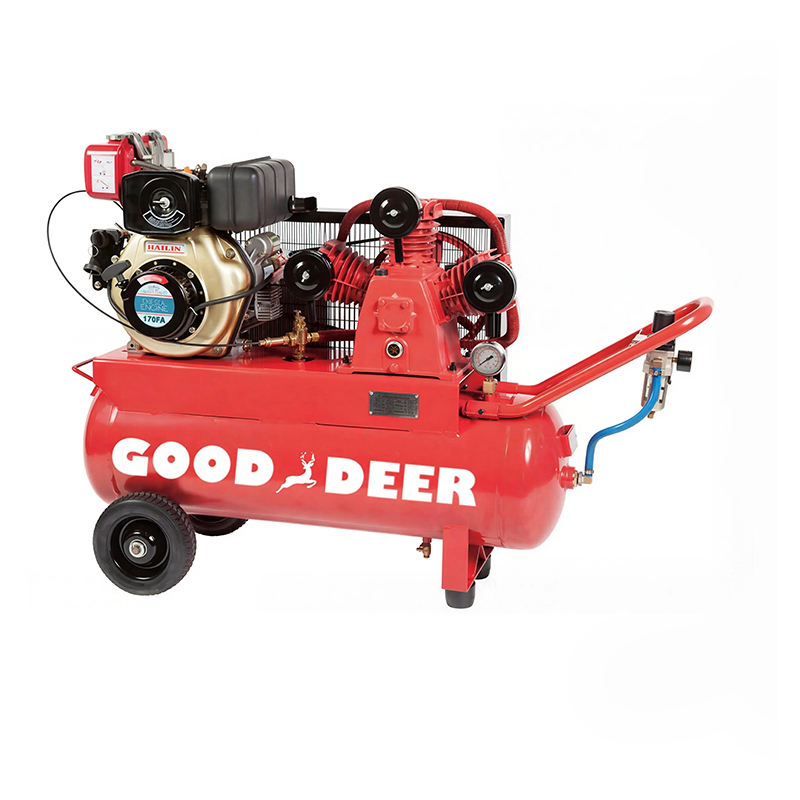
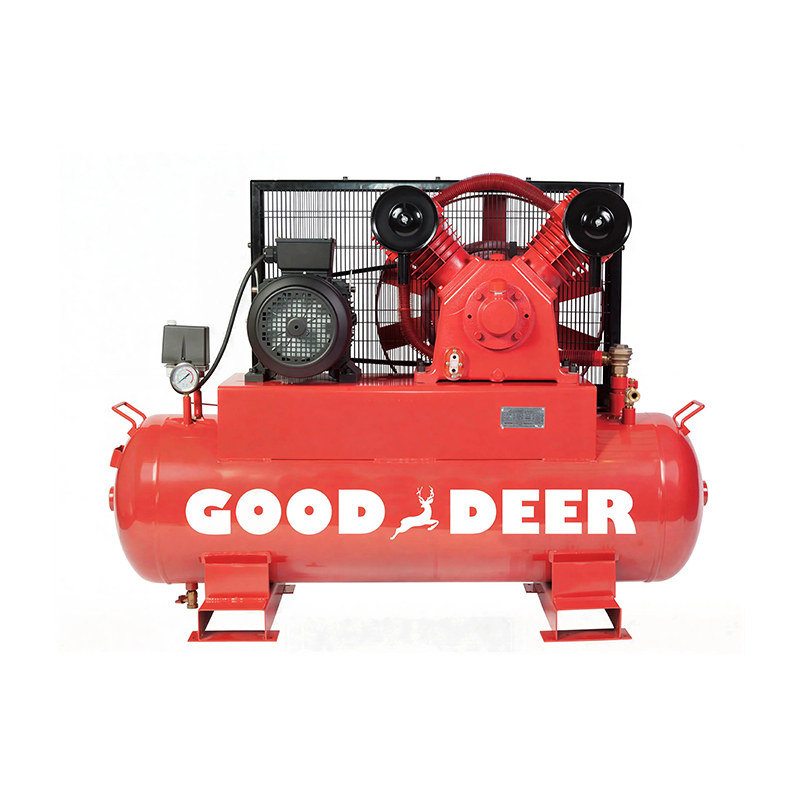
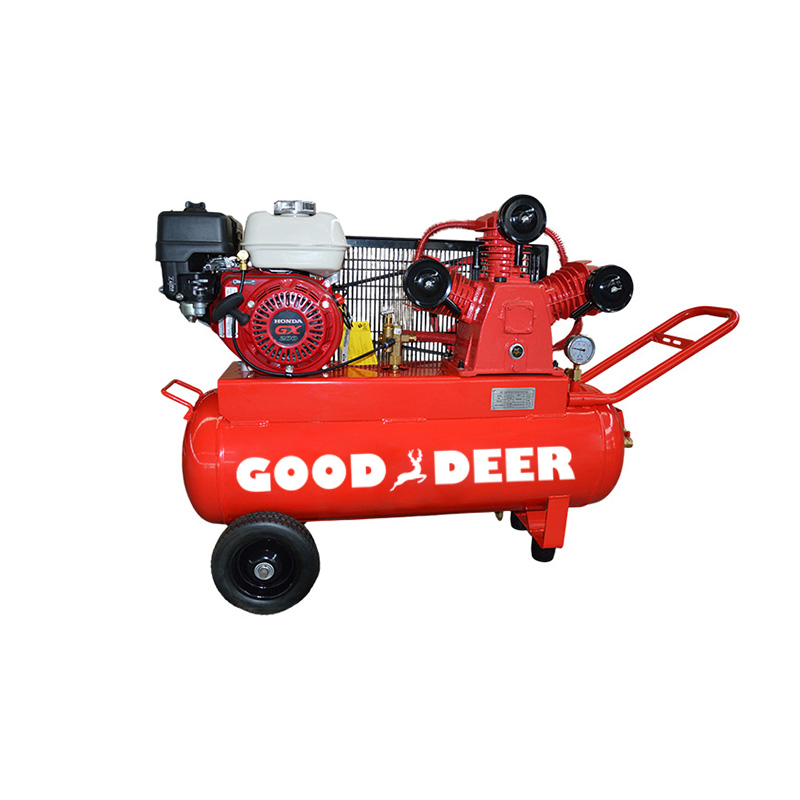
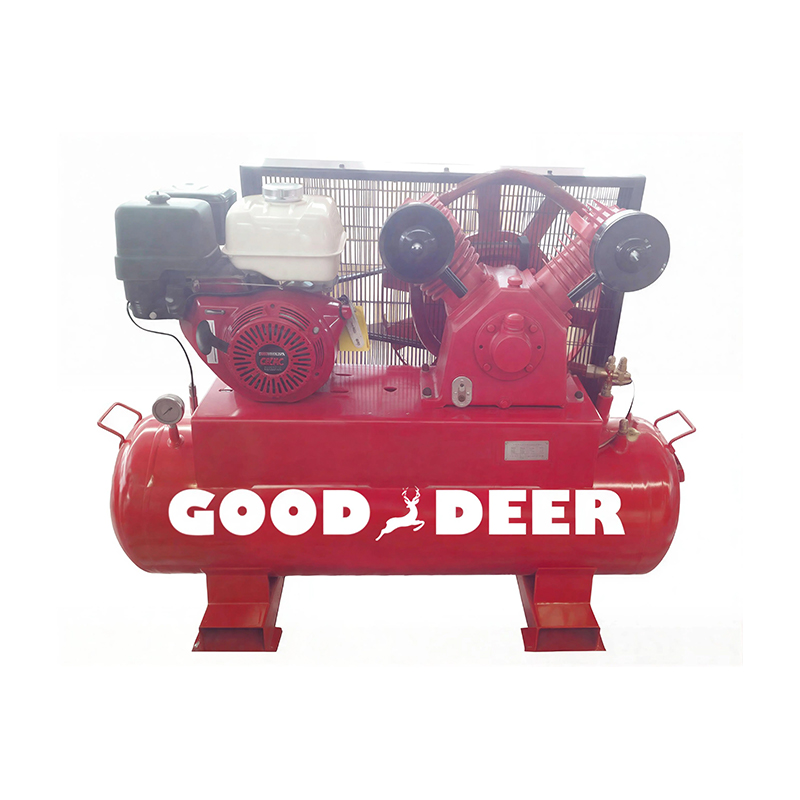
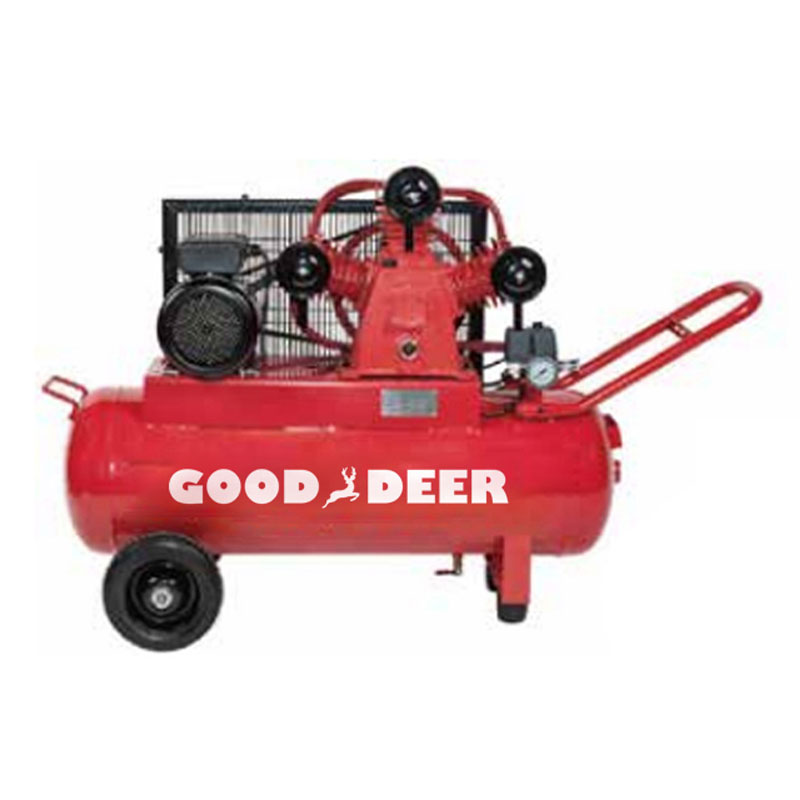
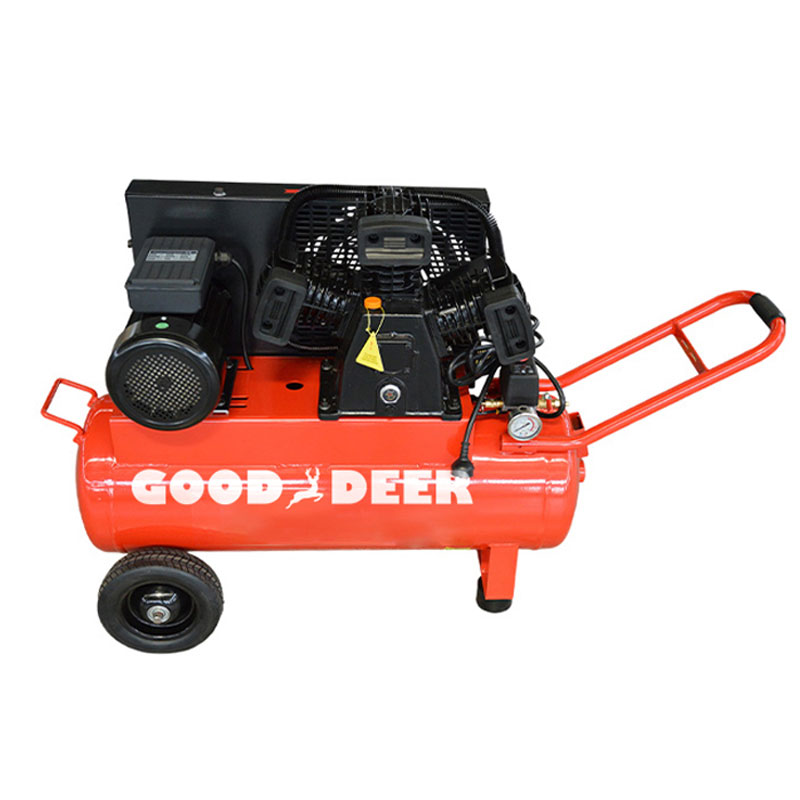
A piston air compressor uses one or more cylinders with reciprocating pistons to compress air in pulses. It fills a storage tank and then shuts off, cycling on again when pressure drops. This design is simple, inexpensive, and easy to maintain — but it generates significant heat and vibration, which limits its duty cycle. Most single-stage piston compressors are rated for a 50–60% duty cycle, meaning no more than 30 minutes of continuous running per hour. Two-stage models handle slightly higher loads but still cannot run continuously without overheating.
Piston air compressors are available from fractional horsepower portable units up to industrial 30+ HP stationary models, typically producing pressures of 90–175 PSI. They are the dominant choice for automotive shops, construction sites, woodworking, and home use.
Screw Air Compressor
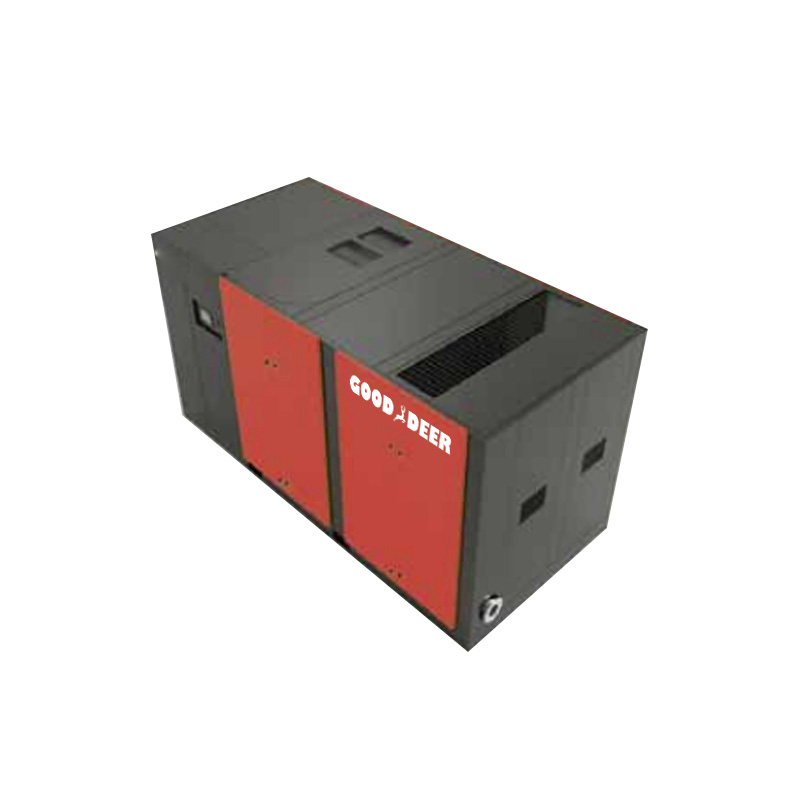
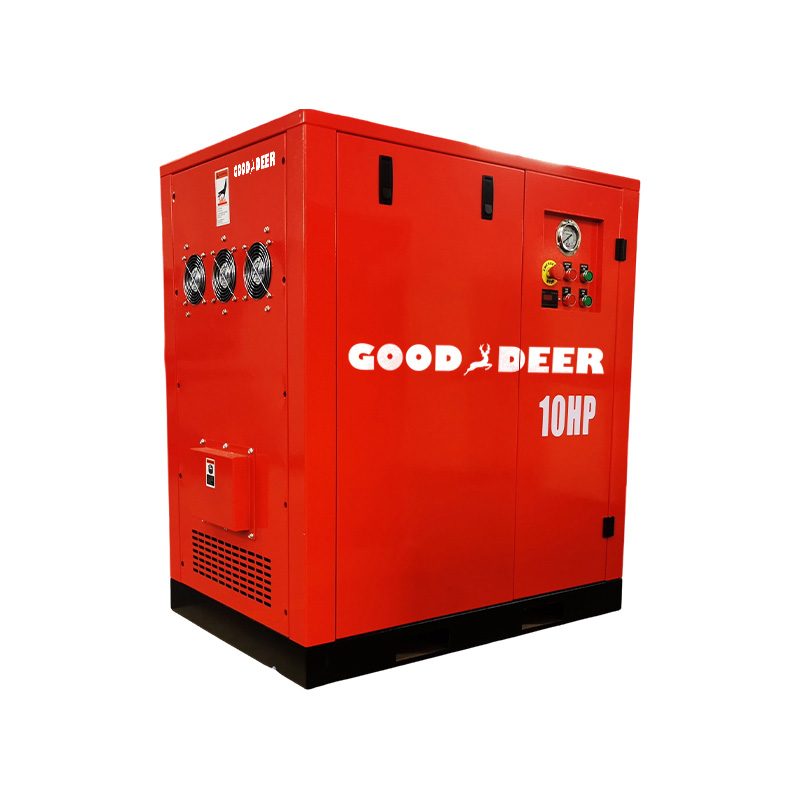
A screw air compressor uses two interlocking helical rotors to compress air continuously and smoothly, with no pulsation. It is designed for 100% duty cycle operation — it can run 24 hours a day, 7 days a week without thermal damage. Screw compressors are quieter, produce cooler air, and deliver more consistent pressure than piston units of equivalent power. The trade-off is cost: a screw air compressor of equivalent output typically costs 3–5 times more upfront than a piston model, with more complex servicing requirements.
Screw compressors start at around 5 HP and scale to hundreds of horsepower for large industrial facilities. They are the standard choice for manufacturing plants, paint shops, laser cutting operations, and any application requiring continuous, high-volume airflow.
Piston vs. Screw Air Compressor: Side-by-Side Comparison
| Criteria | Piston Air Compressor | Screw Air Compressor |
|---|---|---|
| Duty Cycle | 50–75% | 100% |
| Typical Pressure Range | 90–175 PSI | 100–200 PSI |
| Noise Level | 75–90 dB | 60–75 dB |
| Initial Cost (10 HP equivalent) | $800–$2,500 | $3,500–$8,000 |
| Maintenance Complexity | Low | Moderate–High |
| Energy Efficiency | Moderate | High (VFD models: 30–50% savings) |
| Portability | High (smaller units) | Low (stationary) |
| Lifespan | 5,000–15,000 hrs | 40,000–80,000 hrs |
Step 1 — Calculate Your Required CFM and PSI
PSI (pounds per square inch) measures pressure; CFM (cubic feet per minute) measures airflow volume. Both must be matched to your tools and tasks. CFM is the more critical figure for compressor sizing — buying a unit with sufficient PSI but inadequate CFM is one of the most common purchasing mistakes.
Typical CFM and PSI Requirements by Tool
| Tool | CFM Required | PSI Required |
|---|---|---|
| Tire Inflator | 1–3 CFM | 30–90 PSI |
| Nail Gun (framing) | 2–4 CFM | 70–120 PSI |
| Impact Wrench (1/2") | 4–8 CFM | 90–100 PSI |
| Spray Paint Gun (HVLP) | 6–14 CFM | 25–50 PSI |
| Die Grinder | 4–8 CFM | 90 PSI |
| Sandblaster | 15–25 CFM | 90–120 PSI |
| CNC / Laser Cutting Assist | 30–80 CFM | 100–145 PSI |
When running multiple tools simultaneously, add their individual CFM requirements and multiply by 1.25–1.5 as a safety buffer. For example, running two impact wrenches (8 CFM each) and a blow gun (3 CFM) simultaneously requires a compressor rated for at least 24–29 CFM at your target PSI.
Step 2 — Determine Your Duty Cycle Needs
Duty cycle is the percentage of time a compressor can run within a given period without overheating. It is the most misunderstood specification and the leading cause of early compressor failure.
- Under 25% duty cycle: Occasional use — tire inflation, hobby nail gunning, intermittent blowoffs. A small pancake or hot dog piston compressor (1–6 gallon tank) is more than adequate.
- 25–60% duty cycle: Regular shop use — automotive work, woodworking, painting projects. A mid-range piston air compressor with a 20–80 gallon tank handles this range well.
- 60–80% duty cycle: Heavy shop or light production use. Consider a heavy-duty two-stage piston compressor or entry-level screw air compressor (5–7.5 HP).
- 80–100% duty cycle: Continuous industrial production. A screw air compressor is the only appropriate choice — running a piston unit at this level will destroy it within weeks.
Step 3 — Choose the Right Power and Tank Size
Horsepower (HP) drives airflow capacity, while tank size determines how long you can run tools before the compressor cycles on. A larger tank does not make the compressor more powerful — it only stores more air.
Matching HP to Application
- 1–2 HP: Inflation, brad nailers, staple guns. Portable 1–6 gallon units.
- 3–5 HP: Framing nailers, impact wrenches, spray painting. 20–60 gallon tanks.
- 5–10 HP: Auto body work, die grinding, multi-tool shops. 60–120 gallon tanks or small screw units.
- 10 HP and above: Production lines, sandblasting booths, CNC machining. Screw air compressor recommended.
Be cautious of inflated "peak HP" claims on consumer-grade piston compressors. Always look for the rated running HP, not peak or max HP. A unit advertised as "6 HP peak" may only deliver a sustained 3–3.5 HP — which significantly limits its actual CFM output.
Tank Size Guidelines
- 1–6 gallons: Portability priority — job site use, trim work, inflation
- 20–30 gallons: Small workshop — occasional spray painting, basic auto work
- 60–80 gallons: Busy automotive or woodworking shop with multiple tools
- Screw compressors: Often tankless or with small buffer tanks — continuous delivery eliminates the need for large storage
Step 4 — Oil-Lubricated vs. Oil-Free Piston Compressor
Within the piston air compressor category, you must choose between oil-lubricated and oil-free designs. This decision affects maintenance requirements, air quality, and total lifespan.
- Oil-lubricated piston compressors use splash or pressure lubrication to reduce friction. They run cooler, quieter (typically 68–78 dB), and last significantly longer — often 10,000–15,000+ hours with regular oil changes. They require checking and changing oil every 200–500 hours. Best for workshops and any application where longevity matters.
- Oil-free piston compressors use permanently lubricated Teflon-coated components. They are lighter, maintenance-free, and can operate at any angle — ideal for job sites and portable use. However, they run hotter, are louder (80–90 dB), and typically have a service life of 2,000–5,000 hours. They are also required for food processing, pharmaceutical, and dental applications where oil contamination is unacceptable.
For screw air compressors, oil-injected rotary screw designs are standard for most industrial applications. Oil-free screw compressors exist but cost 2–3 times more than oil-injected equivalents and are reserved for critical clean-air applications like semiconductor manufacturing or sterile medical environments.
Step 5 — Consider Power Supply and Installation Requirements
An air compressor that exceeds your electrical supply capacity is useless regardless of its specifications. This is especially relevant for screw air compressors and larger piston units, which often require three-phase power.
- 120V single-phase: Supports compressors up to approximately 1.5–2 HP. Suitable for pancake and small portable units only.
- 240V single-phase: Supports piston compressors up to 5–7.5 HP. Most standard workshop compressors run on 240V/30A circuits.
- Three-phase (208V/460V): Required for most screw air compressors 7.5 HP and above. Verify your facility has three-phase service before purchasing.
- Gasoline/diesel powered: Portable piston compressors for job sites without grid power. Output equivalent to 5–20 HP electric models.
When installing a screw air compressor, also plan for adequate ventilation — a 10 HP screw unit generates approximately 34,000 BTU/hour of heat that must be exhausted from the compressor room to prevent thermal shutdown.
When a Variable Frequency Drive (VFD) Screw Compressor Makes Sense
A fixed-speed screw air compressor runs at full speed regardless of air demand, wasting energy during low-demand periods. A VFD (variable frequency drive) screw compressor adjusts motor speed to match actual demand in real time.
VFD screw compressors typically cost 15–25% more upfront than fixed-speed equivalents, but deliver energy savings of 30–50% in applications with variable demand. For a facility spending $10,000/year on compressed air energy, this translates to $3,000–$5,000 in annual savings — often recovering the price premium within 12–24 months.
VFD compressors make the most sense when air demand varies significantly throughout the day — such as manufacturing facilities with shift changes, automotive shops with variable tool usage, or any system where compressor load fluctuates by more than 30–40%.
Air Quality Requirements: Filters, Dryers, and Downstream Equipment
All compressed air contains moisture, oil vapor, and particulates. Depending on your application, you may need additional filtration and drying equipment — costs that should be factored into your total budget.
- Particulate filters: Remove dust and pipe scale. Required for virtually all applications. Typically $30–$200 depending on flow rating.
- Coalescing oil filters: Remove oil aerosols from lubricated compressors. Essential for painting, food, and medical applications.
- Refrigerated air dryers: Reduce moisture to a dew point of approximately 35–40°F. Standard for most shop and industrial systems. Cost: $300–$2,000+ depending on CFM capacity.
- Desiccant dryers: Achieve dew points as low as -40°F. Required for pneumatic instrumentation, electronics manufacturing, and freeze-sensitive pipelines.
- Activated carbon filters: Remove oil vapor and odors. Required for breathing air applications and food-grade systems.
A complete air treatment system for a 10 HP screw compressor in an automotive paint shop — including coalescing filters, refrigerated dryer, and particulate filtration — typically adds $800–$2,500 to the installation cost, but prevents thousands of dollars in paint defects and tool damage annually.
Practical Buying Recommendations by Use Case
Use the following as a starting-point guide based on the most common purchasing scenarios. Adjust CFM and tank size upward if you anticipate running multiple tools simultaneously or expanding operations.
| Use Case | Recommended Type | Minimum CFM | Tank / Config | Budget Range |
|---|---|---|---|---|
| Home / DIY | Oil-free piston | 2–4 CFM | 6 gallon portable | $80–$200 |
| Auto Repair Shop | Oil-lube piston | 15–20 CFM | 60–80 gallon | $700–$1,800 |
| Auto Body / Paint | Two-stage piston or screw | 20–30 CFM | 80 gallon / 7.5 HP screw | $1,500–$6,000 |
| Woodworking Shop | Oil-lube piston | 10–15 CFM | 30–60 gallon | $400–$1,200 |
| Light Manufacturing | Rotary screw (fixed speed) | 40–80 CFM | 10–20 HP screw | $5,000–$15,000 |
| Heavy Industrial | VFD screw compressor | 100–500+ CFM | 30–150 HP screw | $15,000–$80,000+ |
Common Mistakes to Avoid When Buying an Air Compressor
- Sizing by tank volume instead of CFM: A 60-gallon tank with a weak pump will starve high-demand tools just as quickly as a 20-gallon tank with the same pump.
- Buying peak HP instead of rated HP: Always verify the continuous running horsepower from the motor nameplate or manufacturer spec sheet.
- Ignoring duty cycle for piston compressors: Running a 50% duty cycle piston unit at 90% load will cause premature failure — often within a few hundred hours.
- Skipping air treatment: Moisture and oil contamination from an untreated compressor will ruin pneumatic tools, damage paint jobs, and corrode air lines over time.
- Underestimating future demand: If your shop or production needs are likely to grow, buy at least 25% more capacity than your current peak requirement to avoid replacing the unit within a few years.
- Choosing oil-free solely for convenience: In a fixed workshop setting, the reduced lifespan of oil-free piston units makes an oil-lubricated model the better long-term value in nearly every case.